

When I think of the origins of multiplayer in gaming, my thoughts immediately go back to some of my earliest gaming memories -- playing games on the NES. While games like the original Mario allowed two players to partake in the experience, they were more about taking turns and not contributing towards a shared goal or progress. Mario 3, however, put both players within the context of the same journey. Although the element of taking turns was still present, players took turns to progress through the story together. If one player beat a level, that level would be cleared and the next player would have to move on to the next available level. Admittedly, at times, that game felt less about progressing towards the same goal and more about strategically dying to ensure you were the one who gained access to that next Toad House. The early Sonic games did a better job letting both players play at the same time, but with the tradeoff of an uneven experience. Player one controlled Sonic and player two controlled Tails, but the camera only really followed player one and it was easy to leave player two behind.

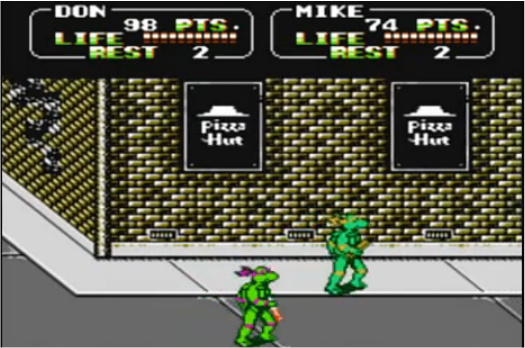


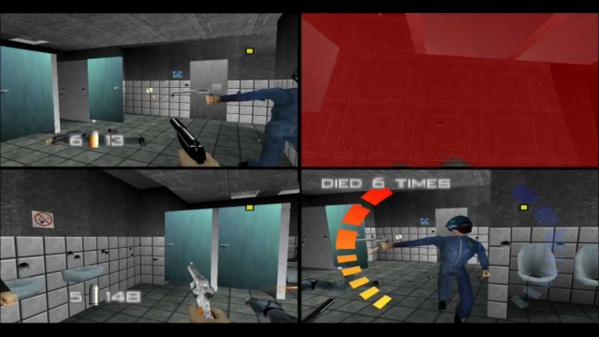
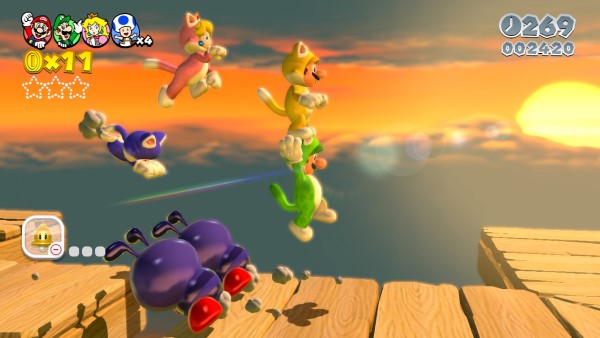
Of course, the other side of the coin was competitive gaming. Some of the earliest games, Pong for instance, allowed players to compete against each other. However, most early competitive games followed the same format as early co-op games -- namely that players were simultaneously playing essentially in the same location. This was best exemplified by fighting games which gave players the opportunity to directly clash against each other. Players were placed in the same arena and literally faced off against each other, most often on simple flat levels. As gaming developed, a new take on competitive gaming arose from racing games: split-screen. With split-screen, players could partake in the same competition, but while experiencing different locations, obstacles, and conditions. One player could be taking a series of tight twists and turns, struggling to avoid other cars, while another could be accelerating down a long straight-away, pulling away from the pack. During the Nintendo 64 era, first person shooters redefined both cooperative competitive gaming, and the split-screen experience they offered became the gold-standard. Goldeneye on the Nintendo 64 allowed four players to simultaneously compete against each other from the comfort of their own couch. Three years later, Rare built upon Goldeneye’s already phenomenal gameplay with Perfect Dark, a game which served as the first introduction for many into split-screen cooperative gaming. Like its side-scroller predecessors, players could work together to battle opponents and work towards objectives. However, it worked exceptionally well in shooters where players could better devise and utilize strategies together. Players could bail each other out of trouble when pinned down, flank enemies and catch them unaware, or split up to complete objectives while also combating enemy forces. Split-screen co-op was revolutionary, and as a younger brother, at the time, I thought it was one of the greatest things ever. Honestly, I am still more than a little disappointed that a two player, 3D Mario game where players can simultaneously control Mario and Luigi has never materialized.



At the same time, online gaming was transforming gaming from one type of social experience into another. While games like those of the Gears of War franchise and Resident Evil 5 and 6 continued to feature split-screen cooperative gaming, the majority of games began to shy away from split-screen multiplayer, instead embracing the ability of gamers to connect to others around the world through the internet for both cooperative and competitive multiplayer. Some of the early Modern Warfare games allowed local split-screen, but prevented multiple players from playing online at the same time on the same console. Initially, the central argument behind this shift was that split-screen could have an impact on players and produce competitive advantages and disadvantages. On one hand, split-screen leads to smaller screens, more noise, and issues like screen-peaking -- competitive disadvantages compared to those who were playing solo. Conversely, split-screen players could better coordinate in ways not open to players playing solo or, at best, relying on online communication tools.

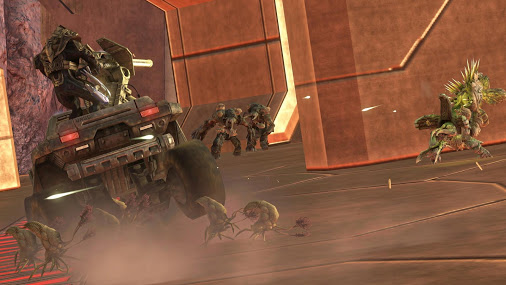
In the end, I suppose it comes down to a question of what are we actually losing? As someone who has been playing video games for over twenty years, I remember when gaming was not really considered a social activity. But gaming is more mainstream now, and in some ways more social. So many games feature chat options and consoles even ship with mics for communication. And yet, individual gaming has become more isolated and it is strange that some of the early social aspects are disappearing. Realistically, Halo 4 was one of the last games which I played split-screen, and this change would only have affected me for a few days. However, growing up, I built friendships through games of Goldeneye and Perfect Dark. Especially in college, playing split-screen Halo was one of the pillars which my lasting friendships with my roommates was built around. I can still remember egging each other to stay up past five AM one night because we were on, what eventually became, a nineteen game winning streak. Honestly, to this day, I am a terrible Warthog gunner because I could drive, and I always knew I had someone there who excelled at the other role. The more I see gaming abandon its early social roots, the more I wonder what effect this shift has on gamers who are younger than me and who are just becoming gamers. But maybe that’s just me. Do you share these sentiments, or do you think split-screen gaming just something that gaming has grown out of as it has grown up?
All for one and one for all~
Comments
Sagacyte ·
Tyrath ·
Mythe_Seraph ·
Good memories. Xbox Live is amazing. Online gaming is incredible, but nothing beats those LAN parties.
Log in through the forum to comment.