 XI Wiki


Reduced collagen helps thicken the sauce, but any actual liquid fat (ie, oil) should be skimmed off and tossed while cooking. Unless you want to strain your stew liquid entirely and emulsify the oil back in.
- Navigation
Results 221 to 233 of 233
-
2011-01-30 13:52 #221An Efficient Consumption Bundle

- Join Date
- Oct 2005
- Posts
- 3,178
- BG Level
- 7
- FFXIV Character
- Elyise Thierremont
- FFXIV Server
- Gilgamesh
- FFXI Server
- Bahamut
- WoW Realm
- Muradin

-
2011-01-30 15:33 #222New Merits
- Join Date
- Aug 2008
- Posts
- 229
- BG Level
- 4
- FFXI Server
- Asura
 http://www.melskitchencafe.com/
 Originally Posted by Judai

^ This is my favorite site for every day type recipes. She has nice pictures and easy to follow directions, and usually the ingredients aren't overly fussy. I've probably made around 20 of her recipes and they've all been very good and didn't keep me in the kitchen for hours.
http://www.howsweeteats.com/
^This blog tends to feature a lot of baking recipes but she has some really good dinner ideas too.
-
2011-01-30 16:58 #223Bagel
- Join Date
- Jun 2007
- Posts
- 1,402
- BG Level
- 6
- FFXI Server
- Bahamut
A tip that I learned years ago from a Jamie Oliver show on how to keep spaghetti noodles from sticking together: Put a twist in the middle of your handful of noodles and then drop them directly into the center of the pot. The noodles will fan out into a spiral. As the noodles cook, the ends that are above the water will slowly drop down into the water. There is no need to stir the noodles using this method. Just drop them in and walk away.
-
2011-01-30 17:02 #224Spiders are Awesome
- Join Date
- Sep 2006
- Posts
- 7,073
- BG Level
- 8
...or just use more water.
-
2011-01-30 17:24 #225Bagel
- Join Date
- Jun 2007
- Posts
- 1,402
- BG Level
- 6
- FFXI Server
- Bahamut
...because everyone has pots large enough to fit a handful of noodles under water?
-
2011-01-30 17:46 #226Ridill Ninja Lotter
- Join Date
- Oct 2006
- Posts
- 6,546
- BG Level
- 8
- FFXIV Character
- Lol Drg
- FFXIV Server
- Sargatanas
- WoW Realm
- Lightning's Blade
what the fuck is so hard about stirring your noodles 1-2 times? Originally Posted by wyrmtung
edit: And I mean noodles aren't like eggs/rice etc that you can step away from.
-
2011-01-30 20:16 #227Bagel
- Join Date
- Jun 2007
- Posts
- 1,402
- BG Level
- 6
- FFXI Server
- Bahamut
Relax, buddy. No need to come hard just because someone is offering a friendly tip. Just for you, I'll grant you permission to continue to do it the old way. In fact, since I'm feeling extra generous, I'll even let you use the twist technique just in case you decide to be extra daring. Originally Posted by ZarakiKujata
Isn't that awesome? You actually have a CHOICE now about how to cook your spaghetti noodles. You're a lucky guy.
-
2011-01-30 21:12 #228Relic Horn
- Join Date
- Jul 2005
- Posts
- 3,016
- BG Level
- 7
 I most definitely agree with your collagen part, but I find if you have the time (or in the case of a braise) it's easier to just get the the final fat skim off by letting it sit in a fridge overnight so all the fat turns solid on the surface. Then it's just one or two quick strains. Originally Posted by Elesirdur
Any fat that isn't strained off then (the initial oil used for cooking you are talking about) is usually skimmed off soon thereafter. I just fine the chill/strain method gets the majority of the solid fat out quickly.
-
2011-01-31 08:11 #229Ridill
- Join Date
- Aug 2005
- Posts
- 22,165
- BG Level
- 10
Again, doinitrong. Originally Posted by Elesirdur
This is amurrica.
-
2011-01-31 09:25 #230
Made a lot of crap this weekend in preparation for being busy during the coming week (aka leftovers). Two kinds of soup, a cake, baked chicken, mashed potatoes, two loaves of bread, two focaccia, various less-exciting vegetable things.
I'm sorry for whoever I will offend with this statement, but of everything I made . . . . the Hershey's cocoa box chocolate cake was my favorite thing both to make and to eat. Dark chocolate, of course.
Dishes made on the way to a cake:
2 Bowls
1 Pan
Eggbeaters (because I'm lazy)
Wooden Spoon (because I got less lazy)
1 cup measuring thing
Teaspoon
Quarter cup measuring thing
... really not bad, considering it was a cake. The two bowls were actually the same bowl twice, but I washed it so I did the same amount of work as if I'd used two.
1 hour to make a cake, including preheating, cleanup, and frosting but not including cooling time. Hard to freaking beat.
-
2011-01-31 14:44 #231Spiders are Awesome
- Join Date
- Sep 2006
- Posts
- 7,073
- BG Level
- 8
Originally Posted by Plow

-
2011-01-31 16:14 #232Campaign
- Join Date
- Oct 2006
- Posts
- 6,575
- BG Level
- 8
- FFXIV Character
- Heart Underblade
- FFXIV Server
- Hyperion
- WoW Realm
- Stormrage
wohoo a cooking thread!
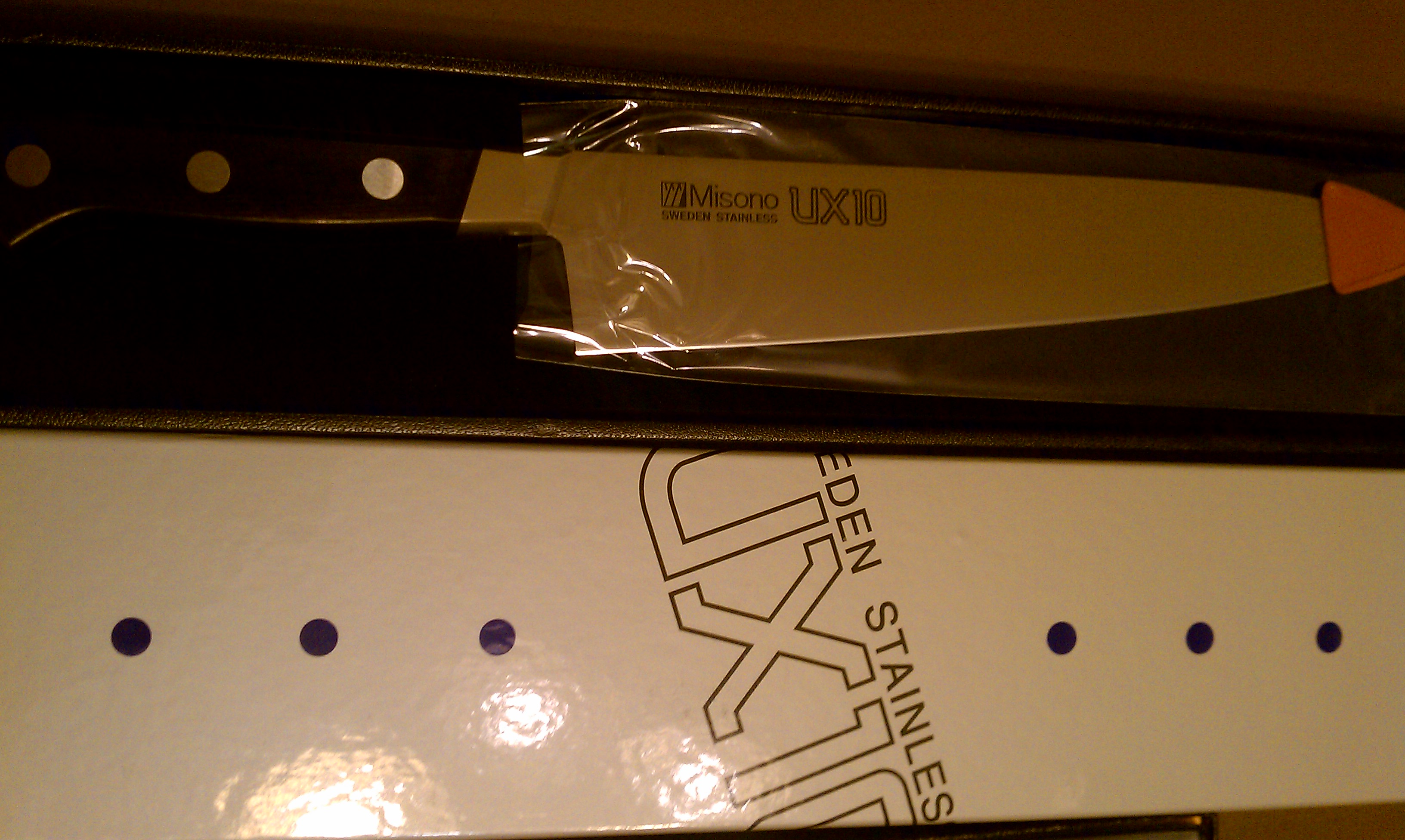
knives I bought a while back (8 months ago)
Spoiler: show
-
2011-01-31 19:20 #233Sea Torques
- Join Date
- Oct 2006
- Posts
- 503
- BG Level
- 5
I had to lol when I read this because I made a bone in roast for Christmas and my mother made me put it back in until there was no pink left except on the tenderloin, which she cut off, and the internal temp was up from 140 to 170, because otherwise SALMONELLA AND DEATH OMGZ. (BTW it was overcooked and terrible lol xD) Originally Posted by Pharaun




Similar Threads
-
The World of Web Trolling (and the death of my childhood)
By SDSD in forum General DiscussionReplies: 15Last Post: 2008-08-01, 11:41 -
Pics of my naked girlfriend(broke up with her)
By Dick in forum General DiscussionReplies: 8Last Post: 2005-07-31, 20:58