 XI Wiki


11% unemployment?
Better cut spending.
- Navigation
Results 61 to 80 of 129
-
2011-08-06 15:17 #61Death by snoo snoo

- Join Date
- Sep 2006
- Posts
- 22,117
- BG Level
- 10
- FFXIV Character
- Syntax Error
- FFXIV Server
- Cactuar

-
2011-08-06 15:19 #62I'm not safe on my island
Nikkei will still get me.
- Join Date
- Oct 2006
- Posts
- 20,043
- BG Level
- 10

Liberals are supposed to care and have empathy with people. They defend those who cannot defend themselves and they defend those who suffer because they can identify with them and use perspective. This is what makes us different to those libertarian faggots and the conservative nearderthals. Both of these groups worship ideas for their own sake, one worships the invisible hand, and the other worships some angry jewish god from the desert. They have principles for idiosyncratic and tribal reasons. What is supposed to make us better is that our ideas do not exist for their own sake, but they exist because that's what people need and want.
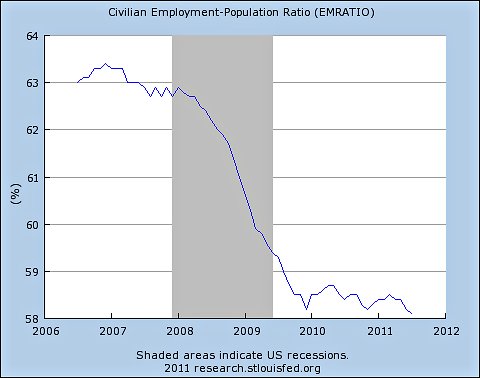
What the American people objectively and subjectively need right now is more employment and a stronger economy, this is far more important than the deficit and the debt. Like archi said, get some perspective:
-
2011-08-06 15:38 #63Hydra
- Join Date
- Dec 2005
- Posts
- 117
- BG Level
- 3

I see what you mean. You're all right that unemployment is a bigger issue, and I agree(especially for the average citizen). I also think we know the real rate is much higher than 11% too. Unemployment to me though, is more of a symptom of the larger problem, which is that the country is just over broke. Jobs have been shipped overseas to boost corporate profits while the same corporations lobby for extra tax breaks, lobby against tax increases for the wealthy, and lobby to to prevent existing loopholes from being closed. The chokehold is getting tighter and most people are already tapped out. Yes, I did just use an MMA analogy to describe the US's fiscal situation. If you think the country is suffering now, the worst is yet to come.
I guess what I'm saying is that if the US doesn't get its financial house in order there will be dire consequences. If the debt rating is downgraded across the board, interest rates may rise causing financing issues for businesses(causing further job losses), homeowners, etc. Hell there's a thread on the first page about no cost-chequing accounts not being offered anymore. These are all symptoms of a larger issue to me. I'm not saying I have all the answers, but asking more of the people who can afford it versus those who cannot seems like a pretty good start. We're on the same page here, just saying it in different ways.
Cutting spending is obviously necessary, its just not fair to do it on the backs of the average citizen. Start getting serious about it. Start slashing the wonderful pensions of elected officials. Slash defense spending. Raise taxes on capital gains, and the wealthiest 1%. Start instituting/raising taxes on luxuries such as yachts and private jets and whatever the fuck else billionaires spend their money on. Bring back estate taxes, even if it is modest. The American Dream is now more about falling out of the right vagina than pulling yourself out of mediocrity through hard work. The system is broken, and those at the top are benefiting from it enormously. Socialism for the rich, capitalism for the poor. Of course they don't want it to change. It needs to change. Unfortunately the republican machine is a powerful one and somehow convinces people to vote against their own best interests. It's baffling.
"The greatest trick the devil ever pulled was convincing the world that he didn't exist."
-
2011-08-06 15:52 #64I'm not safe on my island
Nikkei will still get me.
- Join Date
- Oct 2006
- Posts
- 20,043
- BG Level
- 10
I think that private debt is a much larger problem than public debt (private actors are much more balance sheet constrained, meaning they don't have the same magnitude of options the government has with its debt), and as you can see by the graph, the financial crisis is the reason why we were in a recession. The crisis disappeared the accumulated wealth (some would say imagenary wealth) that has existed due to the buble, which forced the private sector to deleverage, therefore eating up resources to pay down debt rather than for buying, which in turn means demand goes down and employment goes down.
The problem was, that the financial crisis not only increased debt for the private sector by banishing wealth, it also increased public sector debt via the bailouts and lower revenues. But a bigger problem is the idea of having both the public and private sector deleverage at the same time, which means recovery will take much longer, and therefore making people suffer for longer and more than they have to. This isn't just in terms of longer unemployment, but also a decrease in services offered to citizens given spending cuts.
It's much more important and much more humane to help people out of their unemployment and help them deleverage faster. After the private sector deleverages, then the government can start cutting down its debt, which will no doubt be easier because of larger revenues.
-
2011-08-06 16:18 #65Member since 2006 and still can't think of a title.
- Join Date
- Oct 2006
- Posts
- 28,135
- BG Level
- 10
- FFXIV Character
- Acanis Lindri
- FFXIV Server
- Midgardsormr
- FFXI Server
- Bismarck
- WoW Realm
- Kil'jaeden
 We have a black democrat in office. If McCain or another Repub was president, we wouldn't have this issue and the debt ceiling would have been raised months ago with no credit downgrade.
 Originally Posted by Demosthenes11

-
2011-08-06 18:38 #66Ridill
- Join Date
- Apr 2007
- Posts
- 13,293
- BG Level
- 9
With a few tax breaks thrown in for good measure. Originally Posted by Melena
-
2011-08-06 20:48 #67Banned.

- Join Date
- Aug 2009
- Posts
- 2,516
- BG Level
- 7
- FFXI Server
- Fenrir
2008 removed massive amounts of leverage from the system, and leverage is currently incentivized by the fed's rates. if you have issues with leverage kuya, bring it to the fed's doorstep and demand they raise rates, see how it pans out for ya. for that matter, go to washington and lobby against corporations making profit. the invisible hand is just some myth to be worshipped, corporations shouldn't focus on their legal obligation to maximize profit and instead should operate as incubators, right? empathy can be so very destructive...
-
2011-08-06 20:50 #68I'm not safe on my island
Nikkei will still get me.
- Join Date
- Oct 2006
- Posts
- 20,043
- BG Level
- 10
lol
-
2011-08-06 20:54 #69Banned.
- Join Date
- Aug 2009
- Posts
- 2,516
- BG Level
- 7
- FFXI Server
- Fenrir
-
2011-08-06 20:55 #70I'm not safe on my island
Nikkei will still get me.
- Join Date
- Oct 2006
- Posts
- 20,043
- BG Level
- 10
Even more lolz
-
2011-08-06 21:46 #71Black Belt
- Join Date
- May 2010
- Posts
- 5,603
- BG Level
- 8
What a fucking circus act
-
2011-08-06 23:59 #72New Merits
- Join Date
- Dec 2009
- Posts
- 249
- BG Level
- 4
- FFXI Server
- Gilgamesh
- WoW Realm
- Dunemaul
Wut. Originally Posted by solanis
-
2011-08-07 06:59 #73New Merits
- Join Date
- Sep 2008
- Posts
- 225
- BG Level
- 4
- FFXI Server
- Lakshmi

Seemed like a good place to post this since you're referencing the unemployment rate so much:
http://www.bbc.co.uk/news/business-14420702
US unemployment rate down in July
The US economy created 117,000 jobs in July, a better-than-expected outcome, according to the US Labor Department.
The figure was better than June's, which was itself revised up from 18,000 to 46,000.
The overall unemployment rate in July fell to 9.1% from 9.2%.
The news helped the Dow Jones share index to close higher. It comes after the index suffered its biggest one-day drop since 2008 on Thursday due to worries about the global economy.
The number of unemployed people fell to 13.9 million, down from 14.1 million.
President Barack Obama highlighted the number of private sector jobs added not just last month but for the past year-and-a-half, but conceded that "we've got to do better".
"We are going to get through this. Things will get better and we're going to get there together," he said.
Analysts welcomed the improved jobs figures, which came after recent data on economic growth and consumer spending had raised questions about the strength of the US recovery.
It's pretty good, it provides some temporary relief; people had been fearing the worse but it's a better number than expected," said James Knightley, senior US economist at ING.
Businesses added 154,000 jobs, but the government cut 37,000 jobs according to the non-farm payroll figures.
However, 23,000 of those losses were linked to a temporary shutdown of Minnesota's state government which meant workers did not get paid that month.
Average hourly earnings also increased by 0.4%, though weekly earnings remained unchanged.
Doubts remain
However, the jobs figures may provide only a limited reassurance to investors worried about the US economy.
The figures benefited from a decline in the number of workers looking for a job which reduced the number of people registered as unemployed.
That suggests that rather than finding work some job seekers are instead giving up seeking employment.
Stock markets in the US opened higher, but fell back during the morning.
"There were fears we were going into recession and this allays those fears, but the labour market is still sick, and it reminds us of the enormously steep hill we have to climb," said Josh Feinman, chief global economist with DB Advisors.
US traders are also concerned about the continuing sovereign debt issues in the eurozone which threaten to undermine European economic growth.
"I think the sovereign debt issues in Europe are very much still weighing on people. People don't know what the end game is going to be there - I certainly don't," added Mr Feinman.
-
2011-08-07 07:48 #74aduidarnenyeGuest
From what I see on the news here in Canada it seems like the Republicans are doing every damn thing they can to block Barack Obama from improving the economy so they can later blame him for a bad economy.
It looks all like fake numbers from a fake system that produces fake money, which is all fine and good until someone loses an eye.
But generally I know very little about the American economy, except that when I received a USD $10,000 cheque the American dollar tanked and I lost several hundred dollars from that 10k. Was annoying.
-
2011-08-07 08:15 #75Ridill
- Join Date
- Aug 2005
- Posts
- 22,165
- BG Level
- 10
hopefully shit's changed in the last couple pages but I don't see how you can be pissed about them coming out and saying "you're not going to remain AAA while you have retards like Bachmann dominating the political scene and preventing any and all discussion of tax increases" Originally Posted by Kuya
-
2011-08-07 08:37 #76Ridill
- Join Date
- Jul 2008
- Posts
- 11,251
- BG Level
- 9
Taxes are bad though, after all it's the rich who create all the jobs for us and if we tax them then that's less jobs being created for us!!!! Originally Posted by Plow
Too bad the jobs being created are in India >.>
-
2011-08-07 09:04 #77Ridill
- Join Date
- Aug 2005
- Posts
- 22,165
- BG Level
- 10
It's not a matter of being broke, it's a matter of the people that should drive the economy essentially being "happy enough" with what they're doing. They're still gaining wealth, so why eat the costs to expand when they can just cut back and pocket more? Originally Posted by Dalek
And, that unfortunately extends to congress. The debt really means nothing unless you're looking at a default. The rating really means virtually nothing unless the lenders decide it does... and people are still competing to give us their money, so that's highly unlikely. The reality is that we could tax and spend our way back to prominence, the issue is that the people with the power to make that decision aren't ok with that, not that we're anything remotely close to incapable.
That's just not the case, though. Again, it's not a matter of the money not existing, i.e. us being broke, it's a matter of us being unwilling to spend it. Before it would reach a situation where it could do any major damage, we'd be forced into borrowing for stimulus spending, because it would be a matter of that or a reverse version of the bailouts, and that's pretty damn unlikely. (it would actually basically be that except it would cost us a lot more than it did the beneficiaries before)I guess what I'm saying is that if the US doesn't get its financial house in order there will be dire consequences. If the debt rating is downgraded across the board, interest rates may rise causing financing issues for businesses(causing further job losses), homeowners, etc. Hell there's a thread on the first page about no cost-chequing accounts not being offered anymore. These are all symptoms of a larger issue to me. I'm not saying I have all the answers, but asking more of the people who can afford it versus those who cannot seems like a pretty good start. We're on the same page here, just saying it in different ways.
Why on earth would cutting spending be "obviously necessary"? Unless you're including ending the wars, which is not what's being talked about in the current budget discussions (which is ironic considering how obvious a solution it is, but anyway...), there's nothing to the argument that we "need" to cut spending other than the incorrect assumption that spending more than you make is always a bad thing for a nation.Cutting spending is obviously necessary, its just not fair to do it on the backs of the average citizen. Start getting serious about it. Start slashing the wonderful pensions of elected officials. Slash defense spending. Raise taxes on capital gains, and the wealthiest 1%. Start instituting/raising taxes on luxuries such as yachts and private jets and whatever the fuck else billionaires spend their money on. Bring back estate taxes, even if it is modest. The American Dream is now more about falling out of the right vagina than pulling yourself out of mediocrity through hard work. The system is broken, and those at the top are benefiting from it enormously. Socialism for the rich, capitalism for the poor. Of course they don't want it to change. It needs to change. Unfortunately the republican machine is a powerful one and somehow convinces people to vote against their own best interests. It's baffling.
"The greatest trick the devil ever pulled was convincing the world that he didn't exist."
Look at it this way... how many businesses do you know of that made more money than they spent immediately when they started? Maybe a few internet businesses that had virtually no overhead, but things generally go by the old adage of spending money to make money.
Just look at all the Wal-Marts and Home Depots and shit that went up in the late 90's/early0x. Most of them take like 4-6 months of pure spending before they make a single cent.
It's pretty much this. Debt and deficit are thrown around as ammunition in political argument, surplus is dismissed as "oh that was because of this or that invention." Originally Posted by aduidarnenye
U.S. debt should be triple A because we're good at spending money and making more of it. That can't happen if we refuse to spend.
-
2011-08-08 08:33 #78My Little Ixion
- Join Date
- Aug 2007
- Posts
- 8,016
- BG Level
- 8
- FFXIV Character
- Olorin Bustyoas
- FFXIV Server
- Sargatanas
- FFXI Server
- Ramuh
 Originally Posted by archibaldcrane
The overall unemployment rate (which includes people not currently seeking work or who have passed the 99-week UI threshold) is at 16.1%. The only citation I could find for this figure was an uncited mention in a diary on DailyKos so I'm looking for another hard source to confirm. Originally Posted by BardonGaruda
Originally Posted by archibaldcrane
The overall unemployment rate (which includes people not currently seeking work or who have passed the 99-week UI threshold) is at 16.1%. The only citation I could find for this figure was an uncited mention in a diary on DailyKos so I'm looking for another hard source to confirm. Originally Posted by BardonGaruda
-
2011-08-08 13:20 #79Banned.
- Join Date
- Jul 2005
- Posts
- 5,821
- BG Level
- 8
- FFXI Server
- Sylph
- WoW Realm
- Arthas
S&P Downgraded Fannie and Freddie. Aka, if you have student loans your interest rate is about to be jacked. Also, stocks lost 4% today. Lost all the gains this year plus some in a 72 hour period.
-
2011-08-08 13:27 #80Banned.
- Join Date
- Aug 2009
- Posts
- 2,516
- BG Level
- 7
- FFXI Server
- Fenrir
1. what do you mean by "stocks" Originally Posted by Senoska
2. the trading day isn't over
3. the indices are actually down significantly more than 400 basis points right now lol


Similar Threads
-
PSP 3.03 DOWNGRADER NOW OUT!
By Ikith in forum General DiscussionReplies: 63Last Post: 2007-02-16, 21:32 -
Poor Giant German Bunnies = Food For North Korea
By Bethany in forum General DiscussionReplies: 28Last Post: 2007-01-15, 11:13 -
need info on voltage vs. amps
By Skyylya in forum General DiscussionReplies: 7Last Post: 2006-11-20, 08:42 -
PSP Downgrade 2.0 -> 1.5 [Finally!]
By Zigma in forum General DiscussionReplies: 3Last Post: 2005-10-01, 21:55 -
PSP 2.0 downgrade working
By Pete in forum General DiscussionReplies: 1Last Post: 2005-09-27, 23:11