XI Wiki

$109 for TV+Internet+Phone 35/35 (In reality, 42/35). Also, $114 for 50/25.Originally Posted by hey

- Navigation
Results 41 to 60 of 60
Thread: Based Googleoptics.


-
2012-07-28 08:08 #41An exploitable mess of a card game

- Join Date
- Sep 2008
- Posts
- 13,197
- BG Level
- 9
- FFXIV Character
- Gouka Mekkyaku
- FFXIV Server
- Gilgamesh
- FFXI Server
- Diabolos


-
2012-07-28 08:21 #42Relic Shield
- Join Date
- Jun 2007
- Posts
- 1,693
- BG Level
- 6
- FFXIV Character
- Zimt Zucker
- FFXIV Server
- Sargatanas
Visiting Denver at the moment, and it seems awfully bland. What am I missing? Originally Posted by Roranora
On topic: I'm not sure what I'd do with 1 gb intarnets, but I'd sure be willing to find out. Doesn't seem like they'll be in the Bay Area any time soon, unfortunately.
-
2012-07-28 09:37 #43An exploitable mess of a card game
- Join Date
- Sep 2008
- Posts
- 13,197
- BG Level
- 9
- FFXIV Character
- Gouka Mekkyaku
- FFXIV Server
- Gilgamesh
- FFXI Server
- Diabolos
He probably means the outlets/no tax benefits?
-
2012-07-28 11:43 #44
Sweaty Dick Punching Enthusiast
- Join Date
- May 2005
- Posts
- 9,265
- BG Level
- 8
- FFXI Server
- Fenrir
Denver? Well about anywhere but Grand Junction is close enough to the action for me, so just say Colorado. But yep, CO is my home, and it's calling me. Strokes, folks, the world, etc.
But for me..
I have a snowboard and a mountain bike, and I want to use them both more.
Also, $160 per ounce of nice weed legally.. vs $350 per ounce (same weed) through illegal channels. Also, yoga is srs biz. Also, elevation; I'm not sure why, but I love it 5000 ft to like 10000 ft. The air feels better to me, sooo nice. It's not until like 12,000 ft (we trudged to Union/Copper peaks on Copper Mtn) that I feel the effect and struggle to breathe a little. Also, I have a ton of friends, colleagues, and former classmates in the area. Also, women (though this is true in any city; I'm not in a city now--I'm more stuck in between feedlots and seemingly endless 2-lane rural TX highways)
Aaand mountains.
I guess if the area isn't just immediately beautiful and gorgeous to you, it probably won't suck you in. But yeah, look to the horizon to the west: I love that.
Peyton Manning? pff, he's no Aaron Rodgers
Edit: on-topic.. but KC will have better tubes for the time being~
not sure what i'd do with 1gbit tubes, but this is a problem we should've had years ago. what really excites me about this--and the first area doesn't really matter--is that the collective infrastructure is inexcusably poor in this country. And Google seems to want to tackle that more than any other provider
-
2012-07-28 13:54 #45Member since 2006 and still can't think of a title.
- Join Date
- Oct 2006
- Posts
- 28,441
- BG Level
- 10
- FFXIV Character
- Acanis Lindri
- FFXIV Server
- Midgardsormr
- FFXI Server
- Bismarck
- WoW Realm
- Kil'jaeden
 Fixed because it's bullshit out here. Originally Posted by Callisto
-
2012-07-28 13:54 #46An exploitable mess of a card game
- Join Date
- Sep 2008
- Posts
- 13,197
- BG Level
- 9
- FFXIV Character
- Gouka Mekkyaku
- FFXIV Server
- Gilgamesh
- FFXI Server
- Diabolos
NVM.
-
2012-07-28 14:20 #47Very Sexy Nerd

- Join Date
- Oct 2005
- Posts
- 8,738
- BG Level
- 8
- FFXI Server
- Carbuncle

I get around 20/5 (actual speeds) for $55 which I find pretty decent, except for the 200gb/month cap :/, trying to change isp but there isn't much "choice" here, I can supposedly get 50 down/idkup for $25.... trying to get it >.>
-
2012-07-28 18:18 #4829 in magical dog years
- Join Date
- Mar 2008
- Posts
- 2,039
- BG Level
- 7
- FFXIV Character
- Jackson Junior
- FFXIV Server
- Excalibur
Saw googleoptics and immediately thought of the googlegoggles

-
2012-07-28 18:44 #49
Sweaty Dick Punching Enthusiast
- Join Date
- May 2005
- Posts
- 9,265
- BG Level
- 8
- FFXI Server
- Fenrir
I get 0.3 meg up and 7-8 meg down tops, $55.31 / mo. CableOne, coaxial junk tubes.
I'll take a bigger bill for the insane jump I'd see in connection quality.. never minding the frequent local disconnects
-
2012-11-14 19:13 #50BG Content
- Join Date
- Oct 2005
- Posts
- 70,120
- BG Level
- 10
- FFXIV Character
- Six Souls
- FFXIV Server
- Gilgamesh
- FFXI Server
- Quetzalcoatl
- WoW Realm
- Malorne
- Blog Entries
- 9
http://www.bbc.co.uk/news/technology-20324072Google has begun to connect US homes in Kansas City to super-fast broadband, offering residents speeds of up to 1Gbps (gigabit per second).
People living in the "fibrehood" area of Hanover Heights are among the first to use the service.
They are reporting speeds of about 700Mbps (megabits per second).
The product poses a challenge to established cable companies which typically charge more money with slower connections.
Google says it hopes its package will persuade people to spend longer on the web and try out new services.
However, it will need to convince consumers that they would benefit from access to such fast speeds.
In a blog post, Google Fiber's director of service delivery Alana Karen promised a "great service" for residents in Kansas City - which straddles the border between the states of Kansas and Missouri.
Google is able to make the foray into broadband installation because it has been buying up so-called dark fibre from telecoms firms in the US in order to link up its data centres which are dotted around the US.
It has also been investing in cheap fibre that has been laid by companies that have subsequently gone bankrupt before completing rollouts.
The service offers Fibre to the Home (FTTH) and is delivered via overhead cables on the poles that also bring power to homes.
Most analysts agree that the service has been competitively priced. The gigabit service is being offered at $70 (£44) per month with no installation charge. This package also comes with 1TB (terabyte) of storage on Google Drive.
Alternatively subscribers can opt for a broadband plus TV service at a price of $120 (£75).
The third option is to pay a one-off $300 (£189) installation fee in return for free broadband at speeds of 5Mbps.
"One could be unkind and suggest that the TV side of Google Fiber shows that TV over broadband is the rather mundane killer app, when for over decade we have had IPTV in the UK," said Andrew Ferguson, founder of news site ThinkBroadband.
As well as offering residents fast speeds, Google is also hoping to score points for excellent customer service.
"We'll show up when we're supposed to... we'll clean up any mess; each installer carries a vacuum clean. And we'll answer your questions and teach you about your devices - don't be afraid to ask us questions, or ask us to explain something again in simple language," said Ms Karen, in a blog post.
Some have questioned whether the project represents a serious commitment to broadband infrastructure.
"If Google Fiber has an ambition to roll out its fibre and TV services to more cities across the US then the project becomes much more than a curiosity, but with Google so far not connecting businesses it has the hallmarks of a grand experiment," said Mr Ferguson.
Steven Hartley, an analyst with research firm Ovum, thinks it is most likely that Google will use the city as a test-bed.
"This isn't the start of Google launching fibre networks all around the world. But it can use it to test how people use these networks," he said.
The project was first announced in 2010. Interest in the idea was huge with more than 1,000 towns and cities applying to be part of it.
Since Kansas City was selected, web and digital entrepreneur have moved into the city in the hope of benefiting from the new super-fast speeds.
"There are probably people who would sell their soul to be living in a neighbourhood of Kansas City that has access to the service, as they see fibre connectivity as part of the sci-fi future," said Mr Ferguson.
But whether such a project can be repeated in other cities around the globe remains to be seen.
"Fibre to the Home is certainly the gold-plated standard that to the best of our current knowledge is future proof, the problem being that unless every city in the world can find another 'Google' sitting on mountains of cash we will have to wait a few more years," he said.
http://googlefiberblog.blogspot.co.n...-kick-off.html
I want this up in MN. I'm paying $73 (before taxes) for 30Mbps and now KC is getting more that three times that for less.
-
2012-11-14 19:54 #51listen!
- Join Date
- Apr 2011
- Posts
- 7,234
- BG Level
- 8
- FFXI Server
- Sylph
I think you mean 30 times more.
-
2012-11-15 00:43 #52F5 Like A Boss.
- Join Date
- Sep 2005
- Posts
- 7,396
- BG Level
- 8
- FFXIV Character
- Kuroki Kaze
- FFXIV Server
- Sargatanas
- FFXI Server
- Quetzalcoatl
- WoW Realm
- Twisting Nether
I came... Sweet fuck how did Manhattan not get picked for this shit? lol ; ;700mpbs
-
2012-11-29 19:15 #53BG Content
- Join Date
- Oct 2005
- Posts
- 70,120
- BG Level
- 10
- FFXIV Character
- Six Souls
- FFXIV Server
- Gilgamesh
- FFXI Server
- Quetzalcoatl
- WoW Realm
- Malorne
- Blog Entries
- 9
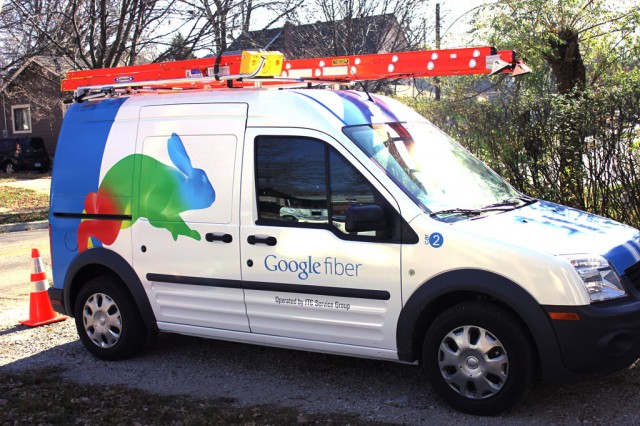 http://arstechnica.com/business/2012...-google-fiber/I can summarize my whirlwind 36 hours in Kansas City in two words: bandwidth and barbecue.
I spent all day Wednesday testing a Google fiber connection, attending startup events, seeing Google’s “fiber space,” meeting entrepreneurs, chatting with a realtor, and interviewing a city official. All of that was washed down, at the end of the day, with a generous helping of delicious burnt ends and ribs at Oklahoma Joe’s—and yes, I’m exhausted.
So how fast is Google Fiber? Really fast... and it may be far ahead of its time.
That said, I can’t say that I noticed a significant difference in terms of my day-to-day use of the Internet. Even the people in the Kansas City Startup Village (KCSV)—a small strip on the edge of Kansas City, Kansas that was among the first homes to have Google’s gigabit connection—agreed with me.
“Right now, we don’t do anything that requires fast Internet,” admitted Adam Arredondo of LocalRuckus, a new local startup, when I stopped by to learn about their experience.
As many Ars commenters have noted, the rest of the Internet is still really slow in comparison to a gigabit home broadband pipe; there are many other obstacles getting in the way of a full-bore Internet experience. After all, once my Web request leaves the fiber-connected house, makes its way out of the city, and starts talking to the rest of the Internet, there are all kinds of routers, switches, boxes, firewalls, and quality of service (traffic shaping) issues that make it so I can’t actually download an album from iTunes in the blink of an eye.
But my brief taste of what promised to be the craziest, fastest Internet for the lowest amount of money may not have been enough. I may have to stay longer next time to really appreciate it.
Another guy in the same work house as Arredondo, Andy Kallenbach (also known as Ars reader “Andreas_kc”) of FormZapper, said that what he really notices is the high upload speed.
“The best connections that I get personally are to several of our servers colocated in downtown [Kansas City],” he wrote in a comments thread, echoing what he told me in person. “It is just as good as walking into the data center and jacking in. Our nightly deployments take around 10 seconds now. [The only] bottleneck now being somewhat drive speed.”
Other Ars readers have suggested that I’d really start to appreciate it once I spent more time with the connection. Malor, who has a 250MB connection in Chattanooga, commented:
“This is something you need to live with, as opposed to just experience briefly, to start to understand how it matters. The biggest thing is that you never, ever have to think about what you are doing with your connection. It doesn't matter. No matter how crowded either direction is, with that kind of packet throughput, you don't really get latency issues. You don't have the problems with cable modems of saturating the upload link and then seeing your download link hosed. At least, I don't think you ever have that problem; I've never been able to completely saturate my upload, even when it was merely 100Mbps.”
Still, I would definitely throw down $70 a month for a 1Gbps connection, happily tossing aside the $30 basic Internet package (20Mbps) that I get from Comcast in Oakland. I think we can all agree that most Americans would definitely enjoy even a small speed bump on the order of 50Mbps to 100Mbps for around the same price as they’re paying now.
“We have a lot to do in Kansas City”Spoiler: show
Homes for HackersSpoiler: show
State Line Road, more than just a street
 Spoiler: show
-
2014-02-20 14:08 #54BG Content
- Join Date
- Oct 2005
- Posts
- 70,120
- BG Level
- 10
- FFXIV Character
- Six Souls
- FFXIV Server
- Gilgamesh
- FFXI Server
- Quetzalcoatl
- WoW Realm
- Malorne
- Blog Entries
- 9
-
2014-02-20 21:02 #55Bringer of Bacon
- Join Date
- Jun 2006
- Posts
- 288
- BG Level
- 4
- FFXI Server
- Bismarck
Well.. Looks like I'll be reconsidering that move to Portland.
-
2014-02-21 14:42 #56True skill only comes from macro switching all your e-peen gear thru 10 pages
- Join Date
- Sep 2007
- Posts
- 4,740
- BG Level
- 7
- FFXI Server
- Quetzalcoatl
San Jose.... of course. Portland seems nice, swastika attack thingy aside
-
2014-02-21 15:32 #57Impossiblu
- Join Date
- Mar 2010
- Posts
- 10,445
- BG Level
- 9
- FFXIV Character
- Prothescar Centursa
- FFXIV Server
- Balmung
- FFXI Server
- Valefor
living in Charlotte finally pays off
-
2014-02-21 17:08 #58She Shoots For The Stars
- Join Date
- Aug 2009
- Posts
- 1,650
- BG Level
- 6
- FFXIV Character
- Elizara Paksenarrion
- FFXIV Server
- Excalibur
- FFXI Server
- Quetzalcoatl
I hope it does show up in Atlanta; I'd be so all over that...
-
2014-02-21 17:08 #59Yoshi P
- Join Date
- Aug 2006
- Posts
- 5,139
- BG Level
- 8
- FFXIV Character
- Dead Gye
- FFXIV Server
- Lamia
- FFXI Server
- Ragnarok
Looks like I need to get those resumes into amd/nvidia/texasinstruments/etc on the double. Also need to find out if actually living in Austin, Texas counteracts the awesomeness of super fast internets. Originally Posted by 6souls
-
2014-02-21 19:20 #60It's all dicks and airplanes
- Join Date
- Jun 2009
- Posts
- 2,300
- BG Level
- 7
- FFXIV Character
- Cia Mir
- FFXIV Server
- Balmung
Why god, WHY DO I HAVE TO BE IN KNOXVILLE INSTEAD OF NASHVILLE.
So many sads right now.