 XI Wiki


To those who don't know any better, you're probably right. Virtually all prominent protestors I follow (mainly outside Baltimore, i.e. Ferguson, NYC, Cali) laughed and dismissed his condescending nonsense.
- Navigation
Results 181 to 200 of 328
-
2015-04-29 15:36 #181Black Belt

- Join Date
- May 2010
- Posts
- 5,603
- BG Level
- 8

-
2015-04-29 15:38 #182Black Guy from Predator.
Uppity Negro
Secret Admin
The Immortal Bill Duke
- Join Date
- May 2008
- Posts
- 15,682
- BG Level
- 9
guess it's fortunate he was talking to the baltimore youth and not them, eh?
-
2015-04-29 15:40 #183Black Belt
- Join Date
- May 2010
- Posts
- 5,603
- BG Level
- 8
The youth will not stay ignorant, they have too many people invested in them, contrary to popular belief.
In other news: Keegan Stephan
Now at arraignment, judges sending #BaltimoreUprising arrestees to jail on up to $500K bail: http://www.theguardian.com/us-news/2...P=share_btn_tw …
-
2015-04-29 15:56 #184Relic Shield
- Join Date
- Jul 2010
- Posts
- 1,843
- BG Level
- 6
- FFXI Server
- Carbuncle
video of Fox news getting called out after protesters demanded they leave
https://twitter.com/IamAkademiks/sta...65858724384770
Rivera commented on the incident Wednesday morning, telling "Fox & Friends" that the protester he argued with was being "truly annoying and obstructionist."
"I had an important story to tell standing there," he said. "It’s exactly that kind of youthful anarchy that led to the destruction and pain in that community.”
-
2015-04-29 16:08 #185
- Join Date
- Jul 2006
- Posts
- 6,936
- BG Level
- 8
You clearly don't know much about Baltimore. That's the entire problem. No funding for education; good teachers won't take the jobs there; nearly half of the studnets skip school regularly; their parents are the same; they are raised in poverty and learn the ways of poverty over and over and over again. Originally Posted by notorious bum

I'm not going to get in a slap fight about Ray Lewis with idiots in here but don't give me this "people are invested in them" bullshit. Yea fuckin right. People's lips are invested in them and their wallets are invested in the fucking inner harbor.
-
2015-04-29 16:11 #186
- Join Date
- Jul 2006
- Posts
- 6,936
- BG Level
- 8
And another thing, gimme a break. The people who need to hear what he had to say arent the ones live tweeting shit for people like you to suck up from afar. Originally Posted by notorious bum
-
2015-04-29 16:23 #187RNGesus

Sweaty Dick Punching Enthusiast
- Join Date
- Jan 2005
- Posts
- 43,679
- BG Level
- 10
- FFXIV Character
- Lenette Valkyr
- FFXIV Server
- Gilgamesh

Daily show last night was actually talking about the education problem.
http://thedailyshow.cc.com/videos/sv...timore-on-fire
-
2015-04-29 16:27 #188Relic Shield
- Join Date
- Jul 2010
- Posts
- 1,843
- BG Level
- 6
- FFXI Server
- Carbuncle
http://patriotnewswire.com/2015/04/g...-on-facebook/#
WARNING READ AT YOU OWN MENTAL RISK *this filth was on my fb feed from a fox fan*
-
2015-04-29 16:31 #189Black Belt
- Join Date
- May 2010
- Posts
- 5,603
- BG Level
- 8
You need to only look at how the youth came together in Ferguson, to debunk the myth that the youth don't know wtf they are doing, what they are protesting for, whether they are being supported more than exploited. Originally Posted by Xajii
The media portrays these protests perfectly as just some excuse to cause trouble because one black kid died. No, they are not organized now, but they will be as time passes. The cat who got disappeared on national TV was a prominent protestor who also participated in Ferguson. Baltimore isn't some isolated city of confused youth.
-
2015-04-29 16:38 #190
Rioting over this injustice is going to result in further targeted policing and will increase the likelihood of future injustices.
Nonviolent protest could work if people actually notice it. Reaching out to the mayor and politicians in Annapolis for help while holding on to the threat of obstructionist nonviolent protest would probably have been more effective.
-
2015-04-29 16:42 #191
- Join Date
- Jul 2006
- Posts
- 6,936
- BG Level
- 8
And it also ain't a charity case for bused-in protesters lookin for another march to come and "organize everything for them", like that has ever worked for them in the past. You're ignoring the enormous population of actual Baltimore residents that care about the city and a lot more than just Freddie Gray. Ray Lewis is talking to the city, not the wandering troupe of protesters. If you can't take his words at face value without spatting some ill-informed misinterpretation of his past (which, even if he did do half of what you think he did, wouldn't discredit his points), then again I say: you don't understand Baltimore. Originally Posted by notorious bum
Are you seriously triyng to tell the one person in this thread who'sa ctually from the area that they're being twisted by the media's portrayal of what is happening?
-
2015-04-29 16:47 #192Black Belt
- Join Date
- May 2010
- Posts
- 5,603
- BG Level
- 8
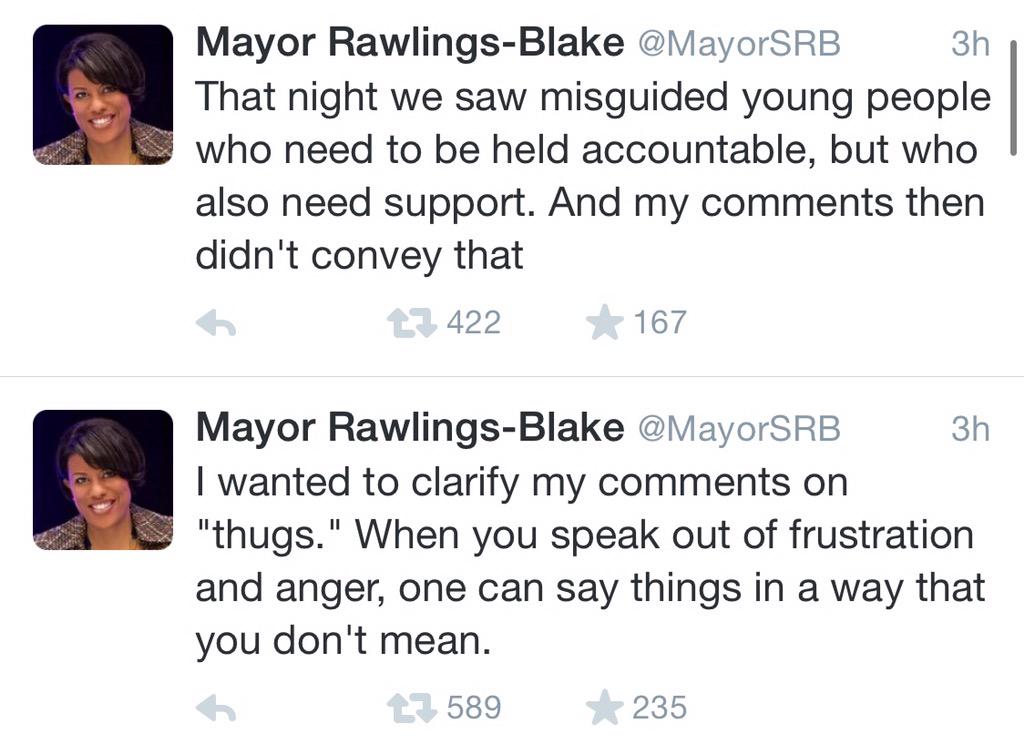
Targeted policing is nothing what anyone has witnessed over the past year. This is a show of force and gratuitous abuse of power. The Bloods and Crips have actually show more tact than anything we have witnessed in Baltimore. Chicago was also a shit-show, I lost the link, but officers on bikes basically trying to herd hundreds of peaceful protestors onto a sidewalk, then had the balls to crash into them and make "snatch and grab" arrests.
Proven once again, money is the loudest voice in America:
edit: wrong tweets, but Mayor also stating that the curfew may be lifted because small businesses are complaining.
-
2015-04-29 16:53 #193Black Belt
- Join Date
- May 2010
- Posts
- 5,603
- BG Level
- 8
You are seriously devaluing and underestimating the presence of "outside protestors." There are tens of thousands around the nation showing solidarity with Balitimore, the same way they did for Ferguson, Cleveland, NYC, etc. Thousands of protestors and organizers coming in from out of town to help support, you don't think they will help shape the direction this movement goes? Black Lives Matter ain't just a catch phrase, my dude. Originally Posted by Xajii
-
2015-04-29 16:59 #194Black Belt
- Join Date
- May 2010
- Posts
- 5,603
- BG Level
- 8
I haven't been able to find a collection/Twitter list to follow for Baltimore activists, but @deray is there, along with many others, thousands will be protesting at Penn station, it appears.
-
2015-04-29 17:03 #195Black Belt
- Join Date
- May 2010
- Posts
- 5,603
- BG Level
- 8
Baltimore Police Will Not Publicly Release Findings of Freddie Gray Investigation (UPDATED) http://bit.ly/1bEFdvT
-
2015-04-29 17:09 #196RNGesus
Sweaty Dick Punching Enthusiast
- Join Date
- Jan 2005
- Posts
- 43,679
- BG Level
- 10
- FFXIV Character
- Lenette Valkyr
- FFXIV Server
- Gilgamesh
Shocker.
-
2015-04-29 17:17 #197A. Body
- Join Date
- Jul 2006
- Posts
- 4,224
- BG Level
- 7
In other words, someone (or someones) looks guilty as hell given the evidence and they figure giving it to the state attorney will keep the lid on long enough to prevent more riots.
-
2015-04-29 17:18 #198The Defense is ready, Your Honor
- Join Date
- Sep 2007
- Posts
- 20,633
- BG Level
- 10
- FFXIV Character
- Lord Longhaft
- FFXIV Server
- Gilgamesh
- FFXI Server
- Cerberus
- WoW Realm
- Mug'thol

That ball game was eerie.
O's won, at least. Back to .500!
-
2015-04-29 17:23 #199No, an ambivalent report would also cause riots, as will their decision to not release a report. This is just strategic so the rioting happens on a weeknight instead of spilling over into the weekend. Originally Posted by Kyreth
Also going to thunderstorm there tonight. They are just playing damage control.
-
2015-04-29 17:26 #200Shootin' rocks at monsters
- Join Date
- Sep 2007
- Posts
- 3,693
- BG Level
- 7
- FFXI Server
- Shiva
Long post is long Originally Posted by Chun Liroy
Spoiler: show

