XI Wiki


I totally understand and I know that you can never hit 100% however as you said 1% is a big number and it has to go out or up and I was specifically wondering if there were plans to mitigate the environmental impact of it going "out" currently cooling water is often dumped back into lakes, rivers, oceans etc. which is seemingly innocuous as the water is clean however even a slight increase in temperature can have catastrophic effects on those environments. I know they operate as efficient as they can because they don't want to lose money.Originally Posted by Kryssan

You seem awfully dismissive of this subject saying "If you want to discuss solutions on where that heat goes, your prerogative." My point is that in a thread where we are talking about how environmentally friendly nuclear power is compared to other sources of power (and it is) this is a pretty big environmental impact that seems to be ignored and glossed over. I wanted to get clarification and see if this is actually talked about and understood in the industry and I just don't see much about it.
I was just curious if they are addressing how to handle that 1% (or whatever percent) of heat loss that is still being released into the environment. It seems like they could have secondary or tertiary cooling systems to bring the water temperature down to a point where it won't destroy the surrounding aquatic ecosystem before releasing the water back into the environment.
- Navigation
Results 121 to 140 of 149
-
2015-12-11 15:12 #121United States of Smash!

- Join Date
- Jun 2006
- Posts
- 8,817
- BG Level
- 8

-
2015-12-11 15:27 #122Ridill
- Join Date
- Apr 2011
- Posts
- 23,594
- BG Level
- 10
- FFXI Server
- Bahamut
I don't really think that is that much of a concern. There are limits to what they can do but frankly these are huge heat sinks and the plants aren't having a catastrophic effect. I know some of the newer designs have regenerative heat exhanges but I seriously doubt they are going to build multiple sets of cooling systems purely to lower heat output to the environment.
-
2015-12-11 15:27 #123Caesar Salad
- Join Date
- Nov 2009
- Posts
- 31,832
- BG Level
- 10
There is always going to be environmental impact in generating power, even solar/wind. Just because you can't eliminate the heat of the waste water doesn't mean nuclear isn't the best choice to meet our energy needs. Does it affect the nearby environment in some way? Sure, but not in nearly as bad a way as burning fossils do. Look at Beijing, compared to the local water near any nuclear power plant.
-
2015-12-11 15:32 #124United States of Smash!
- Join Date
- Jun 2006
- Posts
- 8,817
- BG Level
- 8
Yeah you guys didn't read what I posted. I already said yes nuclear power is better than the alternatives, yes there will always be an impact. That doesn't mean we need to ignore it as an impact and it doesn't mean there shouldn't be effort into how to minimize or mitigate it. I never said it was a big enough impact to say nuclear was worse than other power sources. I even said that it is an impact that is common amongst any power plant that uses water as a cooling source not unique to nuclear power.
-
2015-12-11 15:37 #125Banned.

- Join Date
- Jul 2007
- Posts
- 10,330
- BG Level
- 9
I love my tap water in AZ, get rekt envirodouches
-
2015-12-11 15:38 #126I'll change yer fuckin rate you derivative piece of shit

- Join Date
- Sep 2006
- Posts
- 58,757
- BG Level
- 10
Dude, you don't get it, stop asking reasonable questions and bow down to your nuclear overlords. Originally Posted by zoobernut
-
2015-12-11 15:48 #127Ridill
- Join Date
- Apr 2011
- Posts
- 23,594
- BG Level
- 10
- FFXI Server
- Bahamut
The whole because we can do better we should isn't always true. Think what trying to say is there is a "good enough" point where costs outweigh benefits. In theory it's always great to try for better in practice making one area better might make things overall worse
-
2015-12-11 16:24 #128I'll change yer fuckin rate you derivative piece of shit
- Join Date
- Sep 2006
- Posts
- 58,757
- BG Level
- 10
According to http://illumin.usc.edu/232/thorium-r...energy-crisis/
I think that's less a factor of using Thorium over Uranium as fuel, and more because of the fuel being embedded in the molten salt coolant though.Why a Liquid Fluoride Thorium Reactor is Better
First, thorium is extremely abundant in the crust of earth, unlike uranium. While uranium needs to be enriched before use, thorium is useful in its natural state, which makes thorium fuel cheaper to produce. Because the fission reactions in a LFTR are all based on liquid uranium, they are more efficient than equivalent reactions in a solid uranium reactor due to increased surface area for particle interaction. This means that LFTRs can produce much more energy per ton of fuel than current nuclear reactors [3]. Another big advantage of LFTRs over traditional uranium-based boiling water reactors is that LFTRs do not utilize water at any step, so they do not need to be built near a body of water. Because LFTRs do not utilize high pressure to maintain a stable reactor core, they do not need excessively thick walls around the core, so they can be smaller than current nuclear reactors [4].
-
2015-12-11 16:28 #129United States of Smash!
- Join Date
- Jun 2006
- Posts
- 8,817
- BG Level
- 8
I know right? Originally Posted by archibaldcrane
Maybe I didn't word my question in a clear way. Oh well I guess it isn't a big issue anymore.
Edit: Thanks for that article Archi.
-
2015-12-11 21:56 #130Bagel
- Join Date
- Jan 2009
- Posts
- 1,412
- BG Level
- 6
This is how companies see it, but environmentalists do not. That is what I meant with my statement you refer to here: Originally Posted by dasva
Since it wasn't clear apparently from my post, the answer is it's not. At least, not any further than current designs allow, with room for horizontal improvements as money provides. Originally Posted by zoobernut
1% was me being facetious, it's obviously much more than that. I was just saying that even if you could get it that low, which is still more perfect than what thermodynamics tells us is an engine operating a max theoretically efficiency, you will not fix this problem. You have to dump a lot of heat to make power. You will have waste.
Salodin and dasva said what I said nicer.
I totally read what you posted and answered it. I assumed the physics and thermodynamics of the situation were obvious so I didn't spell it out in the hopes it wouldn't come off as condescending. Originally Posted by zoobernut
A reactor is nothing more than a hot rock. It adds heat energy to a system. We want to transfer that heat energy into electrical energy. The current system used to do so most predominantly is the Regenerative Rankine steam cycle (link).
That system isn't any different for nuclear than a coal plant, which you yourself noted but somehow seem to be magically asking a nuclear plant to do something differently. Rankine cycles were used long before nuclear power. Just because you use a reactor doesn't suddenly make the Rankine cycle different. You don't get to circumvent physics just because the hot rock you're using in this case is Uranium and not coal.
You can obviously use something other than the Rankine cycle, such as the Brayton gas cycle ( and some reactors have done so in the past - in America, that'd be the old Fort. St. Vrain reactor system that produced power for the grid for a decade but was replaced with a natural gas power plant ), but there will still be waste heat. In this case we're just changing our nuclear power plant to look like a natural gas plant instead of a coal plant. The waste heat will still be exchanged with the environment at large, IE "the ultimate heat sink" ( yes, that is what it's officially referred as. Nature is every power plant's "ultimate heat sink" ).
Lets assume that we do not directly transfer our waste heat to a water system ( like with how Palo Verde works - the waste heat isn't going into any 'natural' water and thus not affecting some preserved ecosystem in that particular way ) that waste heat is still going somewhere. It is still affecting the environment in some way and nothing you do will change that. One does not make omelets without breaking eggs.
The question as I see it is what gets affected by said waste. That is not a nuclear discussion, that's an environmental one - hence again my comment in the quoted post. In regards to water-based ecosystems it's true of all power plants using a Rankine cycle equally, regardless of what they're using for a heat source.
Anyone claiming a 'commercial reactor that doesn't use water' is lying out their ass. All reactors capable of producing sufficient electrical power need coolant systems ( only research reactors can be air cooled, because their output is so low comparatively speaking ). Some GenV designs ( which are all theoretical ) can utilise air baffles to cool the reactor in an emergency condition ( basically to prevent a meltdown scenario ) but it's not standard ops. Originally Posted by archibaldcrane
The statement should read "does not require water inside the coolant loop", but insert intended-for-general-public-published-article discussions here. Some reactors, such as those using the Brayton cycle ( which you'll note in your link is what their molten salt design is using - "the hot salt heats a gas to turn the turbine" ) may not even require it in the secondary coolant loop ( coolant gas is the heat transfer mechanism to the turbine ).
But all these different plant designs will require water in the tertiary loop(s) - which are not small in size nor diminutive in environmental impact - so unless someone finds a way to radiatively dissipate the waste heat from a for-power reactor complex *shrug*. Even fusion reactor designs have water coolant ( and technically, water is their source of fuel... ). Basically, pie-in-the-sky.
-
2015-12-12 03:57 #131The Shitlord
- Join Date
- Feb 2008
- Posts
- 11,560
- BG Level
- 9
- FFXIV Character
- Kharo Hadakkus
- FFXIV Server
- Hyperion
- FFXI Server
- Sylph
- WoW Realm
- Rivendare
maybe i missed the answer to this, but how feasible would it be to recapture some of that waste heat's energy? first coolant loop powering a secondary set of generators, second loop powering tertiary, etc? surely there must be a way to take advantage of convection.
-
2015-12-12 09:44 #132Caesar Salad
- Join Date
- Nov 2009
- Posts
- 31,832
- BG Level
- 10
Or at the very least bake some bread with it amirite?
-
2015-12-12 12:19 #133Bagel
- Join Date
- Jan 2009
- Posts
- 1,412
- BG Level
- 6
Originally Posted by Kryssan
Please see the link I included above. This is exactly what everyone does. Originally Posted by BaneTheBrawler
Edit: To be more specific. What you're specifically talking about could fall into a reheat vice a regenerative, but it's not very effective outside of one layer. IE, your diminishing returns accelerate really quickly - you can use steam or even just hot water left over from the reaction cycle to heat plant systems but electric systems are less complex, require far less maintenance than steam / water systems do, and are just generally cheaper. A better way to do the recapture strategy is with a dual turbine system combined with a feed heater. That is to say, you have a high pressure turbine and a low pressure turbine. The high pressure turbine doesn't have a condenser, and dumps directly into the low pressure turbine. Feed heater takes the bled steam to reheat the feed and thus improve cycle efficiency moreso. You get more work out of the system this way, but it is more complex.
It also opens yourself to a new casualty scenario, feed-water quench. If your feed-water heater loses the heat, the feed water temperature goes low really quick given how fast the water is moving. This causes massive thermal stress on your generator and reactor power does scary things ( though usually not meltdown scary, just oh hey I need to do something or worse case the reactor safety systems kicked on scary ). This is also a loss of feed casualty, which is how TMI-2 started ( granted, it is easy enough to recover from, but humans will human) - lose your feed lose your heat sink.
-
2015-12-12 13:03 #134Bagel
- Join Date
- Jan 2009
- Posts
- 1,412
- BG Level
- 6
More stuff, for those who want to see indepth materials. A lot of this is old. To give you an idea of how long we've been sitting on them. I first learned of General Atomics GT-MHR design in 2001. It was already 5 years old then. Still nothing been done with it to my knowledge.
Detailed PDF
Alternate location ( self host )
It's 6MB in size, has some nice pictures if you don't like the word / reading thing. Basically a good look at a gas design.
For salts, we've been building these forever just never using them. You can see a generic timeline here (link) and how an air baffle aux cooling design might look here (link) ( same website ).
Not sure if this is the same thing as what GE/Hitachi are now calling PRISM, but for another, more historically conventional design we can view something like GE's ALMR. Again, this documentation was published in 1996:
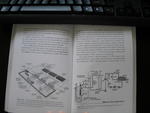
Note the air input for RVACS. Hard to stay excited about things you've known about for so long though.
-
2015-12-12 19:00 #135The Shitlord
- Join Date
- Feb 2008
- Posts
- 11,560
- BG Level
- 9
- FFXIV Character
- Kharo Hadakkus
- FFXIV Server
- Hyperion
- FFXI Server
- Sylph
- WoW Realm
- Rivendare
Originally Posted by Kryssan
Was able to follow your explanation better, though.
-
2015-12-13 13:59 #136Pandemonium
- Join Date
- Feb 2010
- Posts
- 7,659
- BG Level
- 8
- FFXI Server
- Sylph
-
2015-12-13 14:30 #137Ridill
- Join Date
- Aug 2008
- Posts
- 12,467
- BG Level
- 9
- FFXIV Character
- Satori Komeiji
- FFXIV Server
- Sargatanas
- FFXI Server
- Asura

Now imagine you have a nuclear accident a week before a movie releases that happens to be about that issue. America isn't very smart.
Then you have politicans in congress that grew up during that era.
-
2015-12-13 14:46 #138Pandemonium
- Join Date
- Feb 2010
- Posts
- 7,659
- BG Level
- 8
- FFXI Server
- Sylph
It is arguably the great flaw in a Democracy. In a monarchy, a king could say: "I don't care what you say, we're going Nuclear because the green benefits and the savings of other natural resources for other purposes makes the most long-term sense." and then the country has a long-term energy policy that makes sense.
Democracies are historically pretty bad at long-term planning.
-
2015-12-13 15:26 #139
Sweaty Dick Punching Enthusiast
- Join Date
- Dec 2008
- Posts
- 3,097
- BG Level
- 7
Does that mean we're doomed to be extremely bad at long term planning if those historic democracies never had to function in a world with click bait and intentionally misrepresented articles? Originally Posted by Buffy
-
2015-12-13 17:31 #140Ridill
- Join Date
- Apr 2007
- Posts
- 13,293
- BG Level
- 9
Sounds like a good thesis topic to me. Originally Posted by Thunder