 XI Wiki

Our government-medical interactions are really complicated, but I think that it's possible to make a simple argument for nationwide insurance (or single payer) by looking at situations where the government picks up the tab for people who can't pay:
* Hospitals didn't before, don't now, and wouldn't in the future deny people critical procedures. For people who can't pay, these costs are going to be borne by society until we get so callous that we let people die in ERs.
* Noncritical procedures ("well, you have <insert problem here> and you can get by with as it is for the moment, but you'll eventually need expensive surgery") are the procedures that people without insurance opt not to (unless they become critical) get done
* Preventative care and doing noncritical procedures in a timely manner is a lot cheaper than dealing with the eventual catastrophe, particularly when you consider potential disability arising from catastrophe
The only way to rejigger the math so it makes sense to not have everyone insured is to assume a decreased treatment rate for people who don't have insurance. This could either come from an increased mortality rate or people just living with their noncritical disabilities. You don't have to pay for their critical procedures if they're dead or afraid to seek treatment. That isn't the kind of world I want to live in, but that's how it currently works (although quantifiably less-so than before Obamacare). The richest 1% lives more than a decade longer on average than the poorest 5%, and they do so without things like torn menisci.
Putting that aside, though, the CBO report on the previous iteration of AHCA has already been pretty unfavorable (the current one is likely worse) and doesn't even consider these "indirect" costs to society. The CBO report estimates that AHCA would eliminate 1.2 trillion dollars worth of healthcare and return 0.9 trillion dollars worth of rich people's taxes to them, for a net government savings of 323 billion dollars. How much would that savings be, though, if they did actually consider the critical care of the 24 million newly uninsured folk?
I'm not convinced that the current iteration of AHCA would even save the government money.
- Navigation
Results 681 to 700 of 4055
Thread: 115th United States Congress


-
2017-05-04 05:56 #681
-
2017-05-04 06:18 #682BG Medical's Student of Medicine

- Join Date
- Oct 2006
- Posts
- 34,986
- BG Level
- 10

It won't, and people are stupid for thinking it will.
-
2017-05-04 08:59 #683The Optimistic Asshole

Sweaty Dick Punching Enthusiast
- Join Date
- Aug 2005
- Posts
- 29,780
- BG Level
- 10
- FFXIV Character
- Tyche Six
- FFXIV Server
- Tonberry
McCarthy says he has the votes whipped without the undecideds.
-
2017-05-04 09:37 #684Nidhogg
- Join Date
- Apr 2006
- Posts
- 3,717
- BG Level
- 7
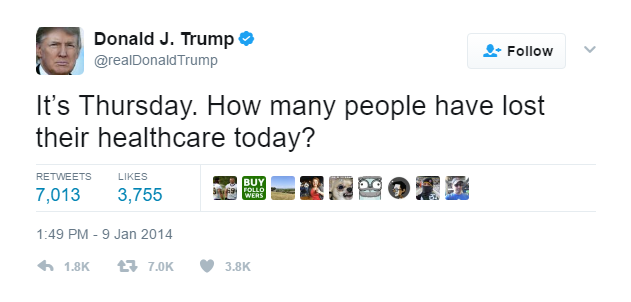
-
2017-05-04 12:20 #685I'll change yer fuckin rate you derivative piece of shit
- Join Date
- Sep 2006
- Posts
- 58,967
- BG Level
- 10
Vote starting in 10 minutes supposedly.
https://www.nytimes.com/interactive/...care-bill.html
-
2017-05-04 12:48 #686I'll change yer fuckin rate you derivative piece of shit
- Join Date
- Sep 2006
- Posts
- 58,967
- BG Level
- 10
Now expected after 2 PM EST.
-
2017-05-04 12:50 #687Ridill
- Join Date
- Aug 2008
- Posts
- 12,467
- BG Level
- 9
- FFXIV Character
- Satori Komeiji
- FFXIV Server
- Sargatanas
- FFXI Server
- Asura

They're not even waiting for the CBO
-
2017-05-04 12:51 #688I'll change yer fuckin rate you derivative piece of shit
- Join Date
- Sep 2006
- Posts
- 58,967
- BG Level
- 10
Nope, that won't be until next week. It'll be fun seeing the new score, which will be horrible just like the last one (this bill isn't that much different).
-
2017-05-04 12:52 #689
Sweaty Dick Punching Enthusiast
- Join Date
- Jan 2006
- Posts
- 3,621
- BG Level
- 7
- FFXI Server
- Unicorn
Of course they aren't waiting for the CBO. This needs to get pushed thru as fast as possible, with as little scrutiny as possible.
-
2017-05-04 12:54 #690I'll change yer fuckin rate you derivative piece of shit
- Join Date
- Sep 2006
- Posts
- 58,967
- BG Level
- 10
-
2017-05-04 13:01 #691Ridill
- Join Date
- Oct 2005
- Posts
- 10,117
- BG Level
- 9
- FFXI Server
- Quetzalcoatl
im feeling sick
-
2017-05-04 13:04 #692I'll change yer fuckin rate you derivative piece of shit
- Join Date
- Sep 2006
- Posts
- 58,967
- BG Level
- 10
People are too confident that this won't pass the Senate.
I mean, this exact bill won't, but the idea that SOMETHING won't pass is being too optimistic.
-
2017-05-04 13:12 #693I'll change yer fuckin rate you derivative piece of shit
- Join Date
- Sep 2006
- Posts
- 58,967
- BG Level
- 10
Vote has begun. Live count here: https://www.nytimes.com/interactive/...care-bill.html
-
2017-05-04 13:16 #694Ridill
- Join Date
- Oct 2006
- Posts
- 18,369
- BG Level
- 9
- FFXIV Character
- Sath Fenrir
- FFXIV Server
- Cactuar
- FFXI Server
- Fenrir
2 dems voted yes as of right now, lol
-
2017-05-04 13:17 #695Ridill
- Join Date
- Oct 2005
- Posts
- 10,117
- BG Level
- 9
- FFXI Server
- Quetzalcoatl
...
-
2017-05-04 13:18 #696Caesar Salad
- Join Date
- Nov 2009
- Posts
- 32,148
- BG Level
- 10
1 changed their vote thank god but wtf...
-
2017-05-04 13:18 #697Ridill
- Join Date
- Oct 2006
- Posts
- 18,369
- BG Level
- 9
- FFXIV Character
- Sath Fenrir
- FFXIV Server
- Cactuar
- FFXI Server
- Fenrir
Looks like they changed their votes, thankfully
Edit: welp
-
2017-05-04 13:18 #698Caesar Salad
- Join Date
- Nov 2009
- Posts
- 32,148
- BG Level
- 10
Anddd it passed. Wow.
-
2017-05-04 13:19 #699Ridill
- Join Date
- Oct 2005
- Posts
- 10,117
- BG Level
- 9
- FFXI Server
- Quetzalcoatl
Daniel NewhauserVerified account @dnewhauser 2m2 minutes ago
216. They got the votes. Cheers in the house chamber. #ahca passes
Jake ShermanVerified account @JakeSherman 55s55 seconds ago
Loud singing of "na Nan a na hey hey hey goodbye" in the house chamber. Seems like it came from Dems
-
2017-05-04 13:21 #700I'll change yer fuckin rate you derivative piece of shit
- Join Date
- Sep 2006
- Posts
- 58,967
- BG Level
- 10
Passed by 2 votes. All of the California Republicans voted for it.
People need to pay for this in 2018.


Similar Threads
-
Moses was the Founding Father of the United States of Texas (Shit Texas Says thread: GTFO FLORIDA)
By 6souls in forum Politics: Advanced ShitpostingReplies: 108Last Post: 2026-10-02, 12:06