 XI Wiki


If it's an honest question...Originally Posted by Zealot

How much of the Old Testament applies to Christians is somewhat up for discussion, but the Bilbical answer is "Not all of it, unless you're an Israelite Jew". The Old Testament Law was broken into several sections, but not particularly neatly. There were National laws, Ceremonial laws, Purity laws, and Moral laws.
Purity laws were rather well addressed in Acts and Romans (at least; I'd have to dig through the other Pauline and deuteroPauline letters to find other explanations), where Paul makes a distinction between Jewish obligations (as God's chosen people), and non-Jewish Christians. It's actually a rather extensive, and at the time divisive, argument within the church. He and Peter had a rather intense argument about it in Acts, but the end result is Paul's argument that non-Jewish Christians are, well, not Jewish, and so should not be Jewish... they should be Christian. Even in the Old Testament, non-Jews living in Israel were excluded from obligations and expectations of purity and ceremonial laws, but not from moral or (most) national laws (some national laws doubled with ceremonial, particularly regarding things like Passover). These laws involved what was clean/unclean, processes for sacrifices, Sabbath observation, and showing proper respect for God.
National laws are most of those dealing with punishment, judiciary practices, etc... Those are Israel-specific, and don't translate elsewhere. These tended to involve retribution, debt, forgiveness of wrongs, property, and things of this sort. Sabbath observation fell here, too.
Moral laws are to be obeyed by Christians, and tend to revolve around not worshiping other gods, sexual purity, charitable obligations, and the general "be excellent to one another". Some questions of proper respect for God also fall here, though these are rather hotly debated in the Church whether most of these are universal, or were culture/church specific-- ie, were the commands given because that was how the culture showed respect, or because that is how all Christians are expected to show respect to God.
All three sets of laws were unchanged by Christ's coming and death (save sacrifices-- those were fulfilled forever).
The biggest issue is where Moral laws and Purity laws have their division. Most Christian scholars draw their distinction by what Jesus, Paul, James, Peter, Luke, or John specifically note in the New Testament as verboden as being the Moral Laws, while most of the eating, clothing, crops, etc... things fall under Purity laws-- things that were designed to separate the Jews from other peoples. ("Holy" doesn't actually mean good-- it means set aside for a specific purpose)
To that end, Exodus, Leviticus, Numbers, and Deuterotomy aren't changed, but parts have an Israel-specific audience, parts have a Jewish-people-specific audience, and parts are universal. Which... is pretty much how they always were. Non-Jews in Israel weren't expected to follow purity laws, but they were held to National laws, and they were expected to follow Moral laws
It's not a question of "pick and choose", so much as attempting to identify what Scripture says about each and maintaining Scriptural consistency.
- Navigation
Results 1881 to 1900 of 3076
-
2018-12-18 22:43 #1881Shootin' rocks at monsters

- Join Date
- Sep 2007
- Posts
- 3,693
- BG Level
- 7
- FFXI Server
- Shiva

-
2018-12-18 23:06 #1882Pseudo-Elitist
- Join Date
- Mar 2008
- Posts
- 3,465
- BG Level
- 7
- FFXI Server
- Leviathan
What could be manlier then two men? Originally Posted by thetruepandagod
-
2018-12-18 23:59 #1883Ridill
- Join Date
- Aug 2008
- Posts
- 12,467
- BG Level
- 9
- FFXIV Character
- Satori Komeiji
- FFXIV Server
- Sargatanas
- FFXI Server
- Asura
 Three men. Originally Posted by Athas
-
2018-12-19 00:07 #1884Ridill
- Join Date
- Aug 2008
- Posts
- 12,467
- BG Level
- 9
- FFXIV Character
- Satori Komeiji
- FFXIV Server
- Sargatanas
- FFXI Server
- Asura
On another note Dave Rubin, Jordan Peterson, and Mike Boudet's Sword and Scale are leaving patreon because of the recent banning of hate speech.
https://www.businessinsider.com/jord...istmas-2018-12
https://graphtreon.com/top-patreon-creators if you want an idea of how big these guys are. Likely they're moving because with Sargon of Akkad gone they've lost a good chunk of their base because of their protest.
-
2018-12-19 02:02 #1885
Sweaty Dick Punching Enthusiast
- Join Date
- Sep 2010
- Posts
- 21,861
- BG Level
- 10
jesoo those Chapo idiots are pulling a mill a year
quick BG let's start a politically economically and historically illiterate podcast to appeal to the dirtbag left
-
2018-12-19 02:18 #1886Ridill
- Join Date
- Aug 2008
- Posts
- 12,467
- BG Level
- 9
- FFXIV Character
- Satori Komeiji
- FFXIV Server
- Sargatanas
- FFXI Server
- Asura
Also just learned Sam Harris's mother created the golden girls. LMAO
https://www.thedailybeast.com/stars-...heir-cash-cows
-
2018-12-19 02:27 #1887
Sweaty Dick Punching Enthusiast
- Join Date
- Sep 2010
- Posts
- 21,861
- BG Level
- 10
Islam is bad because it is the latest mainstream iteration of a religious tradition founded on subservience, obedience, misogyny, slavery, xenophobia, and (worst of all) absolute certainty, with the added benefit of having a war-mongering illiterate who raped a child as its prophet. that it helps inspire some to fly planes into buildings is just the frosting really. Originally Posted by Byrthnoth
-
2018-12-19 05:51 #1888Kevin Chang
- Join Date
- Oct 2007
- Posts
- 10,624
- BG Level
- 9
- FFXI Server
- Sylph

 The truth value of your statements does not refute his core assertion that "You take their kids and put them in a rich liberal democracy, most of the problematic behavior goes away even without converting them all to Christianity." Originally Posted by Andalusian girls
In other words, Islam is not the unique problem, it's the fundamentalism.
-
2018-12-19 05:52 #1889
Christian literature checks a lot of those boxes (def the first three, lots of stuff on how slavery is fine if, I'm sure it has been used to justify xenophobia, and it was cannon for centuries that the Pope was infallible) but doesn't manifest them because it is practiced in western nations. It isn't like women became more central in the Bible over the last century, but their position in western society has changed a lot (away from their Christian-defined oppressed role.) Society regularly turns to religion and says, "That thing you believe... stop believing it."
If you did this "which religion leads to a better culture" comparison in the 12th century, you would be talking about the moral superiority of Islam. In truth, neither religion is good and the concept of an afterlife is culturally toxic.
-
2018-12-19 07:02 #1890Ridill
- Join Date
- Aug 2008
- Posts
- 12,467
- BG Level
- 9
- FFXIV Character
- Satori Komeiji
- FFXIV Server
- Sargatanas
- FFXI Server
- Asura
Also christian priests definitely still do the diddling on kids if you catch my drift.
Dunno about Islam though. Admittedly its not something that's crossed my eyes.
-
2018-12-19 07:43 #1891Caesar Salad
- Join Date
- Nov 2009
- Posts
- 31,764
- BG Level
- 10
Pretty sure fucking little boys is still cool on the dl with whatever Islam calls their priests.
Sent from my SAMSUNG-SM-G935A using Tapatalk
-
2018-12-19 08:43 #1892
- Join Date
- Oct 2006
- Posts
- 22,163
- BG Level
- 10
- FFXIV Character
- Zetanio Breaux
- FFXIV Server
- Gilgamesh
- FFXI Server
- Odin
 Ding ding ding. Originally Posted by Byrthnoth
-
2018-12-19 11:25 #1893Absolute Messenger of Promathia

- Join Date
- Jan 2008
- Posts
- 13,211
- BG Level
- 9
- FFXIV Character
- Blaise Destin
- FFXIV Server
- Sargatanas
- FFXI Server
- Asura
Originally Posted by Fiye

-
2018-12-19 11:52 #1894Absolute Messenger of Promathia
- Join Date
- Jan 2008
- Posts
- 13,211
- BG Level
- 9
- FFXIV Character
- Blaise Destin
- FFXIV Server
- Sargatanas
- FFXI Server
- Asura
I'm not asking you to switch your political leaning or to like Sargon or follow him or even believe what he says in this video, but if you're going to post bullsh*t about someone you should at least take the small amount of time to look at the man and hear his side of the argument from his own mouth. Shit I take the time to read the articles ya'll post where they throw out "Neo nazi", "Alt Right" and "Racist, homophobe" etc like they have a mandated rule in-house to use those words at least 15 times per article at all costs, you can spend 20 minutes watching a video.
Spoiler: show
He's done 4 videos on the subject to argue his point on it, I'm only asking you to watch 1.
-
2018-12-19 12:02 #1895Ridill
- Join Date
- Feb 2007
- Posts
- 15,588
- BG Level
- 9
A fair bit of mayad for what amounts to people exercising their right to tell people, "Not in my house, dawg."
Personally, what pisses me off about shit like Facebook is having to link my mobile games to it. The insinuation this stuff is otherwise socially mandatory speaks rather poorly of your opinion on others, even if it's true some idiots are too addicted to the platforms or take whatever they see as gospel. Otherwise, I've been on the net enough to know it's usually the trolls that like to play the censorship card when their fun and games is suddenly threatened. It isn't hard to be both chill and informative if that's what one is really after.
-
2018-12-19 12:09 #1896Absolute Messenger of Promathia
- Join Date
- Jan 2008
- Posts
- 13,211
- BG Level
- 9
- FFXIV Character
- Blaise Destin
- FFXIV Server
- Sargatanas
- FFXI Server
- Asura
Thats not why people are mayad though. Originally Posted by arus2001
If its easier for you and your sanity to assume such and move on with your life I ain't faulting you for that, sometimes I want to do that too, and I don't blame you for not wanting to play that game all the time. Originally Posted by arus2001
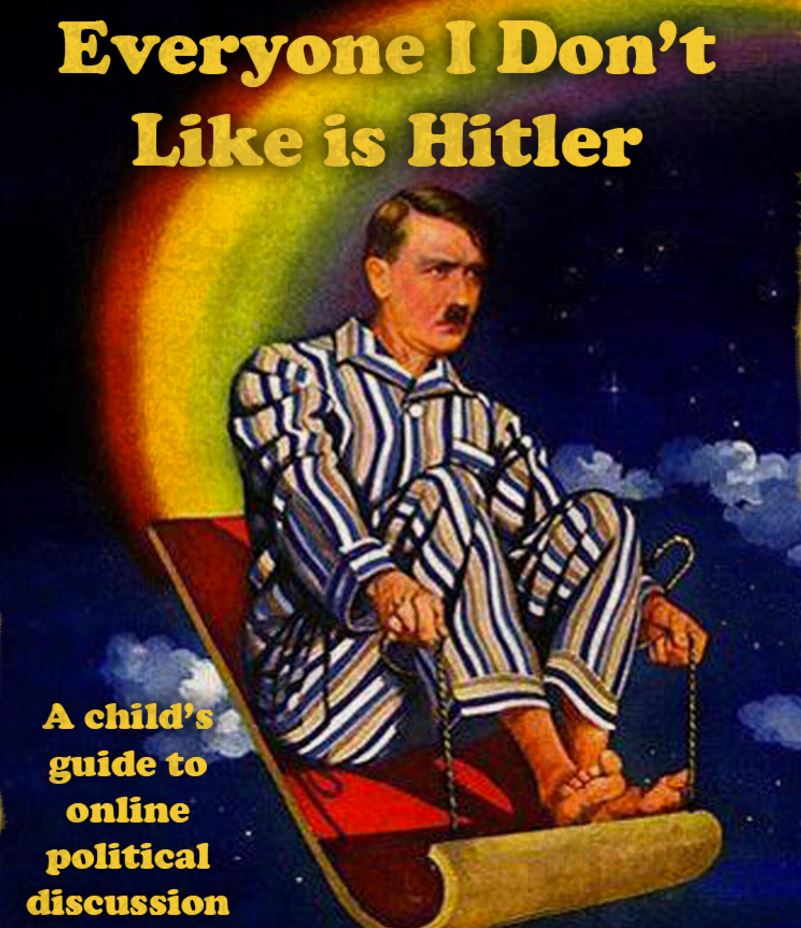
Not that I'm accusing you of this cause I'm not, but my assertion is don't go about spouting uninformed dribble without taking time to see if your original opinion is true, and that doesn't mean going to more heavily biased websites to validate your opinions. Sometimes coming to these threads has me legitimately believing ya'll find 1 or 2 articles from some Left leaning website that paints these people as "The new Hitler" and has 3 tweets plucked from any and all context to back it up and just take it as the word of god without any further research into the topic.
Then again its probably as simple as we have different political views and have different opinions on what does and does not constitute things like Racism, Hate Speech, Homophobia, Sexism etc, and ya'll probably look at me the same way because our views on "Right" and "Wrong" differ in such a degree we seem like madmen to the other.
Edit: From the fact nobodies called me crazy just yet I'm hopeful some of you might actually be watching the Video.
-
2018-12-19 12:12 #1897Ridill
- Join Date
- Apr 2011
- Posts
- 23,594
- BG Level
- 10
- FFXI Server
- Bahamut
-
2018-12-19 12:19 #1898HABS SUCK!!!!!
Sepukku is my Hero
Therrien's Cum Dumpster
- Join Date
- Mar 2005
- Posts
- 37,884
- BG Level
- 10
- FFXI Server
- Gilgamesh

They dont have the time to do that, theyre busy busy parrots repeating everything they see on buzzfeed.
But other people have time to dig through the interwebs to find multiple peer reviewed articles. ¯\_(ツ)_/¯
-
2018-12-19 12:20 #1899Member since 2006 and still can't think of a title.
- Join Date
- Oct 2006
- Posts
- 28,258
- BG Level
- 10
- FFXIV Character
- Acanis Lindri
- FFXIV Server
- Midgardsormr
- FFXI Server
- Bismarck
- WoW Realm
- Kil'jaeden
Jesus, can we add Nynja to the day partial ban of this section at this point?
-
2018-12-19 12:27 #1900Tekki's Bitch
Sweaty Dick Punching Enthusiast
- Join Date
- Mar 2006
- Posts
- 8,981
- BG Level
- 8
almighty allah ur a whingy lad

