 XI Wiki

with science triumphs and nuclear bombs.
- Navigation
Results 1141 to 1160 of 4657
Thread: Thanks Day, very cool!


-
2019-01-04 10:56 #1141

- Join Date
- Oct 2006
- Posts
- 22,163
- BG Level
- 10
- FFXIV Character
- Zetanio Breaux
- FFXIV Server
- Gilgamesh
- FFXI Server
- Odin


-
2019-01-04 11:01 #1142IMPERIAL CONCUBINE OF ME
Coolest Monkey In The Jungle
- Join Date
- Sep 2007
- Posts
- 21,547
- BG Level
- 10
i bet anderson cooper sitting there like "nah I dont think so crazy lady"
-
2019-01-04 12:04 #1143HABS SUCK!!!!!
Sepukku is my Hero
Therrien's Cum Dumpster
- Join Date
- Mar 2005
- Posts
- 37,884
- BG Level
- 10
- FFXI Server
- Gilgamesh
 I thought it was called FREEDOM?
 Originally Posted by Day

-
2019-01-04 12:22 #1144IMPERIAL CONCUBINE OF ME
Coolest Monkey In The Jungle
- Join Date
- Sep 2007
- Posts
- 21,547
- BG Level
- 10
liberation actually
-
2019-01-04 12:22 #1145IMPERIAL CONCUBINE OF ME
Coolest Monkey In The Jungle
- Join Date
- Sep 2007
- Posts
- 21,547
- BG Level
- 10
i feel like AG schooled some peeps on the defense budget one time but i can't remember anything he said
-
2019-01-04 12:25 #1146HABS SUCK!!!!!
Sepukku is my Hero
Therrien's Cum Dumpster
- Join Date
- Mar 2005
- Posts
- 37,884
- BG Level
- 10
- FFXI Server
- Gilgamesh
Go find the posts and copy paste it
-
2019-01-04 12:26 #1147HABS SUCK!!!!!
Sepukku is my Hero
Therrien's Cum Dumpster
- Join Date
- Mar 2005
- Posts
- 37,884
- BG Level
- 10
- FFXI Server
- Gilgamesh
Oops nvm
-
2019-01-04 12:27 #1148IMPERIAL CONCUBINE OF ME
Coolest Monkey In The Jungle
- Join Date
- Sep 2007
- Posts
- 21,547
- BG Level
- 10
no u Originally Posted by NynJa
-
2019-01-04 13:04 #1149Ridill
- Join Date
- Apr 2011
- Posts
- 23,594
- BG Level
- 10
- FFXI Server
- Bahamut
I don't know what he posted but here's my take. Originally Posted by Day
First both Social security and medicare beat it. Granted there is likely more fat in military spending but it's not exactly the biggest thing to go after
Second it's kind of weird. Like not all defense budget is for the military on the other hand a few military or defense adjacent things are paid from other budgets as well like VA or DoE as well as work done by FBI etc. Though some of that is arguable as it's not like we'd drop the DHS or FBI or could renege on retirement/VA stuff etc
Third our spending in terms of percent of GDP last time we were significantly lower was right before WW2 with us being more overall semi steady in recent years with us being pretty close to what we were at the end of the cold war
Fourth military suffers from a lot that same flaw in a lot of government expenditures. That not only use it or lose but also get even less budget next year way of doing things... and of course non competitive contracting and supplies etc
Lastly the countries that do spend less per GPD than us are basically relying on our presence to keep away those that spend way more than us.
-
2019-01-04 13:14 #1150Duplicitous Jew with Political Aspirations
- Join Date
- Dec 2015
- Posts
- 18,629
- BG Level
- 9

I have a strange idea
We could spend money on creating a global economic structure that massively disincentivizes warfare, especially against us and our allies, so as to make defense spending increasingly unnecessary and allow us to maintain power through means other than direct or implied force, and indeed shift the planet toward an ideology that forestalls any action against us because of the massive social and economic penalties it would incur.
I'd love to take credit for that so I will, but also China is already doing it to wild success.
-
2019-01-04 13:25 #1151Ridill
- Join Date
- Aug 2008
- Posts
- 12,467
- BG Level
- 9
- FFXIV Character
- Satori Komeiji
- FFXIV Server
- Sargatanas
- FFXI Server
- Asura

No one can stop the Skillcraft lobby.
-
2019-01-04 13:59 #1152Tekki's Bitch
Sweaty Dick Punching Enthusiast
- Join Date
- Mar 2006
- Posts
- 8,979
- BG Level
- 8
Originally Posted by Day
well, he's right.
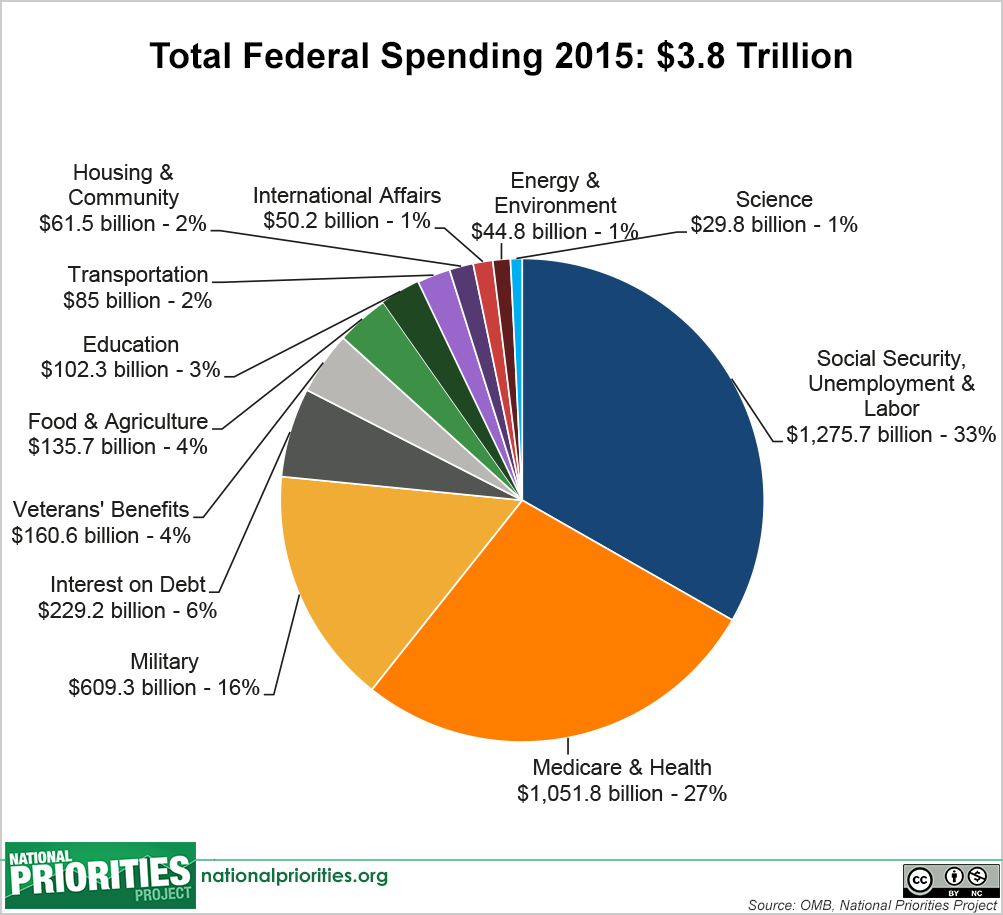
this is simply fact. a bad look for a man who wants to throw 1 trillionish atop the debt over the next ten years for tax reform, but our healthcare entitlements cost that much every year. social security is insolvent, healthcare costs are skyrocketing, debt repayment consumes an ever larger proportion of the budget, and sometime between 2030-2040 this mandatory spending will consume 100% of tax revenue. entitlement reform is not optional.it's the health care entitlements that are the big drivers of our debt, so we spend more time on the health care entitlements - because that's really where the problem lies, fiscally speaking.Classic Fiye Hereentirely true nonsense, thankyouverymuch.
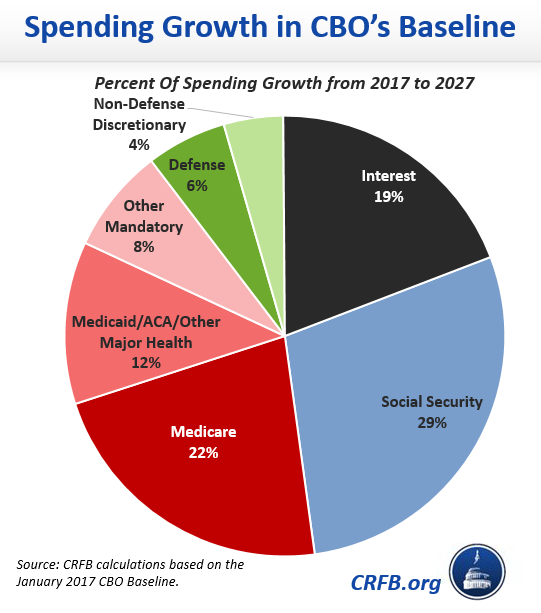
i know i am a broken record but look at the CBO's projections. entitlements and servicing the debt will consume 100% of tax revenues within roughly two decades. that is with $0.00 spent on the military, that is with dispensing with the $100 billion annual deficit increase the tax cuts will (likely) engender.
if he was truly as fiscally conservative as he claims he would have made the tax reform revenue neutral, and taken a gander at military spending. if a ship is sinking from three large holes one does not poke another little hole next to them and expect to float. but every fiscal issue facing the federal government is minor compared to entitlements.
Maybe we could use those Trillions in cut taxes and put them towards funding and reforming social benefits.
Hmmmm nah.the entirety of the cost of the tax cuts would not fund healthcare entitlements for even a single year.
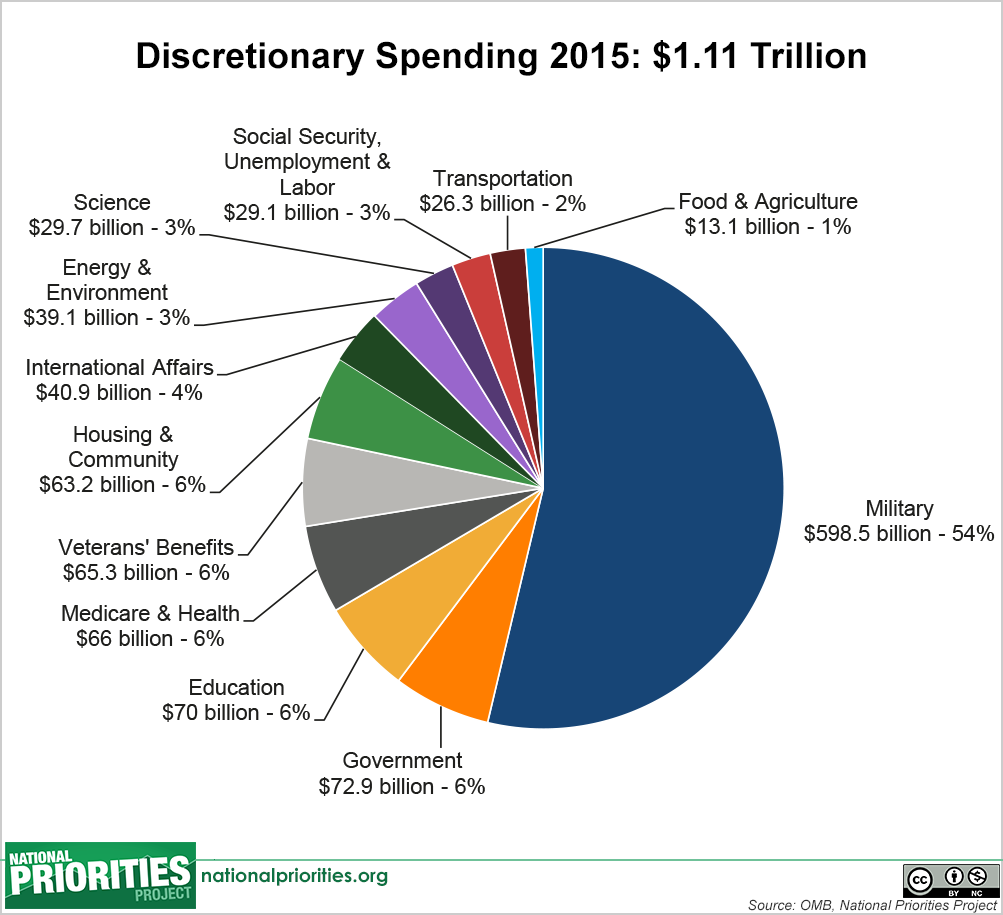
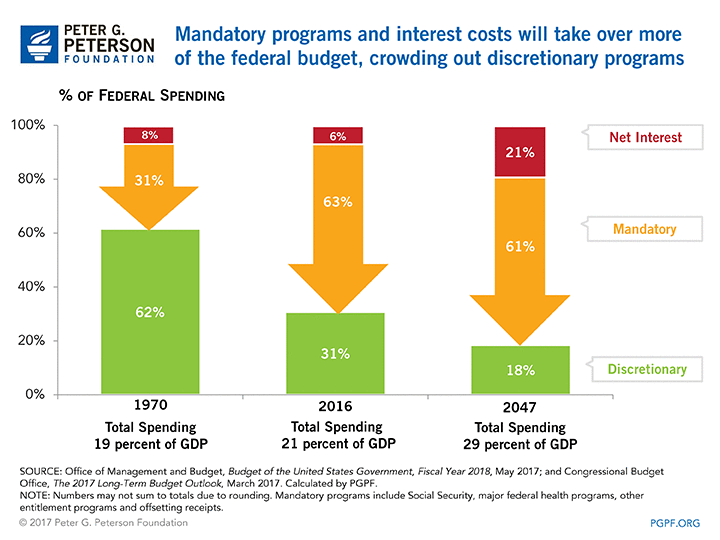
i concur it was grossly irresponsible to cast away a trillion dollars when our financial outlook is already bleak, and Republicans thinking targeting other discretionary spending in welfare will prove a fiscal panacea is absurd. all discretionary spending is only 31% of the federal budget and that proportion is in free-fall. the ship cannot be righted with it no matter what it is cut.not to be too much of a dick but i think many people simply do not have a good grasp of the federal budget.
images may serve where my words fail
many people think this is the federal budget, but this is not the federal budget. this is 31% of the federal budget. now if one seeks cuts in that 31%, there are 10 aircraft carrier sized elephants in the room.
This is the federal budget.
this is the rather shocking collapse in discretionary spending over time as our demographics shift in a way the creators of our entitlement programs never imagined.
and finally, what is driving the federal government's inability to balance a budget
-
2019-01-04 14:00 #1153Tekki's Bitch
Sweaty Dick Punching Enthusiast
- Join Date
- Mar 2006
- Posts
- 8,979
- BG Level
- 8
this was also when we learned that kurosan had no idea what social security actually was
-
2019-01-04 14:05 #1154Ridill
- Join Date
- Aug 2008
- Posts
- 12,467
- BG Level
- 9
- FFXIV Character
- Satori Komeiji
- FFXIV Server
- Sargatanas
- FFXI Server
- Asura
Go invest in some bitcoin. Originally Posted by thetruepandagod
-
2019-01-04 14:07 #1155IMPERIAL CONCUBINE OF ME
Coolest Monkey In The Jungle
- Join Date
- Sep 2007
- Posts
- 21,547
- BG Level
- 10
you a fuckin saint
-
2019-01-04 14:10 #1156Tekki's Bitch
Sweaty Dick Punching Enthusiast
- Join Date
- Mar 2006
- Posts
- 8,979
- BG Level
- 8
In the dark times of senora Ocasio I feel this is also a good exchange to bring back.
AG
Ringthreetaxation has two fundamental effects, it raises revenue and it discourages the production and consumption of the good or service that is being taxed. as such corporate taxation is one of if not the worst conceivable ways to fund government as it specifically retards the economic activity most responsible for the generation of jobs and capital.
progressive types often bemoan what they view as the inequity of the situation, a combined statutory rate of 39.4% on all corporate profit yet an effective rate of something like 19%-25% as corporations aggressively pursue subsidies, deductions, and foreign tax havens. what is lost is that the statutory rate is the exact reason corporations engage in what is viewed as unethical behavior and when the cost to comply is less than the cost to evade they will become paragons of acquiescent virtue, with a host of concomitant salutary reverberations.
from a corporate perspective acquiring a foreign company for a one-time expenditure of 5% of annual profit to be used for a corporate inversion (a particularly reviled form of tax evasion) that allows them to utilize a tax rate 15% lower than the U.S. rate is an entirely rational, perhaps inevitable, sequence of events given the perverse incentives of our current tax code. a code where one is punished with a brutally punitive rate when playing by the rules yet one excels when they begin sinking costs into non-relevant operations like maintaining floors full of accountants lobbyists and lawyers to game the system, a code where the profitability and productivity of American workers has to gap the distance between our 39.4% rate and Ireland's 12.5% rate when Intel is trying to decide where to build a manufacturing site.
for the good of the country the corporate tax rate ought be lowered, drastically, and most deductions and exemptions eliminated, reducing the incentives for corporations to base operations overseas or maintain their bloated tax evasion apparatuses. moreover, the more profitable and simpler-to-operate-in business environment would generate an influx of foreign investment as non-American corporations sought to outsource their production into the largest of the world's markets, a phenomenon inexorably witnessed in smaller and lesser economies which have reduced and simplified their corporate tax structure.
Bernie's plan is standard fare for him, simply enforce the current destructive rate (the highest in the entire world besides the mercantile powerhouses of Chad and the United Arab Emirates) through rigid bureaucratic coercion, an economically illiterate appeal to populist rage that would wound those for whom he professes to careAGI disagree with this on an economic and perception level. I am about to head to work, but I will expand later if you want to engage in the discussion.
SOME taxation may actually cause this, but on a fundamental level taxation is often preferable to assuming certain costs on an individual/business level. Taxation has inherent economies of scales that even the largest businesses can't match.
We can debate what level the taxes should be at, but even the most ardent anti-tax theorist believe that some taxation is necessary for a business environment to even exist (e.g. Noziak). The problem is that these benefits have become so ingrained that business now assume them to be free.
Roads, access to electricity, even the mail, police, military, courts, hell even the social safety net.
I am not disputing the nature of our specific corporate tax structure (which needs to have many different identifiable balancing points, and is not as simple as you make it out to be) but you made a completely incorrect blanket statement about the nature of taxation.
quickletit defies comprehension how you could so badly misunderstand what i wrote that you think i was advocating for zero taxation or implying the government never does anything of value with the revenue raised.
AGI think we're seeing more and more evidence that we're actually undertaxed and it's having a detrimental effect on the economy. Most people should be paying a little more, the well-off should be paying substantially more, and public services and investment should not be systematically underfunded the way they appear to be now.
I know it's not a popular idea because nobody likes paying more taxes, but it just seems like the historically low tax rates we've had over the past 15 years have not brought the kind of growth they've promised, at least not to the middle-class.
we need to move beyond the constrictive dichotomy of higher or lower taxes as the be all end all discussion of the tax code. it is certainly a relevant component and one can make the argument we need to increase our share of government revenue as % of GDP, which as you say was a few percentage points lower during the 2000s and 2010s than the post-World War II historical average (though it is presently on the rise); you can even make the argument a European-style social democracy would be of net societal benefit so that historical mean itself is too low for the demands of a 21st century citizenry, but the argument you cannot make is that the additional revenue raised ought come from an increase in the effective corporate tax rate.
as outlined above corporate tax is the single most destructive form of taxation, it incentives outsourcing and non-business related expenditures in efforts to game the system while discouraging foreign investment and presenting both higher prices to consumers as businesses pass along the cost of the tax and fewer jobs to workers as corporations move operations overseas. it is the least productive form of raising revenue in an increasingly globalized economy where nations compete against one another for jobs and capital, and the recognition of this competitive downward pressure has led even heavily taxed social democracies such as Canada and Sweden to cut their corporate tax rates to 15% and 22% respectively, while making up for the revenue shortage with less toxic forms of taxation--income tax, property tax, excise taxes, value added taxes, estate tax, even capital gains taxes, none so directly retard economic activity and so all are preferable.
the discussion on this page readily illuminates how rudimentary discussion of taxation has become in this nation, even relative to the low standards of most political discourse. make noises about lowering and simplifying through deduction elimination a specific aspect of the tax code and the cry of voodoo economics goes into the air by the left. conversely if this forum were a bastion of conservative rather than liberal thought and one were to suggest the revenue shortfall from, say, halving the corporate tax rate should be made up with increased income taxes on high-earners, or a VAT tax, or increasing the tax of death, the cry of tyranny would resound through the air.
the most significant issue with our system of taxation is not that we are taxed too much or too little but that we are taxed so stupidly.
-
2019-01-04 14:12 #1157Tekki's Bitch
Sweaty Dick Punching Enthusiast
- Join Date
- Mar 2006
- Posts
- 8,979
- BG Level
- 8
u should write for forbes Originally Posted by Fiye
https://www.forbes.com/sites/billyba.../#3277f7d369c7
-
2019-01-04 14:14 #1158Ridill
- Join Date
- Aug 2008
- Posts
- 12,467
- BG Level
- 9
- FFXIV Character
- Satori Komeiji
- FFXIV Server
- Sargatanas
- FFXI Server
- Asura
I won't be satisfied until I take Clint Cillizza's position. Originally Posted by thetruepandagod
-
2019-01-04 14:14 #1159Duplicitous Jew with Political Aspirations
- Join Date
- Dec 2015
- Posts
- 18,629
- BG Level
- 9
One of my primary, if not the single greatest driver of the initiative behind my want to be a lawmaker, is the knowledge that we spend too much on too little.
-
2019-01-04 14:27 #1160Ridill
- Join Date
- Aug 2008
- Posts
- 12,467
- BG Level
- 9
- FFXIV Character
- Satori Komeiji
- FFXIV Server
- Sargatanas
- FFXI Server
- Asura
This is why you failed. Your desire should be the ability to post without care and without repercussion. Originally Posted by Zealot


Similar Threads
-
Thanks Kanye, very cool!
By Day in forum Ragnell Middle Finger Memorial ForumReplies: 3622Last Post: 2018-12-19, 21:39 -
Let us all give thanks this day....
By shepardG in forum Ragnell Middle Finger Memorial ForumReplies: 60Last Post: 2012-11-23, 20:36