 XI Wiki


https://www.mprnews.org/story/2019/0...t-trumps-tweetOriginally Posted by Melena

https://twitter.com/Marco_Langbroek/...09039872475136
An amateur satellite tracker from the Netherlands has identified the one used to take this photo.
The image almost certainly came from a satellite known as USA 224, according to Marco Langbroek, a satellite-tracker based in the Netherlands. The satellite was launched by the National Reconnaissance Office in 2011. Almost everything about it remains highly classified, but Langbroek says that based on its size and orbit, most observers believe USA 224 is one of America's multibillion-dollar KH-11 reconnaissance satellites.
"It's basically a very large telescope, not unlike the Hubble Space Telescope," Langbroek says. "But instead of looking up to the stars, it looks down to the earth's surface and makes very detailed images."
A small community of amateur satellite trackers was far more interested in the picture than the words. These individuals use backyard telescopes to watch satellites whizzing across the sky, and they know where most of them are—even classified ones like USA 224. "They're super bright in the sky and are easy to find," says Michael Thompson, a graduate student in astrodynamics at Purdue University who spots satellites in his spare time. Once a satellite is seen, it's relatively easy to work out exactly where it will be at any point in future. "Using math to calculate an orbit is really easy," he says.
Langbroek went further still. He was able to reconstruct the picture taken by USA 224 by matching the obliqueness of the circular launch pad in the image tweeted by Trump. His calculation showed that the photo was taken from the vantage of USA 224. Langbroek and another online researcher, Christiaan Triebert, also used shadows cast by towers around the launch pad as sun dials—allowing them to verify the time at which the photo was taken.
Both techniques suggest the pictures were snapped by USA 224, which flew near the site at 2:14 PM local time. "The match was perfect, basically," Langbroek says.
- Navigation
Results 2161 to 2180 of 3003
-
2019-09-02 13:06 #2161BG Content

- Join Date
- Oct 2005
- Posts
- 69,794
- BG Level
- 10
- FFXIV Character
- Six Souls
- FFXIV Server
- Gilgamesh
- FFXI Server
- Quetzalcoatl
- WoW Realm
- Malorne
- Blog Entries
- 9


-
2019-09-02 13:37 #2162Ridill

- Join Date
- Feb 2008
- Posts
- 10,419
- BG Level
- 9
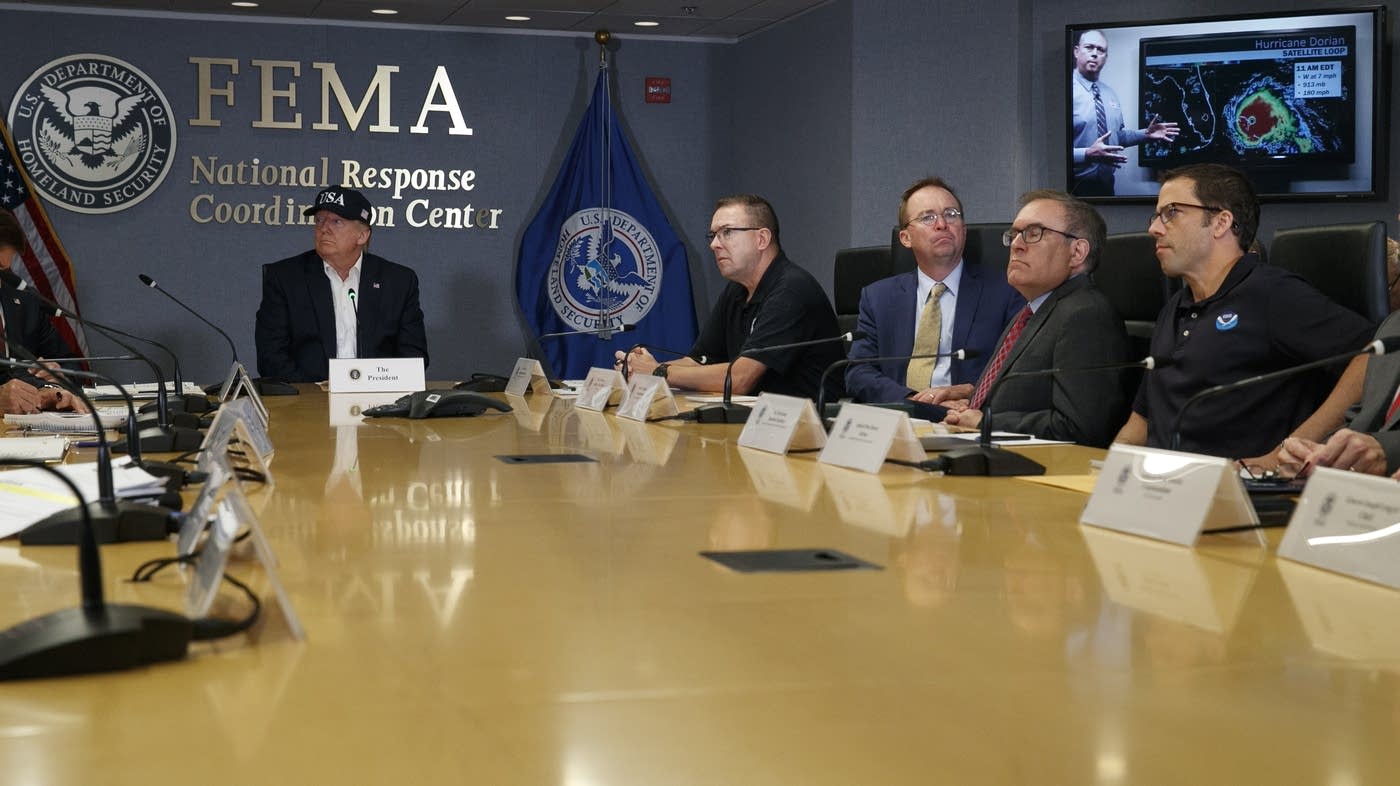
Trump in a new conference told people that the storm was going to hit Alabama.
-
2019-09-02 14:19 #2163BG Content
- Join Date
- Oct 2005
- Posts
- 69,794
- BG Level
- 10
- FFXIV Character
- Six Souls
- FFXIV Server
- Gilgamesh
- FFXI Server
- Quetzalcoatl
- WoW Realm
- Malorne
- Blog Entries
- 9
-
2019-09-02 19:27 #2164Ridill
- Join Date
- Aug 2008
- Posts
- 12,467
- BG Level
- 9
- FFXIV Character
- Satori Komeiji
- FFXIV Server
- Sargatanas
- FFXI Server
- Asura

https://twitter.com/maggieNYT/status...17178636800000
Seems like a bold strategy.A Trump adviser, who spoke on the condition of anonymity, said weeks ago that the president, whose own approval ratings have stayed upside down, needs voters to feel negatively not just about his opponents but about longstanding institutions > https://twitter.com/realDonaldTrump/...99355248205826
-
2019-09-02 19:56 #2165I'll change yer fuckin rate you derivative piece of shit
- Join Date
- Sep 2006
- Posts
- 58,752
- BG Level
- 10
I'm just laughing trying to imagine Trump earnestly saying "longstanding institutions"
Sent from my SM-G930V using Tapatalk
-
2019-09-03 05:01 #2166Sandworm Swallows
- Join Date
- Dec 2007
- Posts
- 7,133
- BG Level
- 8
Not sure if posted here, but it's nice to have some good stuff somewhere.
https://www.nytimes.com/2019/08/21/u...ent-loans.html
President Trump signed a measure on Wednesday that seeks to remove the bureaucratic barriers for permanently disabled veterans to qualify for student loan forgiveness, which he said would save 25,000 wounded warriors an average of $30,000.
-
2019-09-03 06:40 #2167BG Medical's Student of Medicine
- Join Date
- Oct 2006
- Posts
- 34,671
- BG Level
- 10
I'm actually okay with this, but most veterans don't have the problem of student loan forgiveness compared to the general population on account of the GI Bill. Military peeps correct me if I'm wrong. Originally Posted by Yabby
-
2019-09-03 07:06 #2168Sandworm Swallows
- Join Date
- Aug 2007
- Posts
- 7,117
- BG Level
- 8
- FFXIV Character
- Litz Zatsuza
- FFXIV Server
- Sargatanas
- FFXI Server
- Sylph
I joined the military after I took out student loans but generally most kids join young before they do it so generally not an issue unless they try going to a really expensive school that can't be fully covered.
-
2019-09-03 12:37 #2169BG Content
- Join Date
- Oct 2005
- Posts
- 69,794
- BG Level
- 10
- FFXIV Character
- Six Souls
- FFXIV Server
- Gilgamesh
- FFXI Server
- Quetzalcoatl
- WoW Realm
- Malorne
- Blog Entries
- 9
US factory activity unexpectedly slowed last month for the first time in 3 years — and Trump's trade war was the main culprit.
https://www.insider.com/ism-manufact...ade-war-2019-9
Corporations lack confidence in the market due to the Trade War.
-
2019-09-04 04:20 #2170
- Join Date
- Jul 2007
- Posts
- 58,002
- BG Level
- 10
- FFXI Server
- Ifrit
https://www.washingtonpost.com/world...a86_story.html
Defense Secretary Mark T. Esper agreed Tuesday to free up $3.6 billion from the Pentagon budget for President Trump’s border wall by effectively defunding 127 military construction projects using emergency authorities.
Esper determined that the use of the military construction funds was necessary to support American forces deployed to the southern border with Mexico under the national emergency that Trump declared in mid-February. The formal determination allows Trump, under an obscure statute in the federal code overseeing the military, to tap the funds appropriated for other purposes without sign-off from Congress.
The Pentagon declined to disclose which projects would be defunded. Chief Pentagon spokesman Jonathan Rath Hoffman said the list would be made available later this week after the Defense Department notifies lawmakers with affected projects in their districts and foreign embassies with affected projects in their countries.
-
2019-09-04 08:51 #2171BG Content
- Join Date
- Oct 2005
- Posts
- 69,794
- BG Level
- 10
- FFXIV Character
- Six Souls
- FFXIV Server
- Gilgamesh
- FFXI Server
- Quetzalcoatl
- WoW Realm
- Malorne
- Blog Entries
- 9
That's a lot of paint.
-
2019-09-04 08:55 #2172I like to eat food
- Join Date
- Jun 2007
- Posts
- 9,064
- BG Level
- 8
I'm sure they'll be psyched. Originally Posted by Cail
-
2019-09-04 09:00 #2173Hackey Thread Lurker since 2010
- Join Date
- Dec 2005
- Posts
- 8,924
- BG Level
- 8
"We're going to build a wall and the US military is going to pay for it" doesn't have the same impact as the campaign trail version.
-
2019-09-04 09:50 #2174Sandworm Swallows
- Join Date
- Dec 2007
- Posts
- 7,133
- BG Level
- 8
By doing so, they are showing they can cut military spending right? Because that is what it looks like to me.
-
2019-09-04 09:52 #2175
Sweaty Dick Punching Enthusiast
- Join Date
- Jan 2006
- Posts
- 3,617
- BG Level
- 7
- FFXI Server
- Unicorn
"If those socialist, anti American Democrats in congress would just hand over tens of billions to fund this wall we could finally get a bill to send to Mexico. They would totally pay for it, promise. Besides, think of all the families we wouldn't have to separate if there were only a wall!"
- Stable Genius
-
2019-09-04 09:52 #2176I like to eat food
- Join Date
- Jun 2007
- Posts
- 9,064
- BG Level
- 8
You could see it that way, but if they're actually taking the funding from projects, that may need to be cancelled completely, is the trade off worth it?
What was being constructed that they are no longer moving forward with? Is it being cancelled completely, or just amended? etc.
-
2019-09-04 09:55 #2177
Sweaty Dick Punching Enthusiast
- Join Date
- Jan 2006
- Posts
- 3,617
- BG Level
- 7
- FFXI Server
- Unicorn
I expect just the opposite. Next round of funding will include a $50b increase to make up for the shortfall cause by re-appropriating these funds, plus more to further increase border security (national security issue after all). Plus we should heavily militarize our border patrol folks, it's not fair that they don't have armored assault vehicles to jump out of all cool like. Originally Posted by Yabby
-
2019-09-04 14:16 #2178Electric Six groupie
- Join Date
- Sep 2007
- Posts
- 5,451
- BG Level
- 8
- FFXIV Character
- Jayne Barsala
- FFXIV Server
- Lamia
Any infrastructure work that is under construction that will now be on hold will likely deteriorate or fall into a state of disrepair that would end up costing the US more than the initial project. Let's not forget inflation, labor, and material cost increases due to any long-term delay.
-
2019-09-04 15:20 #2179BG Content
- Join Date
- Oct 2005
- Posts
- 69,794
- BG Level
- 10
- FFXIV Character
- Six Souls
- FFXIV Server
- Gilgamesh
- FFXI Server
- Quetzalcoatl
- WoW Realm
- Malorne
- Blog Entries
- 9
https://news.yahoo.com/exclusive-doc...170050594.html
The FBI is treating any group protesting the the U.S.'s immigration policy at the border as an extremist group.
-
2019-09-04 19:35 #2180BG Content
- Join Date
- Oct 2005
- Posts
- 69,794
- BG Level
- 10
- FFXIV Character
- Six Souls
- FFXIV Server
- Gilgamesh
- FFXI Server
- Quetzalcoatl
- WoW Realm
- Malorne
- Blog Entries
- 9
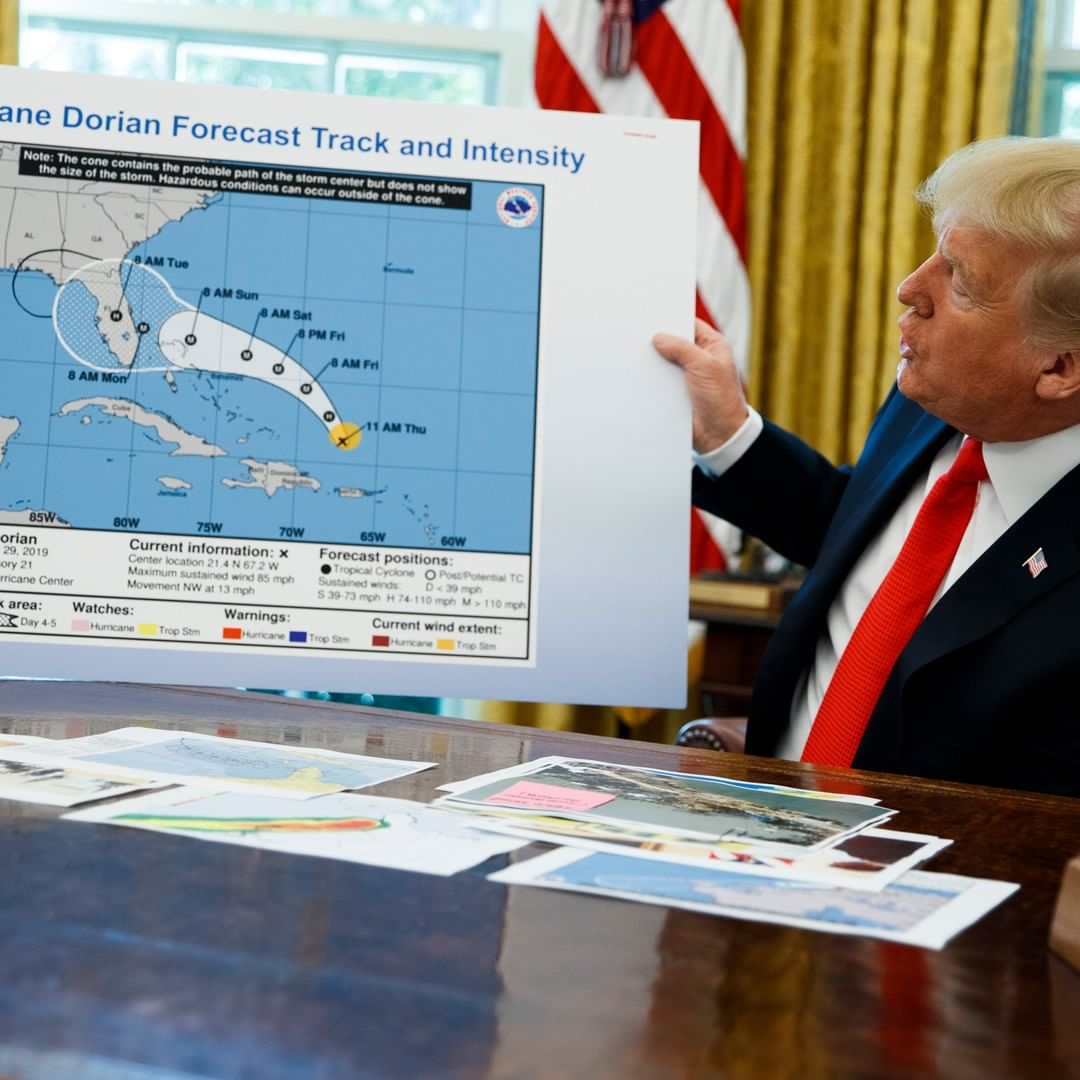
Trump took a sharpie to a hurricane projection map in an attempt for it to fit his Alabama narrative. Originally Posted by Dantrag


Similar Threads
-
Predisent Donald J. Skroob: Episode VIII: I'm Surrounded By Hamberders
By 6souls in forum Politics: Advanced ShitpostingReplies: 3171Last Post: 2019-06-13, 16:45 -
Predisent Donald J. Trump: Episode VII: Space Force Awakens | Keep Trumpy Bear Great
By 6souls in forum Politics: Advanced ShitpostingReplies: 3012Last Post: 2019-01-01, 19:31 -
Predisent Donald J. Trump: Episode VI: Return of the Wall
By 6souls in forum Politics: Advanced ShitpostingReplies: 3027Last Post: 2018-09-26, 13:52 -
Predisent Donald J. Trump: Episode V: Trade Wars Strike Back: Kanye's Opioid Addiction Support Group
By 6souls in forum Politics: Advanced ShitpostingReplies: 2990Last Post: 2018-06-26, 01:58 -
Predisent Donald J. Trump: Drone Wars Episode IV: A New Button
By Sonomaa in forum Politics: Advanced ShitpostingReplies: 3024Last Post: 2018-04-02, 09:33 -
Predisent Donald J. Trump: Drone Wars Episode III: Revenge of Bernie Would Have Won
By BaneTheBrawler in forum Politics: Advanced ShitpostingReplies: 4989Last Post: 2018-01-04, 09:49 -
Predisent Donald J. Trump: James Comey and the Giant Peach Part II: The Ripening
By BaneTheBrawler in forum Politics: Advanced ShitpostingReplies: 4642Last Post: 2017-08-03, 16:25