 XI Wiki


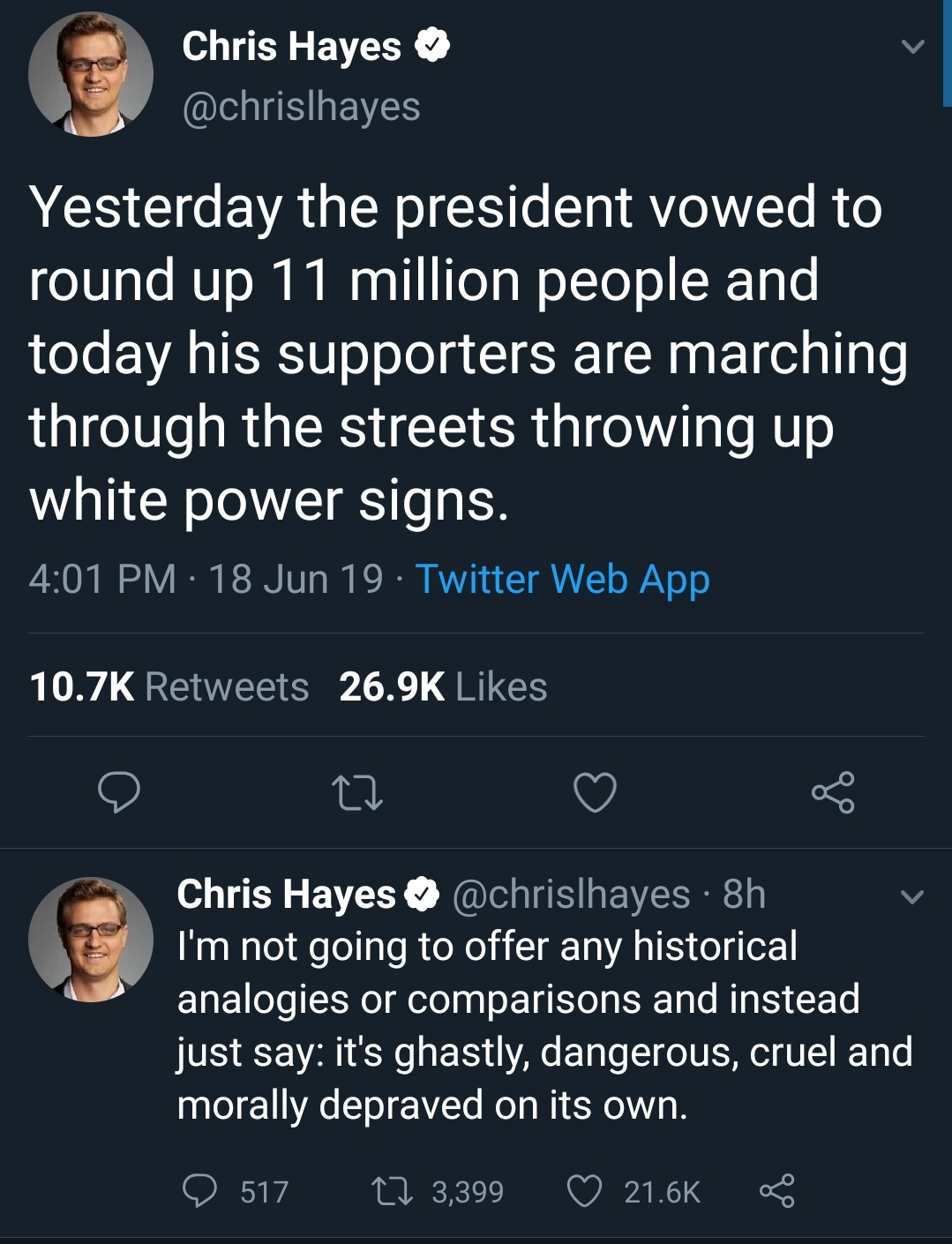
It's not like we're saying OK sign is only racist now anyway. If people wanna use it to say something is OK, thats totally cool. But when racists are marching down the streets using it to show people they are racist, like, wtf? Thats the meaning they want it to have, so in that instance, thats the meaning it has.
Or lets just say swastikas are never racist because it meant something nice to Buddhists.
- Navigation
Results 61 to 80 of 3003
-
2019-06-19 07:40 #61Old Odin

- Join Date
- Jun 2008
- Posts
- 6,086
- BG Level
- 8
- FFXI Server
- Bismarck

-
2019-06-19 07:54 #62Ridill
- Join Date
- Aug 2008
- Posts
- 12,467
- BG Level
- 9
- FFXIV Character
- Satori Komeiji
- FFXIV Server
- Sargatanas
- FFXI Server
- Asura

https://twitter.com/GOPChairwoman/st...963990528?s=19
The grift is paying off. 24.8 million raised in 24 hours.
-
2019-06-19 08:06 #63BG Medical's Student of Medicine
- Join Date
- Oct 2006
- Posts
- 34,664
- BG Level
- 10
The comments on that are just fucking mind-boggling.
-
2019-06-19 08:44 #64Brown Recluse
Sweaty Dick Punching Enthusiast
- Join Date
- May 2006
- Posts
- 28,231
- BG Level
- 10
- FFXI Server
- Unicorn
 Originally Posted by Fiye
 And Republicans got outraged at AOC because she said the border cages reminded her of concentration camps. Originally Posted by archibaldcrane
Remember when that guy demonized a race of people, used scare tactics to get followers, put a concentration of a race in camps, and empowered aryans. Hitler did it too.
-
2019-06-19 09:00 #65Weaboo of the House of Weave
- Join Date
- Mar 2005
- Posts
- 10,322
- BG Level
- 9
- FFXIV Character
- Arthur Pendragon
- FFXIV Server
- Gilgamesh


Well he's right at least that I'm driven by hatred and want to destroy America as it stands. His America at least. Burn that bitch to the god damn ground.
-
2019-06-19 09:46 #66BG Content

- Join Date
- Oct 2005
- Posts
- 69,782
- BG Level
- 10
- FFXIV Character
- Six Souls
- FFXIV Server
- Gilgamesh
- FFXI Server
- Quetzalcoatl
- WoW Realm
- Malorne
- Blog Entries
- 9
 That's a bit less than the $100M his campaign said would be raised. Originally Posted by Fiye
-
2019-06-19 10:53 #67Banned.

- Join Date
- Jan 2009
- Posts
- 3,872
- BG Level
- 7
- FFXI Server
- Shiva
- WoW Realm
- Kil'jaeden
is anyone being rounded up that's not already under active deportation orders? that's something i'd like to see
to be clear, since the people who are going to respond to me will have 0 idea what an active deportation order is.. that means they had their day in court to try to immigrate and were denied for some reason or another. this has nothing to do with them waiting to see a judge
-
2019-06-19 10:55 #68BG Medical's Student of Medicine
- Join Date
- Oct 2006
- Posts
- 34,664
- BG Level
- 10
Can you explain the difference, for those that have 0 idea? It sounds like a demeaning way of telling everyone "Are they deporting people who weren't already ordered deported"? Originally Posted by D44kpunk
-
2019-06-19 10:57 #69Banned.
- Join Date
- Jan 2009
- Posts
- 3,872
- BG Level
- 7
- FFXI Server
- Shiva
- WoW Realm
- Kil'jaeden
https://www.nolo.com/legal-encyclope...val-final.html Originally Posted by kuronosan
i had read that these and the people who have skipped their court dates in the appellate process are the ones being removed from the US.
also, if you aren't familiar with the deportation process i have no idea why you'd give your 2 cents on it. sounds like they are just expediting something that was already scheduled to happen and potentially giving more man-power to doing so.
if they are deporting people who have not had their day in court / not been able to go through the appellate process that would be something of interest. until that is the case though you're just falling for sensationalist bullshit
-
2019-06-19 11:13 #70BG Content
- Join Date
- Oct 2005
- Posts
- 69,782
- BG Level
- 10
- FFXIV Character
- Six Souls
- FFXIV Server
- Gilgamesh
- FFXI Server
- Quetzalcoatl
- WoW Realm
- Malorne
- Blog Entries
- 9
https://www.mprnews.org/story/2019/0...l-fired-plants
The EPA has unveiled a new plan for less federal government oversight over coal power plants and shifting the responsibility to states.
Environmental Protection Agency chief Andrew Wheeler, a former coal industry lobbyist, signed a replacement rule that gives states leeway in deciding whether to require efficiency upgrades at existing coal plants.
Wheeler said coal-fired power plants remained essential to the power grid, something that opponents deny. "Americans want reliable energy that they can afford," he said at a news conference. There's no denying "the fact that fossil fuels will continue to be an important part of the mix," he said.
Rep. David McKinley, R-W.Va. was one of several coal country lawmakers on hand for the signing. He argued that power from the sun and wind was not yet reliable enough to depend on. "We're not ready for renewable energy ... so we need coal."
"This action is recalibrating EPA so it aligns with being the agency to protect public health and the environment in a way that respects the limits of the law," said Mandy Gunasekara, a former senior official at the EPA who helped write the replacement rule. She now runs a nonprofit, Energy45, that supports President Donald Trump's energy initiatives.
"The Clean Power Plan was designed largely to put coal out of business," Gunasekara said. Trump's overhaul is meant to let states "figure out what is best for their mission in terms of meeting modern environmental standards" and providing affordable energy, she said.
An Associated Press analysis Tuesday of federal air data showed U.S. progress on cleaning the air may be stagnating after decades of improvement. There were 15% more days with unhealthy air in America both last year and the year before than there were on average from 2013 through 2016, the four years when America had its fewest number of those days since at least 1980.
The EPA's own regulatory analysis last year estimated that Trump's replacement ACE rule would kill an extra 300 to 1,500 people each year by 2030, owing to additional air pollution from the power grid.
-
2019-06-19 11:32 #71Caesar Salad
- Join Date
- Nov 2009
- Posts
- 31,804
- BG Level
- 10
Not that we have much choice, but I'm playing the wait and see approach to the deportations trump says is about to happen. I have zero confidence he will exclude asylum seekers or those waiting on court dates.
Sent from my SM-G975U using Tapatalk
-
2019-06-19 11:41 #72Banned.
- Join Date
- Jan 2009
- Posts
- 3,872
- BG Level
- 7
- FFXI Server
- Shiva
- WoW Realm
- Kil'jaeden
he has threatened mass deportations since he took office and we've seen marginal increases of deportations and not much more. i expect nothing to happen, being outraged all the time over shit like this must be exhausting. idk how you guys do it. during his presidency trump hasn't even hit obama's numbers of deportation. think 2012 obama deported 400k, trumps highest year has been 270k~
https://www.cnn.com/2019/06/19/polit...ons/index.html
heres an article with an annoying ass auto play video
-
2019-06-19 11:55 #73Caesar Salad
- Join Date
- Nov 2009
- Posts
- 31,804
- BG Level
- 10
Idk why you always gotta be so dense about it. No one here is complaining about deportations of people who have done shit worthy of getting deported, were complaining because people who have a legal right to apply for asylum are getting shafted by policies of this administration.
How many articles on the subject would it take for you to believe that this administration is trying its hardest to keep asylum seekers from applying and being granted asylum?
Sent from my SM-G975U using Tapatalk
-
2019-06-19 11:56 #74Caesar Salad
- Join Date
- Nov 2009
- Posts
- 31,804
- BG Level
- 10
Deport the rapists and murderers. But dont try and tell me that there are 200k of them coming a month. Those are clearly people seeking asylum because our international policies have ravaged their country of origin.
Sent from my SM-G975U using Tapatalk
-
2019-06-19 11:58 #75Banned.
- Join Date
- Jan 2009
- Posts
- 3,872
- BG Level
- 7
- FFXI Server
- Shiva
- WoW Realm
- Kil'jaeden
i'm not sure what part wasn't clear to you, i'll number it so maybe you can understand. the hilarity of you calling me dense and then reading nothing i said is comical Originally Posted by Salodin
1. obama's peak year he deported nearly double trumps peak year (400k compared to 270k)
2. everyone being deported already had deportation final orders or missed their appellate court dates(this means they either went to court and asked for asylum and were DENIED and appealed it and were DENIED again or they did not go to court AT ALL) please read this one
3. he has said from the start he would do mass deportations and is doing less than most of the presidents before him, it's called pandering
-
2019-06-19 11:58 #76I'll change yer fuckin rate you derivative piece of shit
- Join Date
- Sep 2006
- Posts
- 58,744
- BG Level
- 10
if we think that is bad should we be upset about this Originally Posted by D44kpunk
-
2019-06-19 12:00 #77Caesar Salad
- Join Date
- Nov 2009
- Posts
- 31,804
- BG Level
- 10
The point. Originally Posted by D44kpunk
Your head.
Sent from my SM-G975U using Tapatalk
-
2019-06-19 12:03 #78Banned.
- Join Date
- Jan 2009
- Posts
- 3,872
- BG Level
- 7
- FFXI Server
- Shiva
- WoW Realm
- Kil'jaeden
Originally Posted by Salodin

i realize that you never research anything and only argue with your little heart but here are some statistics from you, from homeland security
-
2019-06-19 12:08 #79Caesar Salad
- Join Date
- Nov 2009
- Posts
- 31,804
- BG Level
- 10
Was it this thread where you say I never research anything, and then I gave you research proving you false? Or was it another one. I cant recall, you make the claim often lol.
Sent from my SM-G975U using Tapatalk
-
2019-06-19 12:09 #80Brown Recluse
Sweaty Dick Punching Enthusiast
- Join Date
- May 2006
- Posts
- 28,231
- BG Level
- 10
- FFXI Server
- Unicorn
I love it when people tell me I'm upset about something and then complain about it.


Similar Threads
-
Predisent Donald J. Skroob: Episode VIII: I'm Surrounded By Hamberders
By 6souls in forum Politics: Advanced ShitpostingReplies: 3171Last Post: 2019-06-13, 16:45 -
Predisent Donald J. Trump: Episode VII: Space Force Awakens | Keep Trumpy Bear Great
By 6souls in forum Politics: Advanced ShitpostingReplies: 3012Last Post: 2019-01-01, 19:31 -
Predisent Donald J. Trump: Episode VI: Return of the Wall
By 6souls in forum Politics: Advanced ShitpostingReplies: 3027Last Post: 2018-09-26, 13:52 -
Predisent Donald J. Trump: Episode V: Trade Wars Strike Back: Kanye's Opioid Addiction Support Group
By 6souls in forum Politics: Advanced ShitpostingReplies: 2990Last Post: 2018-06-26, 01:58 -
Predisent Donald J. Trump: Drone Wars Episode IV: A New Button
By Sonomaa in forum Politics: Advanced ShitpostingReplies: 3024Last Post: 2018-04-02, 09:33 -
Predisent Donald J. Trump: Drone Wars Episode III: Revenge of Bernie Would Have Won
By BaneTheBrawler in forum Politics: Advanced ShitpostingReplies: 4989Last Post: 2018-01-04, 09:49 -
Predisent Donald J. Trump: James Comey and the Giant Peach Part II: The Ripening
By BaneTheBrawler in forum Politics: Advanced ShitpostingReplies: 4642Last Post: 2017-08-03, 16:25