XI Wiki


https://www.ft.com/content/8816fcec-...f-fc59d5bcbf59
The popular visa is now the O-1B. Used to be for artists that could offer a exceptional creativity, now it's for OnlyFans models, TikTok & Instagram influencers. The only metrics considered are follower counts and likes.
The number of influencers who have successfully applied for an O-1B visa, reserved for “exceptional” creatives, has exploded since the Covid-19 pandemic, according to immigration lawyers like Wildes, talent managers and creators.
Some immigration attorneys said influencers now made up more than half their clientele. They are happy to take on these clients, not only from a financial perspective, but because “likes” and subscriber figures are easy metrics to quantify compared with the often murky process of proving “exceptional ability”.
“A lay person is very easily impressed by a large number of followers,” said immigration lawyer Elektra Yao, founding partner of the Yao Law Group. “You don’t need to be a rocket scientist,” she said.
The criteria for O-1Bs — which can include performing in a leading role for a distinguished production, a record of commercial success or significant recognition from experts — have been adapted to fit online influencers, say attorneys.
High follower counts and big earnings can be used to establish commercial success, landing a contract to promote a certain brand can qualify as an endorsement of talent and being featured at a store opening could be considered starring in a distinguished production.
“If you think about how many people are on social media every day and how few people actually make a living from it — it is really a skill.”
- Navigation
Results 321 to 340 of 1084
-
2026-01-04 22:17 #321BG Content

- Join Date
- Oct 2005
- Posts
- 70,559
- BG Level
- 10
- FFXIV Character
- Six Souls
- FFXIV Server
- Gilgamesh
- FFXI Server
- Quetzalcoatl
- WoW Realm
- Malorne
- Blog Entries
- 9


-
2026-01-05 19:48 #322BG Content
- Join Date
- Oct 2005
- Posts
- 70,559
- BG Level
- 10
- FFXIV Character
- Six Souls
- FFXIV Server
- Gilgamesh
- FFXI Server
- Quetzalcoatl
- WoW Realm
- Malorne
- Blog Entries
- 9
https://www.kare11.com/article/news/...1-379180585e7d
ICE to bolster their forces by 2100 in MN in reaction to the Somali fraud.
In semi-related news;The surge in federal law enforcement began Sunday and continues Monday, according to NBC. The additional agents include 1,500 enforcement and removal officers and 600 agents from Homeland Security Investigations (HSI).
DHS officials tell NBC that the additional agents will focus on investigating fraud allegations following a recent viral video centered on Somali-run day care centers.
None of the day cares featured in the viral video had formal allegations of fraud against them at the time of the video's release.
https://apnews.com/article/ice-immig...6f53635aaa2acc
A Hilton franchise in MN canceled all of the reservations of ICE agents staying there.
-
2026-01-07 12:23 #323BG Content
- Join Date
- Oct 2005
- Posts
- 70,559
- BG Level
- 10
- FFXIV Character
- Six Souls
- FFXIV Server
- Gilgamesh
- FFXI Server
- Quetzalcoatl
- WoW Realm
- Malorne
- Blog Entries
- 9
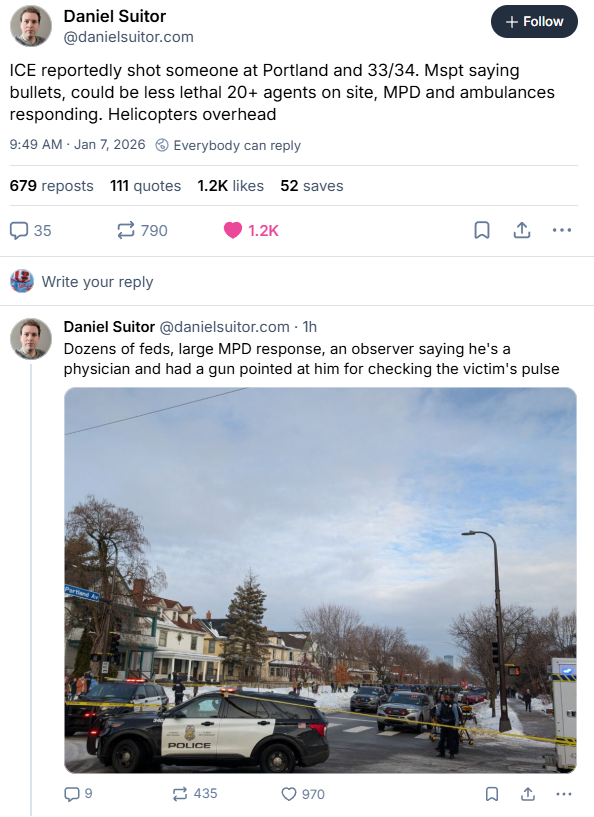
And ICE shot and killed a person in Minneapolis within the past hour.
-
2026-01-07 12:33 #324BG Content
- Join Date
- Oct 2005
- Posts
- 70,559
- BG Level
- 10
- FFXIV Character
- Six Souls
- FFXIV Server
- Gilgamesh
- FFXI Server
- Quetzalcoatl
- WoW Realm
- Malorne
- Blog Entries
- 9
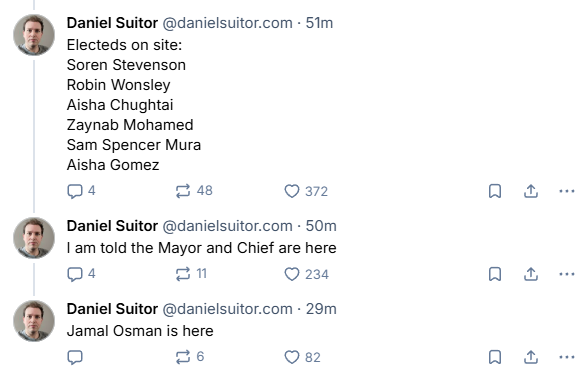
press conference at noon. Large gathering of people at the scene.
-
2026-01-07 12:36 #325
-
2026-01-07 12:40 #326BG Content
- Join Date
- Oct 2005
- Posts
- 70,559
- BG Level
- 10
- FFXIV Character
- Six Souls
- FFXIV Server
- Gilgamesh
- FFXI Server
- Quetzalcoatl
- WoW Realm
- Malorne
- Blog Entries
- 9
Local NBC affiliate says the person was shot through the front windshield
-
2026-01-07 12:49 #327BG Content
- Join Date
- Oct 2005
- Posts
- 70,559
- BG Level
- 10
- FFXIV Character
- Six Souls
- FFXIV Server
- Gilgamesh
- FFXI Server
- Quetzalcoatl
- WoW Realm
- Malorne
- Blog Entries
- 9
-
2026-01-07 12:49 #328RNGesus
Sweaty Dick Punching Enthusiast
- Join Date
- Jan 2005
- Posts
- 43,856
- BG Level
- 10
- FFXIV Character
- Lenette Valkyr
- FFXIV Server
- Gilgamesh
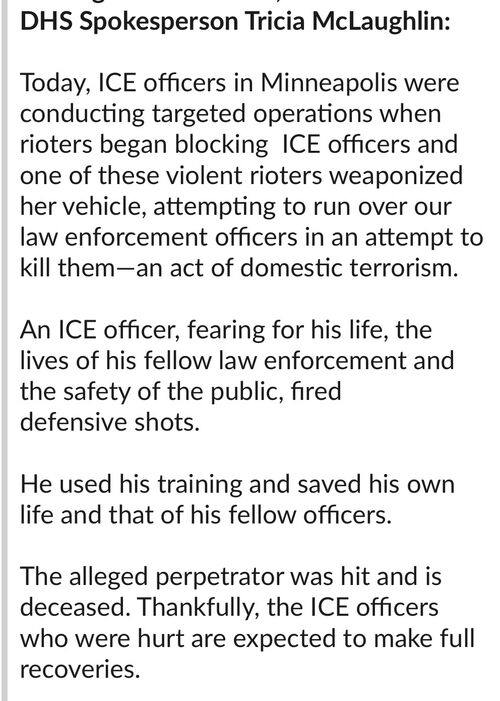
"defensive shots"
-
2026-01-07 12:50 #329BG Content
- Join Date
- Oct 2005
- Posts
- 70,559
- BG Level
- 10
- FFXIV Character
- Six Souls
- FFXIV Server
- Gilgamesh
- FFXI Server
- Quetzalcoatl
- WoW Realm
- Malorne
- Blog Entries
- 9
https://www.mprnews.org/story/2026/0...eral-operation
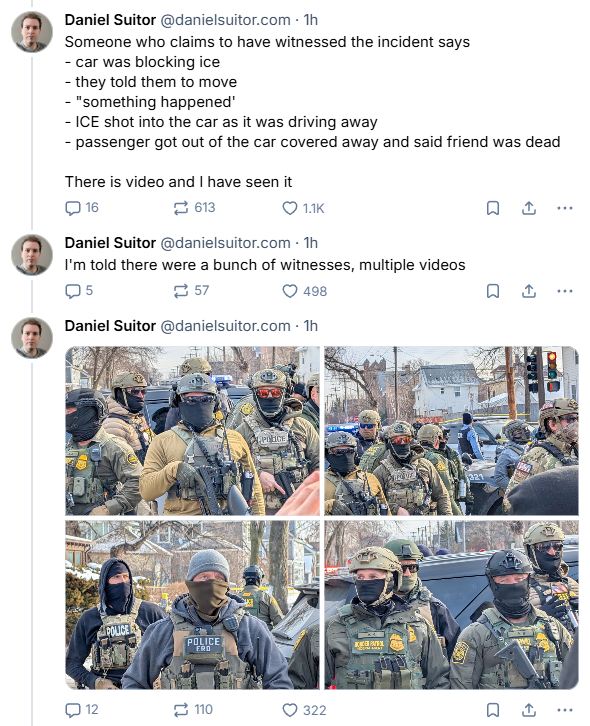
Emily Heller lives near 33rd and Portland and said she woke up to a commotion outside her home. She said she saw a car blocking traffic on Portland Avenue that appeared to be part of a protest against federal law enforcement operations.
Heller said she heard ICE agents telling the driver, a woman, to “get out of here.”
“She was trying to turn around, and the ICE agent was in front of her car, and he pulled out a gun and put it right in — like, his midriff was on her bumper — and he reached across the hood of the car and shot her in the face like three, four times,” Heller said.
Heller said it appeared the woman then accelerated and traveled about 100 feet before striking a utility pole and some other vehicles. She could be seen slumped over inside her car.
-
2026-01-07 12:51 #330
So they shot a woman through the windshield because she was in the way?
-
2026-01-07 12:52 #331
Guess so. Yikes.
-
2026-01-07 12:59 #332Kevin Lowe's Sock Account
Pens win! Pens Win!!! PENS WIN!!!!!
Sweaty Dick Punching Enthusiast
- Join Date
- Dec 2007
- Posts
- 7,274
- BG Level
- 8
- FFXI Server
- Fenrir

Sounds like a promotion and cabinet position are in order for this fine patriot
-
2026-01-07 13:09 #333BG Content
- Join Date
- Oct 2005
- Posts
- 70,559
- BG Level
- 10
- FFXIV Character
- Six Souls
- FFXIV Server
- Gilgamesh
- FFXI Server
- Quetzalcoatl
- WoW Realm
- Malorne
- Blog Entries
- 9
https://bsky.app/profile/danielsuito.../3mbtzlfajm227
video of the shooting (it's not graphic)
-
2026-01-07 13:14 #334Duplicitous Jew with Political Aspirations
- Join Date
- Dec 2015
- Posts
- 18,865
- BG Level
- 9
Urge to kill rising
Sent from my SM-S938U using Tapatalk
-
2026-01-07 13:19 #335BG Content
- Join Date
- Oct 2005
- Posts
- 70,559
- BG Level
- 10
- FFXIV Character
- Six Souls
- FFXIV Server
- Gilgamesh
- FFXI Server
- Quetzalcoatl
- WoW Realm
- Malorne
- Blog Entries
- 9
The inside of the SUV, NSFL depending on your tolerance for blood
Spoiler: show
-
2026-01-07 13:29 #336BG Content
- Join Date
- Oct 2005
- Posts
- 70,559
- BG Level
- 10
- FFXIV Character
- Six Souls
- FFXIV Server
- Gilgamesh
- FFXI Server
- Quetzalcoatl
- WoW Realm
- Malorne
- Blog Entries
- 9
The State Emergency Operation Center has been activated. This last happened during the Floyd unrest.
-
2026-01-07 13:29 #337Weaboo of the House of Weave
- Join Date
- Mar 2005
- Posts
- 10,582
- BG Level
- 9
- FFXIV Character
- Arthur Pendragon
- FFXIV Server
- Gilgamesh


There's no way this is real, I didn't see any of this on Fox or Newsmax today.
-
2026-01-07 13:30 #338BG Content
- Join Date
- Oct 2005
- Posts
- 70,559
- BG Level
- 10
- FFXIV Character
- Six Souls
- FFXIV Server
- Gilgamesh
- FFXI Server
- Quetzalcoatl
- WoW Realm
- Malorne
- Blog Entries
- 9
Noem just announced that she is returning to Minneapolis in response to the shooting.
-
2026-01-07 13:31 #339Weaboo of the House of Weave
- Join Date
- Mar 2005
- Posts
- 10,582
- BG Level
- 9
- FFXIV Character
- Arthur Pendragon
- FFXIV Server
- Gilgamesh
https://x.com/DHSgov/status/2008958123092979817
Grok is this real I don't trust the biased deep state media
-
2026-01-07 13:32 #340BG Content
- Join Date
- Oct 2005
- Posts
- 70,559
- BG Level
- 10
- FFXIV Character
- Six Souls
- FFXIV Server
- Gilgamesh
- FFXI Server
- Quetzalcoatl
- WoW Realm
- Malorne
- Blog Entries
- 9
Very tempting to mod abuse you. Originally Posted by Tymon