 XI Wiki


https://www.rand.org/pubs/research_reports/RR1530.htmlOriginally Posted by guartz

Key Findings
There Are an Estimated 1,320–6,630 Transgender Service Members in the Active Component, but Not All Will Seek Gender Transition–Related Treatment
It is difficult to estimate the number of transgender personnel in the military due to current policies and a lack of empirical data. Applying a range of prevalence estimates, combining data from multiple surveys, and adjusting for the male/female distribution in the military provided a midrange estimate of around 2,450 transgender personnel in the active component (out of a total number of approximately 1.3 million active-component service members) and 1,510 in the Selected Reserve.
Only a subset will seek gender transition–related treatment. Estimates derived from survey data and private health insurance claims data indicate that, each year, between 29 and 129 service members in the active component will seek transition-related care that could disrupt their ability to deploy.
The Costs of Gender Transition–Related Health Care Treatment Are Relatively Low
Using private health insurance claims data to estimate the cost of extending gender transition–related health care coverage to transgender personnel indicated that active-component health care costs would increase by between $2.4 million and $8.4 million annually, representing a 0.04- to 0.13-percent increase in active-component health care expenditures.
Even upper-bound estimates indicate that less than 0.1 percent of the total force would seek transition-related care that could disrupt their ability to deploy.
Previous Integration Efforts and the Experiences of Foreign Militaries Indicate a Minimal Likely Impact on Force Readiness
The limited research on the effects of foreign military policies indicates little or no impact on unit cohesion, operational effectiveness, or readiness. Commanders noted that the policies had benefits for all service members by creating a more inclusive and diverse force.
Policy changes to open more roles to women and to allow gay and lesbian personnel to serve openly in the U.S. military have similarly had no significant effect on unit cohesion, operational effectiveness, or readiness.
- Navigation
Results 1481 to 1500 of 2981
-
2019-11-25 09:06 #1481Ridill

- Join Date
- Aug 2008
- Posts
- 12,467
- BG Level
- 9
- FFXIV Character
- Satori Komeiji
- FFXIV Server
- Sargatanas
- FFXI Server
- Asura


-
2019-11-25 09:08 #1482Ridill
- Join Date
- Aug 2008
- Posts
- 12,467
- BG Level
- 9
- FFXIV Character
- Satori Komeiji
- FFXIV Server
- Sargatanas
- FFXI Server
- Asura
Stop talking out of your fucking ass
-
2019-11-25 09:08 #1483BG Medical's Student of Medicine
- Join Date
- Oct 2006
- Posts
- 34,674
- BG Level
- 10
Your head is in the right place, but you're still mistaken. Originally Posted by guartz
White folks are at an increased risk for developing malaria but we don't prohibit them from going to Africa.
Women are at higher risk for attempting suicide but they are allowed to serve.
Statistics only serve as possible predictors, they are not 100% certainties.
As a provider I would worry about the mental health of a transgender soldier, but I wouldn't prevent a healthy one from serving just because of risk.
-
2019-11-25 09:10 #1484Sandworm Swallows
- Join Date
- Dec 2007
- Posts
- 7,139
- BG Level
- 8
I love that guartz is back in full force now that the topic as moved on to things he has talking points for.
-
2019-11-25 09:13 #1485Ridill
- Join Date
- Aug 2008
- Posts
- 12,467
- BG Level
- 9
- FFXIV Character
- Satori Komeiji
- FFXIV Server
- Sargatanas
- FFXI Server
- Asura
Its almost like the DoD spent a year researching this only for it to get overturned by a fucking tweet. Originally Posted by Yabby
-
2019-11-25 09:47 #1486TIME OUT MOTHERFUCKER

- Join Date
- Jun 2007
- Posts
- 4,972
- BG Level
- 7
I didn't bring up this topic. Originally Posted by Yabby
-
2019-11-25 09:53 #1487The Optimistic Asshole
Sweaty Dick Punching Enthusiast
- Join Date
- Aug 2005
- Posts
- 29,729
- BG Level
- 10
- FFXIV Character
- Tyche Six
- FFXIV Server
- Tonberry
Dysphoria is not a mood disorder, so why are we even talking about this? DSM made it very clear that they're removing the word disorder from it completely. Dysphoria alone is not a reason to be disqualifying by any current psychiatric standards.
-
2019-11-25 10:01 #1488Sandworm Swallows
- Join Date
- Dec 2007
- Posts
- 7,139
- BG Level
- 8
No, the point was you didn't come back until this topic started. I really want to hear your thoughts on the testimonies last week. Originally Posted by guartz
-
2019-11-25 10:09 #1489Caesar Salad
- Join Date
- Nov 2009
- Posts
- 31,823
- BG Level
- 10
NO YOU DONT STOP THIS MADNESS Originally Posted by Yabby
Sent from my SM-G975U using Tapatalk
-
2019-11-25 10:10 #1490Sandworm Swallows
- Join Date
- Dec 2007
- Posts
- 7,139
- BG Level
- 8
Fight fire with fire
-
2019-11-25 10:19 #1491Cardiac Cat
- Join Date
- Nov 2006
- Posts
- 11,604
- BG Level
- 9
- FFXIV Character
- Airlea Ocelot
- FFXIV Server
- Balmung
- FFXI Server
- Bahamut
- WoW Realm
- Aegwynn
Not a doctor, so here. Originally Posted by kuronosan
https://www.mayoclinic.org/diseases-...n/faq-20057770
Sent from my SM-G960U using Tapatalk
-
2019-11-25 10:19 #1492BG Medical's Student of Medicine
- Join Date
- Oct 2006
- Posts
- 34,674
- BG Level
- 10
Well, I am. I was being sarcastic.
-
2019-11-25 10:21 #1493Caesar Salad
- Join Date
- Nov 2009
- Posts
- 31,823
- BG Level
- 10
Originally Posted by Gadritan
I chuckled hehe Originally Posted by kuronosan
Sent from my SM-G975U using Tapatalk
-
2019-11-25 10:23 #1494Sandworm Swallows
- Join Date
- Dec 2007
- Posts
- 7,139
- BG Level
- 8
Admit it... one of the reasons you became one is to be able to say something like this. Originally Posted by kuronosan
-
2019-11-25 10:39 #1495Ridill
- Join Date
- Aug 2008
- Posts
- 12,467
- BG Level
- 9
- FFXIV Character
- Satori Komeiji
- FFXIV Server
- Sargatanas
- FFXI Server
- Asura
Advanced shitposting Originally Posted by kuronosan
-
2019-11-25 10:57 #1496BG Medical's Student of Medicine
- Join Date
- Oct 2006
- Posts
- 34,674
- BG Level
- 10
Honestly, I meant no disrespect. In the context of depression we're not talking about "oh I was briefly sad" and there are large swaths of people who are actually depressed and do not get treatment (for many reasons).
Drawing a line on what does or doesn't constitute depression you care about is obtuse.
-
2019-11-25 12:38 #1497TIME OUT MOTHERFUCKER
- Join Date
- Jun 2007
- Posts
- 4,972
- BG Level
- 7
That's not true either. Originally Posted by Yabby
As far as my thoughts, this pic summarizes it pretty well
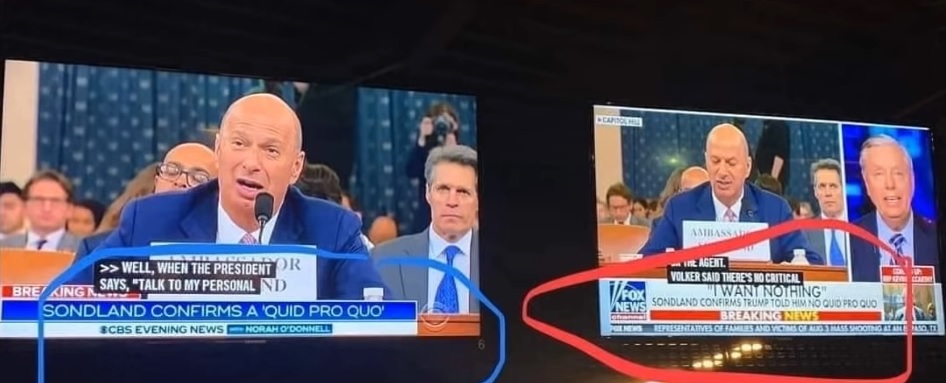
In related news:
approval for impeachment tanks with independent voters.
https://thehill.com/homenews/campaig...g-independents
republicans have ..3? investigations of their own going
https://www.foxnews.com/politics/hor...probe-document
https://www.politico.com/news/2019/1...justice-000296
https://www.washingtonpost.com/polit...outputType=amp
fakes news is getting sued from like every corner
https://www.washingtontimes.com/news...-over-vienna-/
https://thehill.com/homenews/media/4...nst-washington
https://www.cbsnews.com/news/rachel-...famation-case/
Moderate house democrats are complaining about impeachment
https://dailycaller.com/2019/11/17/j...d-impeachment/
possible criminality about 2018 elections and finance fraud
https://www.politico.com/news/2019/1...midterm-071725
Obama is now a conservative.
https://www.theblaze.com/news/washin...a_conservative
Trump keeps shattering fund raising records and DNC is broke
https://www.washingtonexaminer.com/n...ocratic-debate
-
2019-11-25 12:40 #1498Cardiac Cat
- Join Date
- Nov 2006
- Posts
- 11,604
- BG Level
- 9
- FFXIV Character
- Airlea Ocelot
- FFXIV Server
- Balmung
- FFXI Server
- Bahamut
- WoW Realm
- Aegwynn
I miss the good ol' days when our biggest worry was if the president lied about getting a piece of ass in the white house.
Sent from my SM-G960U using Tapatalk
-
2019-11-25 12:41 #1499Cardiac Cat
- Join Date
- Nov 2006
- Posts
- 11,604
- BG Level
- 9
- FFXIV Character
- Airlea Ocelot
- FFXIV Server
- Balmung
- FFXI Server
- Bahamut
- WoW Realm
- Aegwynn
Bring back Slick Willy!
Sent from my SM-G960U using Tapatalk
-
2019-11-25 12:51 #1500TIME OUT MOTHERFUCKER
- Join Date
- Jun 2007
- Posts
- 4,972
- BG Level
- 7
Ah at least we knew who his whistle blower was. Originally Posted by Gadritan


Similar Threads
-
Predisent Donald J. Skroob: Episode IX: Pray for Toledo
By 6souls in forum Politics: Advanced ShitpostingReplies: 3002Last Post: 2019-10-11, 12:12 -
Predisent Donald J. Skroob: Episode VIII: I'm Surrounded By Hamberders
By 6souls in forum Politics: Advanced ShitpostingReplies: 3171Last Post: 2019-06-13, 16:45 -
Predisent Donald J. Trump: Episode VII: Space Force Awakens | Keep Trumpy Bear Great
By 6souls in forum Politics: Advanced ShitpostingReplies: 3012Last Post: 2019-01-01, 19:31 -
Predisent Donald J. Trump: Episode VI: Return of the Wall
By 6souls in forum Politics: Advanced ShitpostingReplies: 3027Last Post: 2018-09-26, 13:52 -
Predisent Donald J. Trump: Episode V: Trade Wars Strike Back: Kanye's Opioid Addiction Support Group
By 6souls in forum Politics: Advanced ShitpostingReplies: 2990Last Post: 2018-06-26, 01:58 -
Predisent Donald J. Trump: Drone Wars Episode IV: A New Button
By Sonomaa in forum Politics: Advanced ShitpostingReplies: 3024Last Post: 2018-04-02, 09:33 -
Predisent Donald J. Trump: Drone Wars Episode III: Revenge of Bernie Would Have Won
By BaneTheBrawler in forum Politics: Advanced ShitpostingReplies: 4989Last Post: 2018-01-04, 09:49 -
Predisent Donald J. Trump: James Comey and the Giant Peach Part II: The Ripening
By BaneTheBrawler in forum Politics: Advanced ShitpostingReplies: 4642Last Post: 2017-08-03, 16:25