 XI Wiki


https://www.politico.com/news/2020/0...ections-102779Originally Posted by guartz

I want you to go ahead and read the very first bullet point.
- Navigation
Results 521 to 540 of 2637
-
2020-01-24 10:45 #521Duplicitous Jew with Political Aspirations

- Join Date
- Dec 2015
- Posts
- 18,863
- BG Level
- 9


-
2020-01-24 10:50 #522I like to eat food
- Join Date
- Jun 2007
- Posts
- 9,064
- BG Level
- 8
That's not what Trump says, though.
-
2020-01-24 10:51 #523I trusted Zet and this is what happened

Eleven owes me $40 bucks
- Join Date
- Jun 2007
- Posts
- 21,269
- BG Level
- 10
- FFXIV Character
- Kaslo Essyx
- FFXIV Server
- Famfrit
- FFXI Server
- Carbuncle
 Note: My firm is litigating some of these proposed changes Originally Posted by Zealot

-
2020-01-24 10:56 #524TIME OUT MOTHERFUCKER

- Join Date
- Jun 2007
- Posts
- 4,972
- BG Level
- 7
That's exactly what was addressed with the regulation though, nothing else. It's still illegal to pollute waterways, and Trump has ordered EPA and Army Corp to develop a replacement policy. The only thing that changed was a broad definition of what is a waterway that made farmers not sure what exactly is a waterway. Originally Posted by Gadritan
At any rate, it will be challenged in court and I'm sure we will hear more about it.
-
2020-01-24 11:10 #525I trusted Zet and this is what happened
Eleven owes me $40 bucks
- Join Date
- Jun 2007
- Posts
- 21,269
- BG Level
- 10
- FFXIV Character
- Kaslo Essyx
- FFXIV Server
- Famfrit
- FFXI Server
- Carbuncle
Here's the thing. Some people see a "puddle," biologists and hydrogeologists can see hydrogeologically connected wetlands that serve as vital part of the streamway system. These systems work as both flood control and pollution deterrents. There is a lot more going on scientifically than your average joe can see. Originally Posted by Gadritan
-
2020-01-24 11:13 #526Cardiac Cat
- Join Date
- Nov 2006
- Posts
- 11,604
- BG Level
- 9
- FFXIV Character
- Airlea Ocelot
- FFXIV Server
- Balmung
- FFXI Server
- Bahamut
- WoW Realm
- Aegwynn
I get that. I don't know enough about the details to pick it apart.
From a distance it seems like a very aggressive swing in the opposite direction rather than a more cautious approach with subtle changes over time.
Correct me here if I'm wrong.
Sent from my SM-G960U using Tapatalk
-
2020-01-24 11:16 #527The Optimistic Asshole
Sweaty Dick Punching Enthusiast
- Join Date
- Aug 2005
- Posts
- 29,769
- BG Level
- 10
- FFXIV Character
- Tyche Six
- FFXIV Server
- Tonberry
Guartz gonna have a good faith argument with an attorney working at a firm litigating the bullshit he's spewing...
(guessing Kaslo won't be able to actually discuss anything )
)

-
2020-01-24 11:30 #528Brown Recluse
Sweaty Dick Punching Enthusiast
- Join Date
- May 2006
- Posts
- 28,444
- BG Level
- 10
- FFXI Server
- Unicorn
The main reason Trump is rolling back water restrictions is to help the development of more golf courses Originally Posted by Gadritan
-
2020-01-24 11:34 #529I like to eat food
- Join Date
- Jun 2007
- Posts
- 9,064
- BG Level
- 8
Also depends on what you're defining as a "puddle." Here's a picture from one of my jobsites of someone dumping something that made it's way into the stormwater system and down to my site which feeds directly into a drinking water source.
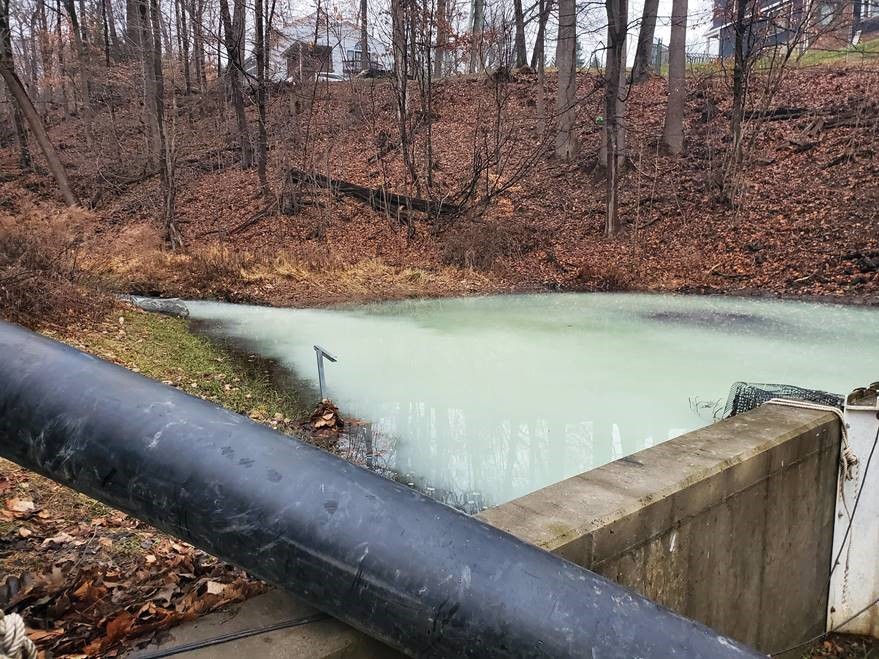
Water shouldn't be milky. I'm not sure what ended up happening with this. Last I was told was that the managing agency was investigating what it was and who did it. This is how dumping something on the street or in a puddle can effect drinking water.
-
2020-01-24 11:36 #530I like to eat food
- Join Date
- Jun 2007
- Posts
- 9,064
- BG Level
- 8
Probably not entirely false. Although golf courses have better perc rates than asphalt/concrete there is still a lot of runoff that puts more pressure on water treatment facilities and existing stormwater infrastructure. If the treatment restrictions are reduced as well you could technically process more water to release into waterways and reduce regulation on runoff control and stormwater pollution protection. Originally Posted by Dimmauk
-
2020-01-24 11:42 #531I trusted Zet and this is what happened
Eleven owes me $40 bucks
- Join Date
- Jun 2007
- Posts
- 21,269
- BG Level
- 10
- FFXIV Character
- Kaslo Essyx
- FFXIV Server
- Famfrit
- FFXI Server
- Carbuncle
Yeah I can't say much, but I'm trying to see if there is an article or press release for our brief on behalf of Waterkeeper. But this is from a case a few years ago where a mining company was filling wetlands to access areas to pull gravel out of a stream for sale: https://www.tulsaworld.com/news/loca...60117f66c.html Originally Posted by Tyche
EDIT: Here we go: https://seaturtles.org/lawsuit-chall...t-protections/
-
2020-01-24 12:43 #532BG Medical's Student of Medicine
- Join Date
- Oct 2006
- Posts
- 34,949
- BG Level
- 10
Trump reportedly caught on tape by Parnas telling his staff to 'get rid of Yanukovich'. Haven't been able to listen yet but probably nothing to get excited about.
-
2020-01-24 12:58 #533Duplicitous Jew with Political Aspirations
- Join Date
- Dec 2015
- Posts
- 18,863
- BG Level
- 9
There's a case I studied for environmental law about why this became an issue in the first place and a big reason is these unconnected waterways, seasonal lakes, and "ephemeral" bodies of water are usually crucial for their environment.
If something has been "seasonal" for thousands of seasons chances are the entire local ecosystem depends on its appearance and its removal would drastically affect the surrounding area.
Sent from my SM-N960U using Tapatalk
-
2020-01-24 14:47 #534BG Content
- Join Date
- Oct 2005
- Posts
- 70,554
- BG Level
- 10
- FFXIV Character
- Six Souls
- FFXIV Server
- Gilgamesh
- FFXI Server
- Quetzalcoatl
- WoW Realm
- Malorne
- Blog Entries
- 9
The Pentagon now says it's 34 troops who were affected. Originally Posted by 6souls
-
2020-01-24 15:07 #535TIME OUT MOTHERFUCKER
- Join Date
- Jun 2007
- Posts
- 4,972
- BG Level
- 7
Nothing stopping states from making rules on waterways.
-
2020-01-24 15:11 #536BG Content
- Join Date
- Oct 2005
- Posts
- 70,554
- BG Level
- 10
- FFXIV Character
- Six Souls
- FFXIV Server
- Gilgamesh
- FFXI Server
- Quetzalcoatl
- WoW Realm
- Malorne
- Blog Entries
- 9
Except that the Trump administration has been suing states who make regulations that don't align with it's new federal guidelines. Originally Posted by guartz
-
2020-01-24 15:12 #537TIME OUT MOTHERFUCKER
- Join Date
- Jun 2007
- Posts
- 4,972
- BG Level
- 7
Makes sense, but surely sometimes puddle is just a puddle, isn't that the case also? Originally Posted by Kaslo
-
2020-01-24 15:42 #538Brown Recluse
Sweaty Dick Punching Enthusiast
- Join Date
- May 2006
- Posts
- 28,444
- BG Level
- 10
- FFXI Server
- Unicorn
Why are Republicans pro pollution?
-
2020-01-24 15:49 #539Like a boss yo
- Join Date
- Feb 2006
- Posts
- 3,852
- BG Level
- 7
- FFXI Server
- Odin
- WoW Realm
- Mal'Ganis
As per Mr. Krabs " MONEY ! " For the lot of em being religious right, they really do love worshiping the golden calf...
-
2020-01-24 15:52 #540BG Content
- Join Date
- Oct 2005
- Posts
- 70,554
- BG Level
- 10
- FFXIV Character
- Six Souls
- FFXIV Server
- Gilgamesh
- FFXI Server
- Quetzalcoatl
- WoW Realm
- Malorne
- Blog Entries
- 9
It's not currently financially viable to be environmental. Originally Posted by Dimmauk

