XI Wiki


Also RAM, primary PC has 64 GB. Everything else below.
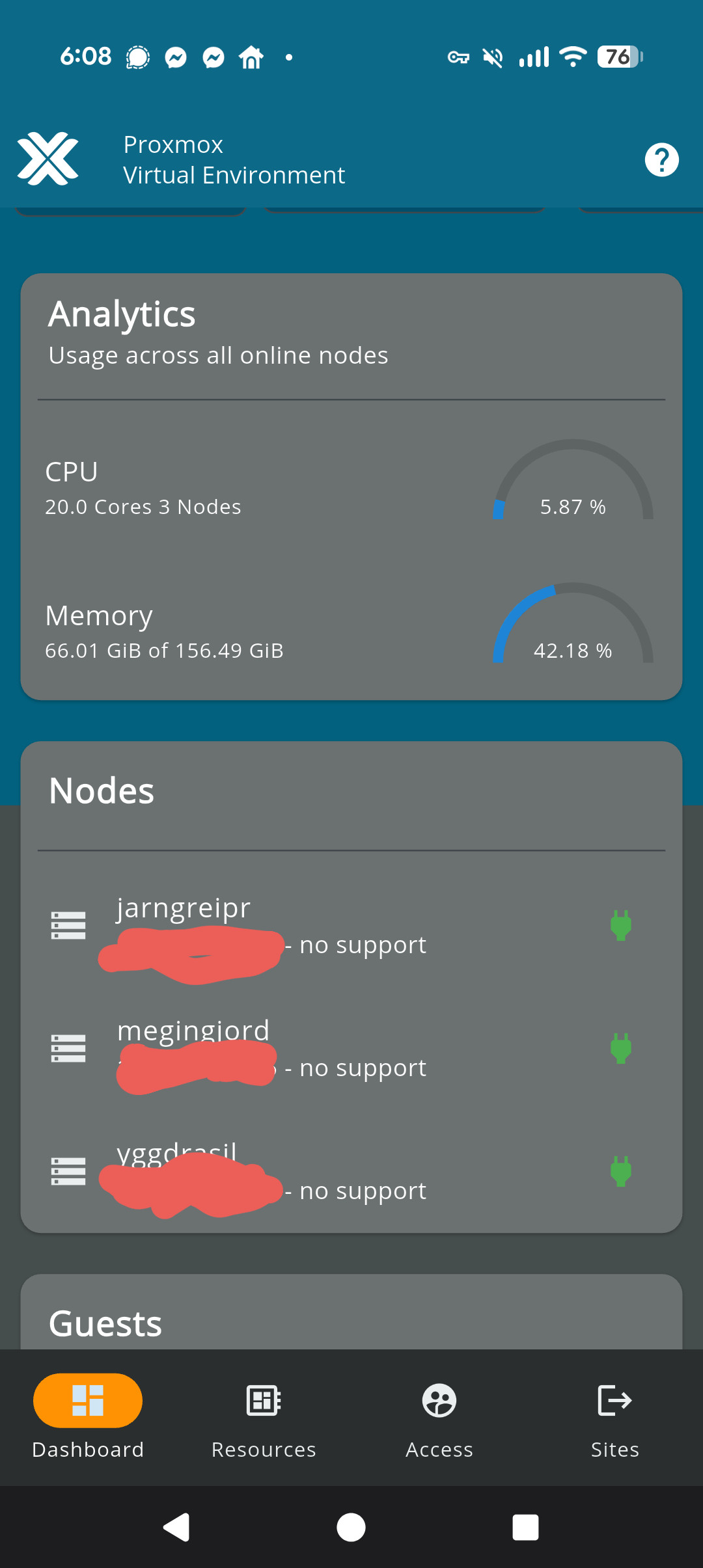
About to drop another machine into my cluster with a 2TB NVME and 64 GB of RAM.
- Navigation
Results 42981 to 43000 of 46628
-
2025-11-02 13:12 #42981preachy and pretentious

- Join Date
- Apr 2006
- Posts
- 3,797
- BG Level
- 7
- FFXI Server
- Bahamut

-
2025-11-02 13:16 #42982preachy and pretentious
- Join Date
- Apr 2006
- Posts
- 3,797
- BG Level
- 7
- FFXI Server
- Bahamut
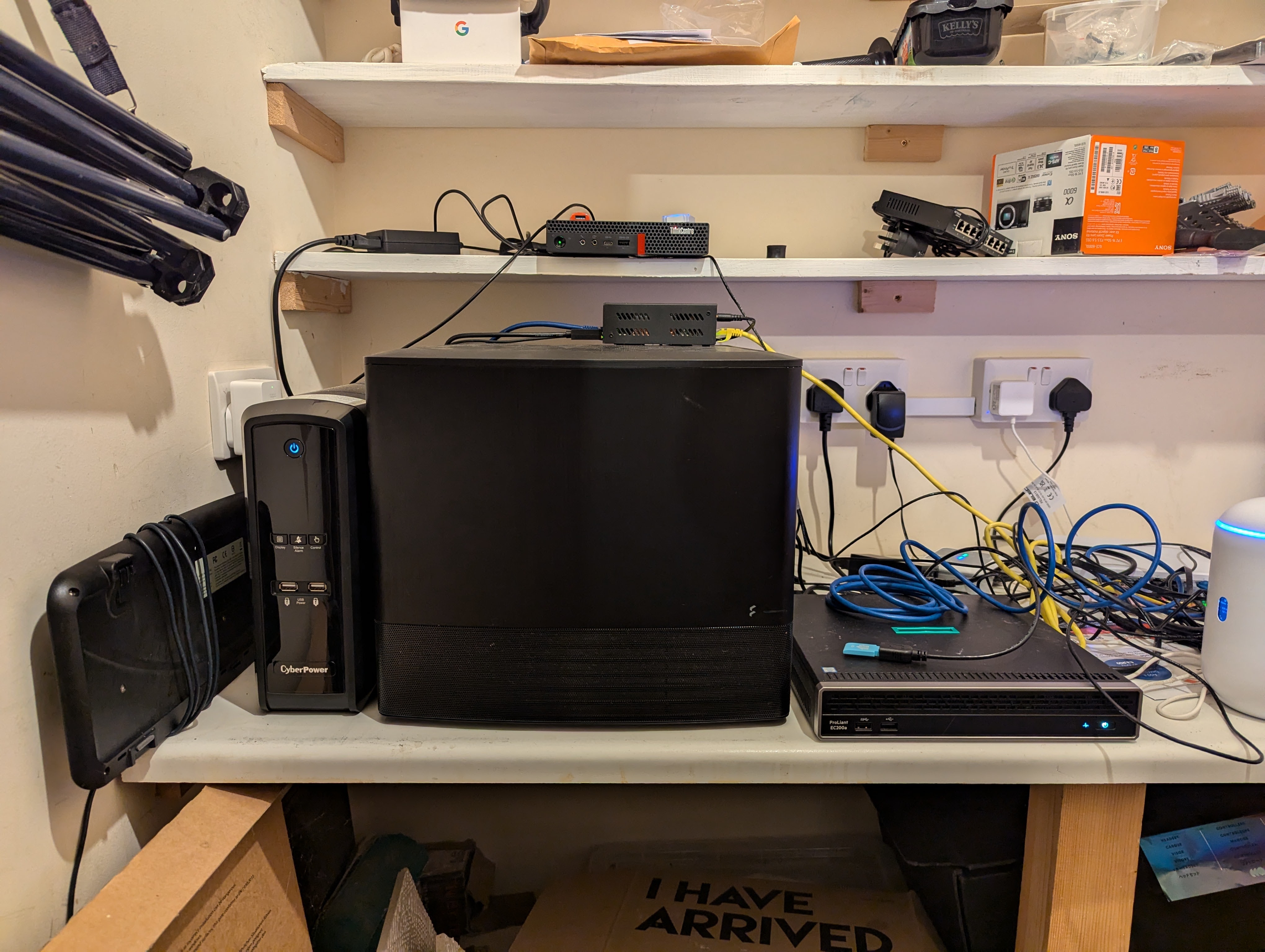
All shoved into a closet in my garage.
-
2025-11-02 13:28 #42983preachy and pretentious
- Join Date
- Apr 2006
- Posts
- 3,797
- BG Level
- 7
- FFXI Server
- Bahamut
I should probably pack it all up and get a decent super micro blade with a beefy xeon. RAM is my primary limiting factor. I don't need as much CPU cycles as I do RAM. If I can get 256 gigs of RAM on one machine, I wouldn't need as many nodes. Also want to drop an Intel arc b50 somewhere in there because a GPU that supports SI-ROV without breaking the bank is goated.
-
2025-11-02 13:35 #42984Caesar Salad

- Join Date
- Nov 2009
- Posts
- 31,944
- BG Level
- 10
Jesus man, how many kwatts you using a month lmao Originally Posted by Krandor

Sent from my SM-S936U using Tapatalk
-
2025-11-02 13:45 #42985Mr. Bananagrabber
Sweaty Dick Punching Enthusiast
- Join Date
- Dec 2005
- Posts
- 55,522
- BG Level
- 10
- FFXI Server
- Asura


Not that much, the server is running off a Celeron processor and spins down the drives when not in use (which is helped by the caching drive covering all the smaller functions), the DAS isn't turned on unless I need to back something.
-
2025-11-02 13:47 #42986preachy and pretentious
- Join Date
- Apr 2006
- Posts
- 3,797
- BG Level
- 7
- FFXI Server
- Bahamut
It easy to stay within range if you know what you're doing. Spinning rust is what consumes the most energy. Leaning on thin clients and micro servers helps, but even my big server is optimized. All my server uses 120 watts per hour and about 3 kilowatts a day which is less than my desktop, but I also have solar panels. Originally Posted by Salodin
-
2025-11-02 13:48 #42987preachy and pretentious
- Join Date
- Apr 2006
- Posts
- 3,797
- BG Level
- 7
- FFXI Server
- Bahamut
Yeh, I could drop my shit too if I did a spin down. Sadly TrueNAS isn't really keen on spin down, plus it defeats the purpose for me. Originally Posted by Krandor
-
2025-11-02 13:48 #42988preachy and pretentious
- Join Date
- Apr 2006
- Posts
- 3,797
- BG Level
- 7
- FFXI Server
- Bahamut
You're using something like unraid with a cache SSD aren't you?
-
2025-11-02 14:07 #42989Mr. Bananagrabber
Sweaty Dick Punching Enthusiast
- Join Date
- Dec 2005
- Posts
- 55,522
- BG Level
- 10
- FFXI Server
- Asura
I'm using an off the shelf QNAP NAS. It has some oddities mostly with the program for setting up containers, but otherwise it does everything I need (including integrated DDNS service) so I haven't had to migrate to a more opened up OS
-
2025-11-02 14:20 #42990preachy and pretentious
- Join Date
- Apr 2006
- Posts
- 3,797
- BG Level
- 7
- FFXI Server
- Bahamut
It's a set it and forget it for most people, but that would drive me mad! Originally Posted by Krandor
-
2025-11-02 18:31 #42991Mr. Bananagrabber
Sweaty Dick Punching Enthusiast
- Join Date
- Dec 2005
- Posts
- 55,522
- BG Level
- 10
- FFXI Server
- Asura
You mean what I mentioned about containers? It's mostly that it doesn't just let you import in a premade text file, so I have to enter everything manually through menus when I install/update a container.
The only docker/container I use with any regularity is Komga for my comic books and I can just copy/paste the individual lines from a text document so it doesn't bug me. Jellyfin handles all the other media and there's a repo on GitHub that makes a native version of it that runs better than through a container
-
2025-11-02 19:20 #42992preachy and pretentious
- Join Date
- Apr 2006
- Posts
- 3,797
- BG Level
- 7
- FFXI Server
- Bahamut
Putty might let you left click auto paste into nano when editing your docker-compose.yml, of course deleting lines all together is just a headache of you're not versed in nano or vim. I find it easier to just mv file.yml file2.yml. Alternatively, I just make a git rep for my containers and pull whatever I need or push my changes out (like this https://github.com/Hexadecimalism/traefik3/tree/main), but that's maybe a headache for anyone that doesn't use git.
-
2025-11-02 20:55 #42993Mr. Bananagrabber
Sweaty Dick Punching Enthusiast
- Join Date
- Dec 2005
- Posts
- 55,522
- BG Level
- 10
- FFXI Server
- Asura
Putty doesn't let me make containers through the QNAP OS. The OS is actually pretty locked down, no way to see the hidden OS or program config files without SSHing in.
But like it said it can handle everything I want from my server so I'm fine with it.
-
2025-11-03 02:27 #42994preachy and pretentious
- Join Date
- Apr 2006
- Posts
- 3,797
- BG Level
- 7
- FFXI Server
- Bahamut
Oof
-
2025-11-03 14:24 #42995I would prefer not to.
Moms Spaghetti
Philly Special
- Join Date
- May 2006
- Posts
- 39,369
- BG Level
- 10
incroyable

-
2025-11-03 22:59 #42996Tekki's Bitch
Sweaty Dick Punching Enthusiast
- Join Date
- Mar 2006
- Posts
- 9,022
- BG Level
- 8
youtube needs to stop fucking with chrome adblocks
-
2025-11-03 23:10 #42997The Fucking Voice of Actually
- Join Date
- Nov 2007
- Posts
- 11,032
- BG Level
- 9
- FFXIV Character
- Cantih Hacos
- FFXIV Server
- Gilgamesh
- FFXI Server
- Bahamut
- Blog Entries
- 6

Firefox motherfucker, do you speak it.
-
2025-11-04 02:13 #42998Tekki's Bitch
Sweaty Dick Punching Enthusiast
- Join Date
- Mar 2006
- Posts
- 9,022
- BG Level
- 8
chrome will have to become completely unusable for me to make the switch, the same way firefox forced me to make the switch with their massive memory leaks years ago
-
2025-11-04 03:58 #42999Caesar Salad
- Join Date
- Nov 2009
- Posts
- 31,944
- BG Level
- 10
Hey Mert, I know you used ai detection tools to try and catch students cheating (or maybe it was gred). What are you doing/using to look into the kids trying to bypass that?
My barber was talking to me about how some of his other clients tell him all the tricks they do and how they rely so hard on AI and refuse to learn the material. They got the cheating to a science like putting the AI paper through a humanizer to change some language and make it sound more natural, or even telling it to add 2-3 grammatical errors to emulate undergrad writing
-
2025-11-04 04:13 #43000Kevin Chang
- Join Date
- Oct 2007
- Posts
- 10,675
- BG Level
- 9
- FFXI Server
- Sylph
 I check the edit history on the paper for one big copy paste. There are hallmarks of AI writing (that humanizers sometimes remove). I make sure I get an in-class writing sample to compare their writing against. I quiz them on words they use on their papers if I have any doubt. Originally Posted by Salodin