 XI Wiki

Weren't double pfizer or double moderna both touted as having a 95% efficacy or something like that?
- Navigation
Results 1861 to 1880 of 3009
Thread: {COVID-19} Pandemic Vomit VI


-
2021-07-27 00:52 #1861Brokage

- Join Date
- Oct 2006
- Posts
- 20,298
- BG Level
- 10
- FFXIV Character
- Vasp Anemos
- FFXIV Server
- Faerie
- FFXI Server
- Valefor

-
2021-07-27 01:00 #1862I'm almost as bad as Mazmaz

Sweaty Dick Punching Enthusiast
- Join Date
- Jul 2008
- Posts
- 26,101
- BG Level
- 10
i'm sure it has something to do with the dosage amount and we add a diluting agent (salt) to pfizer but not moderna. i dunno if the states does that
-
2021-07-27 01:04 #1863I would prefer not to.
Moms Spaghetti
Philly Special
- Join Date
- May 2006
- Posts
- 39,340
- BG Level
- 10

we get 5g in ours
-
2021-07-27 05:45 #1864Sandworm Swallows
- Join Date
- Dec 2007
- Posts
- 7,152
- BG Level
- 8
-
2021-07-27 08:40 #1865I trusted Zet and this is what happened
Eleven owes me $40 bucks
- Join Date
- Jun 2007
- Posts
- 21,251
- BG Level
- 10
- FFXIV Character
- Kaslo Essyx
- FFXIV Server
- Famfrit
- FFXI Server
- Carbuncle
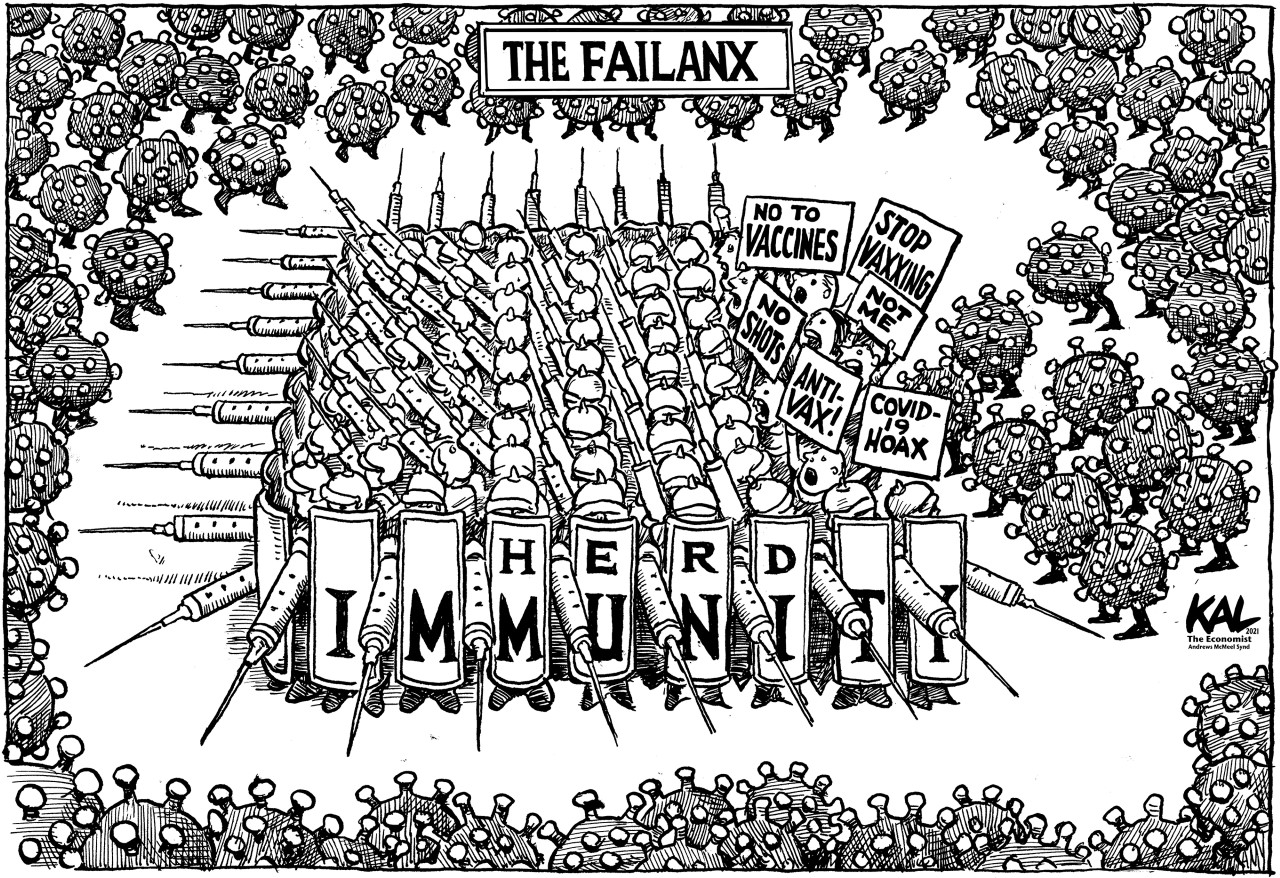
 And it caused people to tear down those towers because of it.
 Originally Posted by Mertron

-
2021-07-27 09:57 #1866BG Medical's Student of Medicine
- Join Date
- Oct 2006
- Posts
- 34,743
- BG Level
- 10
Not really, the concentration in a vaccine isn't dependent on the volume of vaccine. It's titrated to the volume of the diluent, so there isn't a difference in dosing from 3ml to 5ml if the vaccine concentration is the same. Originally Posted by Rhyis.
Either way, Pfizer and Moderna are both mRNA vaccines so they should work in tandem. It'd be different if you get something like Pfizer/Moderna and then Novavax, AZ, or J&J.
-
2021-07-27 09:58 #1867RNGesus
Sweaty Dick Punching Enthusiast
- Join Date
- Jan 2005
- Posts
- 43,654
- BG Level
- 10
- FFXIV Character
- Lenette Valkyr
- FFXIV Server
- Gilgamesh

Well thats why I initially asked because Vaspinne said people with 1st dose of AZ were getting Moderna 2nd dose.
-
2021-07-27 10:03 #1868BG Medical's Student of Medicine
- Join Date
- Oct 2006
- Posts
- 34,743
- BG Level
- 10
As I said before, that would still potentiate the first dose. It likely wouldn't be as robust a response as it would be with like vaccines. It would be two different responses as the AZ vaccine is an attenuated adenovirus vaccine. Moderna would basically boost the AZ response in a different way. It's like treating blood pressure with a beta blocker and a renal adjunct like Lisinopril. Two different mechanisms with some synergistic effect. Originally Posted by Tyrath
-
2021-07-27 10:15 #1869I'm almost as bad as Mazmaz
Sweaty Dick Punching Enthusiast
- Join Date
- Jul 2008
- Posts
- 26,101
- BG Level
- 10
from that link i used before they talk about mixing az with pfizer but there's absolutely nothing about moderna in terms of trial studies.
Spoiler: show
Spoiler: show
it seems to work but there's also a dozen potential complications if you mix az with anything that don't seem to pop up if you mix pfizer/moderna
-
2021-07-27 10:20 #1870Duplicitous Jew with Political Aspirations
- Join Date
- Dec 2015
- Posts
- 18,754
- BG Level
- 9
CDC is going to restore masking indoors guidance even for the vaccinated in states where the virus is surging again.
Sent from my SM-N981U using Tapatalk
-
2021-07-27 10:30 #1871RNGesus
Sweaty Dick Punching Enthusiast
- Join Date
- Jan 2005
- Posts
- 43,654
- BG Level
- 10
- FFXIV Character
- Lenette Valkyr
- FFXIV Server
- Gilgamesh
Good luck getting people to comply D:
-
2021-07-27 10:41 #1872BG Medical's Student of Medicine
- Join Date
- Oct 2006
- Posts
- 34,743
- BG Level
- 10
I think it's about as equal to the rate of vaccination at this point. People who are going to comply are likely already taking these measures in public. Those that are on the fence or "over it" aren't going to mask up no matter what. From here on out we're in the Darwin period and will probably see surges before we see compliance. As for increased deaths that's difficult to say.
-
2021-07-27 10:43 #1873I'll change yer fuckin rate you derivative piece of shit
- Join Date
- Sep 2006
- Posts
- 58,782
- BG Level
- 10
They'll mask if it's required (like here) but otherwise no
-
2021-07-27 10:57 #1874IMPERIAL CONCUBINE OF ME
Coolest Monkey In The Jungle
- Join Date
- Sep 2007
- Posts
- 21,547
- BG Level
- 10
Thats what I do
-
2021-07-27 12:45 #1875Weaboo of the House of Weave
- Join Date
- Mar 2005
- Posts
- 10,448
- BG Level
- 9
- FFXIV Character
- Arthur Pendragon
- FFXIV Server
- Gilgamesh


https://twitter.com/Yamiche/status/1420027166843097092
May only fall on a small section of the population, of course this means nothing as it's up to businesses and governments to require anything
-
2021-07-27 12:52 #1876Hackey Thread Lurker since 2010
- Join Date
- Dec 2005
- Posts
- 8,935
- BG Level
- 8
Following suit with University of California, the California State University system is also going to require all staff, faculty, and students to be vaccinated with exceptions based on religious or medical reasons. However, CSU will not exclude students from student activities and facilities like the UC system would. CSU will require unvaccinated individuals to be tested regularly.
CSU will not require proof of vaccination instead relying an attestation. Individual campuses may independently request proof of vaccination.
I expect a shitshows in the rural campuses of Chico and Humboldt. Probably at SDSU, too.
-
2021-07-27 12:53 #1877Weaboo of the House of Weave
- Join Date
- Mar 2005
- Posts
- 10,448
- BG Level
- 9
- FFXIV Character
- Arthur Pendragon
- FFXIV Server
- Gilgamesh
https://twitter.com/yabutaleb7/statu...50096079712262
If this is true I think a lot of places are going to have to rethink what their goal is now
If zero or near zero community spread is the goal then we need strict restrictions/lockdowns for the long haul. If a vaccinated person can still spread like anybody else then there is no end possible without total isolation
If not then mandate vaccines or just call it game set match and let the unvaxxed deal with the consequences. Which won't happen cuz of kids. Catch 22, impossible situation imo
-
2021-07-27 13:21 #1878I'm almost as bad as Mazmaz
Sweaty Dick Punching Enthusiast
- Join Date
- Jul 2008
- Posts
- 26,101
- BG Level
- 10
this is why i think masks will be around for a long ass time, at least up here. it's impossible to get an entire population vaccinated. how do you account for the homeless, those too young to receive the vaccine, etc? there will always be people that are still susceptible to covid killing them
-
2021-07-27 13:28 #1879I'll change yer fuckin rate you derivative piece of shit
- Join Date
- Sep 2006
- Posts
- 58,782
- BG Level
- 10
-
2021-07-27 13:58 #1880Weaboo of the House of Weave
- Join Date
- Mar 2005
- Posts
- 10,448
- BG Level
- 9
- FFXIV Character
- Arthur Pendragon
- FFXIV Server
- Gilgamesh
Lot of people will check you at the door on that logic, given that first world countries broadly have totally ignored these people despite numerous other diseases that routinely debilitate their populations (speaking of homeless here) Originally Posted by Rhyis.


Similar Threads
-
{COVID-19} My Body, My Choice V: We HaD tHe CuRe In FeBrUaRy
By 6souls in forum Politics: Advanced ShitpostingReplies: 2993Last Post: 2021-04-12, 03:56 -
{COVID-19} Rona Isn't Going Away IV: Quarantine long enough and ducks become fucks
By 6souls in forum Politics: Advanced ShitpostingReplies: 3004Last Post: 2020-11-29, 23:40 -
{COVID-19} Coronavirus Pandemic III: Second Wave Preperation
By 6souls in forum Politics: Advanced ShitpostingReplies: 3001Last Post: 2020-08-27, 11:25 -
{COVID-19} Coronavirus Pandemic II: Easter is Being Rescheduled to July 15th
By 6souls in forum Politics: Advanced ShitpostingReplies: 3065Last Post: 2020-06-15, 18:31 -
{COVID-19} Coronavirus Pandemic: Toilet Paper Rationing
By 6souls in forum Politics: Advanced ShitpostingReplies: 3002Last Post: 2020-03-30, 16:55