 XI Wiki


given projections have it hitting 5+ million lifetime copies sold it's very likely, tho the lead writer has said chances are good a DLC/expansion is coming first. studio is currently working only on improving the base game but more is almost assuredly coming given the financial success.
- Navigation
Results 301 to 320 of 813
-
2025-05-12 12:04 #301

Sweaty Dick Punching Enthusiast
- Join Date
- Sep 2010
- Posts
- 21,875
- BG Level
- 10

-
2025-05-12 12:11 #302Relic Horn
- Join Date
- Jul 2005
- Posts
- 3,011
- BG Level
- 7

 Originally Posted by chazzyphizzle
 Spoiler: show
-
2025-05-12 18:38 #303Relic Shield
- Join Date
- Feb 2010
- Posts
- 1,816
- BG Level
- 6
- FFXI Server
- Bahamut

 Back in January, Story Kitchen went exclusive with Sandfall to announce they're co-producing a live-action adaptation of the game. Other than that, no other media has been mentioned, not even rumored. It's so early into the success, I'm sure all they have in the pipeline is 6-12 month DLC projects. But yeah, expect more. Or not. Maybe instead of a sequel they'll make different IPs that are also badass. Originally Posted by Takiwaki
-
2025-05-12 21:05 #304RNGesus
Sweaty Dick Punching Enthusiast
- Join Date
- Jan 2005
- Posts
- 43,464
- BG Level
- 10
- FFXIV Character
- Lenette Valkyr
- FFXIV Server
- Gilgamesh
In perhaps what is a big irony, I thought the Yellow Harvest zone fully opened up later because I didn't see the climbing spikes blending into the cliffside.
I needed the yellow paint damnit.
-
2025-05-12 21:55 #305RNGesus
Sweaty Dick Punching Enthusiast
- Join Date
- Jan 2005
- Posts
- 43,464
- BG Level
- 10
- FFXIV Character
- Lenette Valkyr
- FFXIV Server
- Gilgamesh
I really meant to but then I kept doing 1 more thing and 1 more thing and now the final dungeon appears blue on the world map, oops Originally Posted by Krandor
Maybe I'll bump difficulty up to Expert
-
2025-05-13 14:27 #306RNGesus
Sweaty Dick Punching Enthusiast
- Join Date
- Jan 2005
- Posts
- 43,464
- BG Level
- 10
- FFXIV Character
- Lenette Valkyr
- FFXIV Server
- Gilgamesh
Expedition 60 journal...oof
-
2025-05-13 15:46 #307RNGesus
Sweaty Dick Punching Enthusiast
- Join Date
- Jan 2005
- Posts
- 43,464
- BG Level
- 10
- FFXIV Character
- Lenette Valkyr
- FFXIV Server
- Gilgamesh
Was still a bit too easy, lol oops Originally Posted by Tyrath
-
2025-05-13 16:22 #308RNGesus
Sweaty Dick Punching Enthusiast
- Join Date
- Jan 2005
- Posts
- 43,464
- BG Level
- 10
- FFXIV Character
- Lenette Valkyr
- FFXIV Server
- Gilgamesh
Originally Posted by Krandor
Yeah I did the "bad" ending too it looks like. Originally Posted by Lebzile
Spoiler: show
-
2025-05-13 16:47 #309RNGesus
Sweaty Dick Punching Enthusiast
- Join Date
- Jan 2005
- Posts
- 43,464
- BG Level
- 10
- FFXIV Character
- Lenette Valkyr
- FFXIV Server
- Gilgamesh
Glad I made the switch. This felt far more incredibly satisfying even if bittersweet
Spoiler: show
-
2025-05-13 18:42 #310Mr. Bananagrabber
Sweaty Dick Punching Enthusiast
- Join Date
- Dec 2005
- Posts
- 55,286
- BG Level
- 10
- FFXI Server
- Asura

Ending spoilers
Spoiler: show
-
2025-05-13 18:49 #311RNGesus
Sweaty Dick Punching Enthusiast
- Join Date
- Jan 2005
- Posts
- 43,464
- BG Level
- 10
- FFXIV Character
- Lenette Valkyr
- FFXIV Server
- Gilgamesh
Originally Posted by Krandor
Spoiler: show
Originally Posted by Tyrath
-
2025-05-13 21:17 #312
Sweaty Dick Punching Enthusiast
- Join Date
- Sep 2010
- Posts
- 21,875
- BG Level
- 10
Spoiler: show
-
2025-05-14 00:14 #313
Sweaty Dick Punching Enthusiast
- Join Date
- Mar 2006
- Posts
- 7,987
- BG Level
- 8
- FFXI Server
- Ragnarok
-
2025-05-14 08:10 #314RNGesus
Sweaty Dick Punching Enthusiast
- Join Date
- Jan 2005
- Posts
- 43,464
- BG Level
- 10
- FFXIV Character
- Lenette Valkyr
- FFXIV Server
- Gilgamesh
Originally Posted by Andalusian girls
Spoiler: show
-
2025-05-14 09:41 #315Yoshi P
- Join Date
- Nov 2006
- Posts
- 5,087
- BG Level
- 8
- FFXI Server
- Quetzalcoatl
- WoW Realm
- Proudmoore
Spoiler: show
am in this thread since I started the game, people have been extremely cautious about spoilers.I was enthralled by this game from the start, and since I have zero faith in humanity I didn't step foot in this thread until I completed it.
-
2025-05-14 17:44 #316King Bitcher of Bitchington
- Join Date
- Jul 2006
- Posts
- 3,494
- BG Level
- 7
- FFXIV Character
- Chuggs M'koul
- FFXIV Server
- Cactuar
Spoiler: show
-
2025-05-14 20:10 #317RNGesus
Sweaty Dick Punching Enthusiast
- Join Date
- Jan 2005
- Posts
- 43,464
- BG Level
- 10
- FFXIV Character
- Lenette Valkyr
- FFXIV Server
- Gilgamesh
I don't think I will do it right away and I still have several optional areas left, but how is NG+ as lvl 99?
-
2025-05-14 21:04 #318Ridill
- Join Date
- Dec 2007
- Posts
- 11,006
- BG Level
- 9
- FFXI Server
- Shiva
- WoW Realm
- Azuremyst
CEO confirmed they will be making Esquie plushies, and I, gentlemen, am going to be a huge sucker and buy one.
-
2025-05-14 21:46 #319RNGesus
Sweaty Dick Punching Enthusiast
- Join Date
- Jan 2005
- Posts
- 43,464
- BG Level
- 10
- FFXIV Character
- Lenette Valkyr
- FFXIV Server
- Gilgamesh
Originally Posted by Guitarman
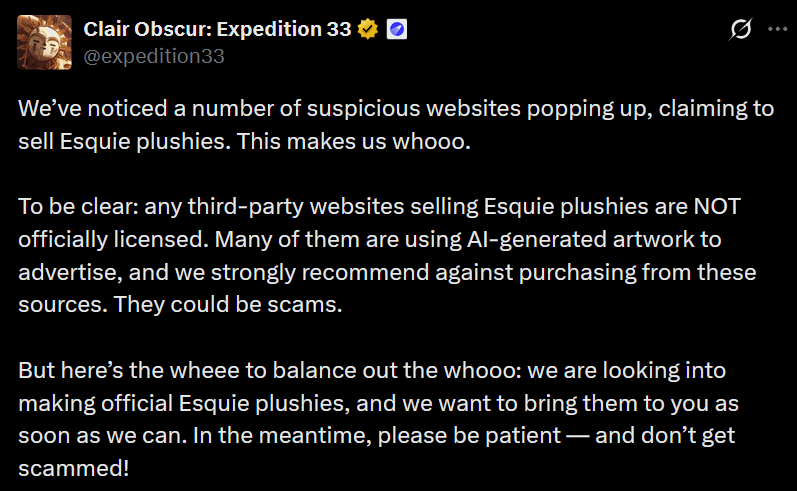
This does make me wheee
-
2025-05-14 21:57 #320
Sweaty Dick Punching Enthusiast
- Join Date
- Mar 2006
- Posts
- 7,987
- BG Level
- 8
- FFXI Server
- Ragnarok
Shut up and take my money





Similar Threads
-
JoJo's Bizarre Adventure | R(emaster) (PC/PS5/XSX/PS4/XB1/NSW) - 2022
By Xno Kappa in forum Gaming DiscussionReplies: 101Last Post: 2022-10-23, 12:21 -
Alan Wake | Remastered (PC/PS5/XSX/PS4/XB1) | Switch Remaster - TBD
By ArchDizzle in forum Gaming DiscussionReplies: 64Last Post: 2022-05-12, 14:45 -
Godfall (PC/PS5) | PS4 Edition | Ultimate (PC/PS5/XSX/PS4/XB1) - April 7, 2022
By 6souls in forum Gaming DiscussionReplies: 48Last Post: 2022-03-21, 20:24 -
The Sims 4 (PC/Mac/PS5/XSX/PS4/XB1)
By 6souls in forum Gaming DiscussionReplies: 114Last Post: 2021-06-13, 09:56