 XI Wiki

That seems odd to me as well. If anything, wouldn't ship A going south register ship B going north as nothing at first because the photons coming off from ship B have to catch up first, and then after that wouldn't ship B seem to be going slower, to ship A, because each photon has to catch up to ship A, which is going at the same direction as the photons? Say if ship B had a light blinking once per second, moving away at .99c, and ship A was moving opposite ship B at .99c, the photon from ship B would be moving at 1c in the same direction as ship A. but because the photons have to play catch up, it takes a lot longer than a second for each photon to reach ship A's receiver, wouldn't it?
- Navigation
Results 4401 to 4420 of 5661
Thread: Large Hardon Collider


-
2011-03-21 19:26 #4401Chram

- Join Date
- Nov 2007
- Posts
- 2,622
- BG Level
- 7

-
2011-03-21 19:35 #4402foopyGuest
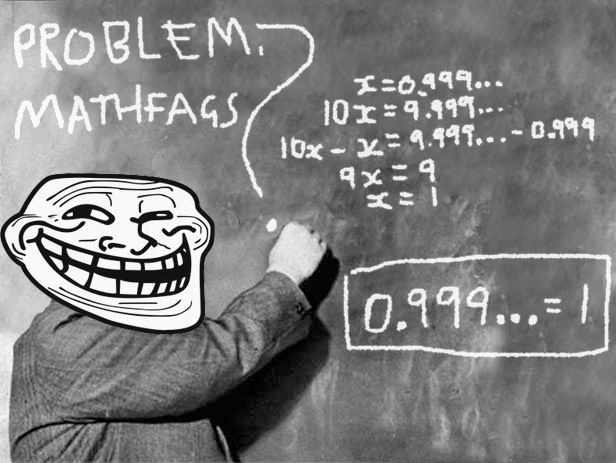
thanks for the replies eli. my brain is still shit though. i feel like i'm being trolled by einstein and lorentz.
-
2011-03-21 19:46 #4403

- Join Date
- Feb 2006
- Posts
- 22,049
- BG Level
- 10
- FFXI Server
- Bismarck

Back from class, what did I miss?
-
2011-03-21 19:51 #4404Canadian Fury
MANITOBA IS NOT A REAL PLACE
- Join Date
- Jun 2008
- Posts
- 1,089
- BG Level
- 6
- FFXI Server
- Valefor
 http://www.nature.com/news/index.html
 Originally Posted by Psion

-
2011-03-21 19:58 #4405Chram
- Join Date
- Nov 2007
- Posts
- 2,622
- BG Level
- 7
Sweet, that makes two promising sites to look at now.
-
2011-03-21 20:18 #4406Title: "HUBBLE GOTCHU!" (without the quotes, of course [and without "(without the quotes, of course)", of course], etc)
- Join Date
- Jul 2006
- Posts
- 3,141
- BG Level
- 7
I'm probably not going to proof read my post, so I apologize for any mistakes or anything wrong I say. Inc. tl;dr Originally Posted by Psion
For day-to-day developments in sciences/science news, SciAm and NewScientist are good sites. NewScientists actually had an article over the psi stuff you brought up earlier. Usually, when they're talking about something, they'll try to explain the relevant background. For example, if there's a new experiment about the particle-wave duality, they'll explain the particle-wave duality during the article so that you don't have to be familiar with quantum theory to understand the article.
Other than these, I can't think of any sites. You can find stuff for specific questions you may have about physics. For example, if you want to learn about the double slit experiment, you could google that and find sites specifically about it. Also, try searching for youtube videos. Sometimes you'll find a really good video, and often that person's channel will have other videos that will also be interesting. For example, I just googled "double slit experiment" and found this:
http://www.youtube.com/watch?v=DfPeprQ7oGc
And after finding that, I see that there are other "Dr Quantum" videos that also would interest you if you were trying to learn quantum physics.
And a funny youtube comment
So now you can learn a ton of stuff just by looking at the recommended videos on the side or searching for more "Dr Quantum".fucking electrons are planning something, otherwise they wouldn't give a shit about being watched.
Also, since you mention it, I'll explain what is meant by "Newtonian Physics".
Normally, physicists will describe physics in three broad categories. These are "Classical Physics", "Quantum Physics", and "Relativity" or "General Relativity". If you see me using the abbreviations QM or GR, I mean "Quantum Mechanics" and "General Relativity"
Historically, we described physics phenomenon based on what we were able to observe. For example, a few hundred years ago, nobody studied electrons because we never observed them. So our physics described "everyday" phenomenon, such as collisions between objects, heat flow, electricity, astronomy, and stuff like that. We developed rules and laws to describe these, and they worked very well. They were pretty much as accurate as our measuring equipment allowed us to measure at that point. This is classical physics. Sometimes people will use the term "classical physics" and "newtonian physics" interchangebly. Sometimes people will use the word "newtonian" more specifically, to talk about the mechanics of particles, planets, and extended bodies (i.e. how much stress can a metal beam take before it breaks?). Then we'll give other names to other areas of physics, such as "optics" to the study of light. Sometimes the word "newtonian" is used to distinguish it from other methods of describing the same phenomenon that newtons laws described. For example, "Lagrangian Mechanics" studies the same stuff as newton's laws, but it's way easier to use in many cases.
Anyways, although classical physics was pretty accurate, historically, there were a few things it couldn't explain. For example, Mercury's orbit didn't quite agree with Newton's laws. If you were to draw an oval (or actually, an ellipse) that represented Mercury's orbit, you would realize that the oval rotates over time.
http://aether.lbl.gov/www/classes/p10/gr/img249.gif
Newton's laws predicts a certain amount of this rotation (called "precession"), but the precession we observed did not match with what Newton's laws predict.
Another problem we had was trying to explain how light could propogate through a vacuum. Since light is a wave, people thought it had to travel through a medium (called "Ether"), just like sound needs air to travel. Experiments showed that not only did Ether not exist, but that the speed of light doesn't change for any observer.
If you're in a car going 50mph and Eli going 60mph, then from your point of view (or "frame of reference"), it looks to you as if Eli is only going 10mph, whereas Kaylia, who's at the bus stop because he's a physicist and thus can't afford a car, will measure Eli to be going 60mph. One interesting thing to note about physics is that we can't tell who's right and who's wrong. Kaylia says Eli is going 60 but you say he's going 10. Well, neither of you is more correct than the other. Everything is "relative" to the person's "frame of reference".
In fact, from your frame of reference, you would say that you're sitting still and Kaylia (as well as the rest of the world) is moving backwards at 50mph (except Eli, who's going forward 10mph). Kaylia would argue that he's (and the rest of the world) the one sitting still and you're the one who's moving (at 50mph, to be exact). No experiment can be conducted to say who's "right" and who's "wrong". You're perfectly correct in saying that you're sitting still in your still car while everything else is moving backwards.
Anyways, light is weird. You measured Eli to only be going 10mph although Kaylia measured 60mph. There's a 50mph discrepancy here. However, no matter how fast you're going and how fast you're moving, you'll always both agree on the speed of light. There will never be any discrepancy. If you're moving at half the speed of light and I shine a flashlight at you (I'm at the bus stop with Kaylia because I'm also a physics major), common sense would tell you that you'll see the light only moving half as fast as normal. However, that's not true. You'll see the beam of light zoom past you at full speed. However, Kaylia and I will disagree that the beam of light moved past you that fast. We measure the speed of light going it's normal speed, but you're going half that speed, so it only approaches you half as fast in our reference frame.
In other words, the speed of light is always the same, no matter what. This, combined with the fact that there is no way for us to say who's right or who's wrong (remember, Kaylia and I observed something different than what you observed) gives us Special Relativity (which I'll abbreviate SR). This is what the argument has been about these past few pages. SR leads to certain weird things such as time dilation (people in different references frames go through time at different rates), length contraction (what we discussed), and momentum dilation (the momentum of objects increase faster than what Newton's laws predict). It also leads to the equivalence of mass and energy (E=mc^2). It also leads to the fact that nothing can go faster than light in any reference frame. Everything with mass has to go slower than light. Everything that's massless has to go at light speed. A particle that goes faster than light is called a "tachyon". According to special relativity, momentum dilation and time dilation causes tachyons to have a mass that is an imaginary number, and to travel backwards in time. All signs point to the conclusion that tachyons do not exist.
With everything I just mentioned, I made an important assumption. I assumed that every person involved was not accelerating. We were all traveling in a straight line at a constant speed. If you're traveling in a straight line at a constant speed (i.e. you're not accelerating), you are said to be in an "inertial" reference frame. Although it's impossible to distinguish between these frames, it is possible to tell if someone is in a non-inertial (i.e. accelerating) reference frame. We do this by looking at Newton's laws. Newton's laws state that an object can only accelerate when there's a force causing it to do so.
From our frame of reference here on Earth, it appears as if the sun is moving around the Earth. Since all reference frames are equally valid, then I can state that the sun IS moving around the Earth. But what force is causing it to do so? Obviously the gravity of the Earth or the rest of the solar system can't result in the sun orbiting the Earth. So in order to explain this, we can either say that there is no force (in other words, Newton's laws don't hold in our frame of reference) or we can use math to construct "pseudo forces" to explain it. So, an alternate definition of an inertial reference frame is a frame of reference in which newton's laws hold and there are no pseudo forces). Experiments can tell you whether or not you are in an inertial frame or a non-inertial frame.
GR is the theory that explains gravity, the consistency of the speed of light, and other stuff in a way that also works in non-inertial frames. GR correctly predicts the precession of Mercury. It also predicts that gravity can distort time, create black holes, and it predicts the big bang. This is the theory we have to use when we want to describe very massive objects or describe the universe or gravity over long distances, as well as objects moving extremely fast. It is in these cases that these weird effects we don't notice every day (like time dilation) becomes noticeable and thus, Newton's laws no longer work.
There were other issues scientist needed to explain. For example, we couldn't come up with a working model of the atom. If electrons revolved around atoms the way planets revolved around the sun, atoms would not be stable. We also needed to explain the photoelectric effect (link. Watch the double slit experiment posted earlier first) and a few other things. Basically, small scale physics was violating our common sense couldn't be described by Newton's laws.
A new theory emerged to explain small scale physics, and this was called "Quantum Mechanics). (link). You should probably watch the entire series of videos here, as well as some Dr Quantum videos to understand quantum mechanics.
I think that's everything you need to know. Now you understand what we mean when we say "Classical Physics", "Newtionian Physics", "Quantum Physics", and "General Relativity". Remember, special relativity is just a subset of General Relativity so we'll often just say "GR" instead of "GR and SR".
-
2011-03-21 20:19 #4407If I screw up again Im gone forever.
Secret Admin
- Join Date
- Jul 2008
- Posts
- 8,540
- BG Level
- 8
- FFXI Server
- Bismarck
You missed my unbanning, Miz baby. Shiro/Miz do you know of any other places other than science daily for more biology related news? I go to sciencedaily but sometimes it has some... uninteresting articles. Or any place to just look up interesting things about neurology/studies on the brain.
-
2011-03-21 20:28 #4408Canadian Fury
MANITOBA IS NOT A REAL PLACE
- Join Date
- Jun 2008
- Posts
- 1,089
- BG Level
- 6
- FFXI Server
- Valefor
This Week in Virology: http://www.twiv.tv/ Originally Posted by Silentleroy
MicrobiologyByes: http://www.microbiologybytes.com/blog/
As aforementioned, Nature News: http://www.nature.com/news/index.html
Maybe just Nature, Cell, or Science?
-
2011-03-21 20:33 #4409If I screw up again Im gone forever.
Secret Admin
- Join Date
- Jul 2008
- Posts
- 8,540
- BG Level
- 8
- FFXI Server
- Bismarck
Alright, I'll check those out. Thanks.
-
2011-03-21 20:34 #4410Bagel
- Join Date
- Jul 2007
- Posts
- 1,320
- BG Level
- 6
Cell/Science/Nature also have fantastic podcasts that I've found are unbelievably convenient for listening to during workouts. They're a bit technical when they interview authors, but in general it's the best wrapup of the big shit going down in the world of science every week.
Nature gets special consideration because some of the subfields have specific and separate podcasts (e.g. neuropod for neuroscientists). In general Cell is my least favorite podcast, as it is a bit more technical in the few episodes I've listened to, but I still try very hard to make time for it.
For more lay treatment of the week in science, Science Fridays on NPR has a full podcast available.
-
2011-03-21 20:47 #4411Canadian Fury
MANITOBA IS NOT A REAL PLACE
- Join Date
- Jun 2008
- Posts
- 1,089
- BG Level
- 6
- FFXI Server
- Valefor
God, I love Nature.
-
2011-03-21 20:47 #4412Chram
- Join Date
- Nov 2007
- Posts
- 2,622
- BG Level
- 7
Thanks woozie, though I'm not entirely sure why light stays the same speed if I'm going at half it's speed in the same direction. Is it because time is slowing down for me or something, so I perceive it as going at full speed? So like say if going at .5c makes your time pass half as fast, so even though the light should be perceived by you as going half as fast as normal, because your time is half as fast as well, it appears to be full speed to you? From what I hear, approaching the speed of light slowing your time down isn't for debate, since they did experiments with flying an atomic clock around at fast speeds or something and it was slower, correct? Is this the reason why light always seems to go the same speed no matter how fast you are in relation to it, because the faster you go the slower your own time goes?
Photons sure seem a lot like witchcraft to me. x_X
-
2011-03-21 20:58 #4413Title: "HUBBLE GOTCHU!" (without the quotes, of course [and without "(without the quotes, of course)", of course], etc)
- Join Date
- Jul 2006
- Posts
- 3,141
- BG Level
- 7
Time dilation is usually thought of as a result of the constancy of the speed of light, not the other way around. The constancy of the speed of light is just a fundamental aspect of nature. Also, you never notice time dilation in your own reference frame. So if I'm in a rocket going from Earth at .90c, then I wont feel like my own clocks are moving slower. Everything always seems normal to me in my own frame of reference.
So the constancy of the speed of light is not a result of time dilation. It would be more accurate to think of time dilation as a result of the constancy of the speed of light. Special relativity starts with the constancy of the speed of light, as well as the fact that all reference frames are equally valid (note that in special relativity, if I mention reference frames I almost always mean "inertial" frames). Time dilation (as well as everything else in SR) is a result of these two postulates.
-
2011-03-21 21:03 #4414Chram
- Join Date
- Nov 2007
- Posts
- 2,622
- BG Level
- 7
K, so witchcraft.
-
2011-03-21 21:03 #4415If I screw up again Im gone forever.
Secret Admin
- Join Date
- Jul 2008
- Posts
- 8,540
- BG Level
- 8
- FFXI Server
- Bismarck
But what about VSL?
-
2011-03-21 23:04 #4416Banned.

- Join Date
- Jul 2005
- Posts
- 17,471
- BG Level
- 9
- FFXI Server
- Ifrit
- WoW Realm
- Area 52
http://cdn1.knowyourmeme.com/i/000/0...PNG?1286434936 Originally Posted by foopy
When we say it's impossible to go faster then light, it really is! (unless you cheat with black hole and universe expansion, but that's another topic we will save for another day)
The concept that is the most important in relativity is that no matter how fast you go, light is always going to travel at 300 000km/s. If you manage to increase your speed from 0km/s to 100 000km/s, you will realize that you're still moving at 0km/s compared to light, and its still moving at 300 000 km/s. Find a new point of reference that isn't moving and repeat this experiment (increase your speed by 100 000 km/s), and you will obtain the same result again.
If someone look at you from the outside, he will see you burn the same amount of energy every jumps, but the speed increase will diminish everytime. You will basically go from 100 000 km/s, to 180 000km/s, to 240 000km/s, to 280 000km/s, and eventually 299 999km/s. I made up the number but it will converge toward the speed of light without ever reaching it. If it was working differently, it would means that the shuttle would spend different amount of energy in both frame of reference, which is something we want to avoid.
Back to your problem, if you're on Earth, you will see both shuttles fly away at 0.99c in opposite direction with the same amount of kinetic energy. There is no issue.
If you're in one of the shuttle however, the problem is a little more complex (probably why you asked!) and is very similar to the picture above (where Earth push the second shuttle). Basically, once you reach 0.99c and look behind, you will see that Earth is moving away from you at 0.99c...which is what you would expect. Now, if the 2nd shuttle decide to leave the Earth, you won't be able to add up the speed, instead you will have to look how much kinetic energy this shuttle is going to have (same amount as the first shuttle). If you add up that kinetic energy to the initial speed, you will find a total speed of ~0.995c instead of 2*0.99c. If that 2nd shuttle fire a missiles at "0.99c", you would have to once again consider its momentum and check the speed
[edit]
Go me..forgot to click send 3hours ago and left.
-
2011-03-21 23:07 #4417
- Join Date
- Feb 2006
- Posts
- 22,049
- BG Level
- 10
- FFXI Server
- Bismarck
No, just stop. Leave the Smolin/Magueijo fire starters at the door. Its fine if left in the theoretical realm, and yes, I have all of Magueijo's books so I know exactly the end result of a VSL discussion. Originally Posted by Silentleroy
See Woozie/Max round 6
-
2011-03-21 23:52 #4418Banned.
- Join Date
- Jul 2005
- Posts
- 17,471
- BG Level
- 9
- FFXI Server
- Ifrit
- WoW Realm
- Area 52
Cubert: That's impossible. You can't go faster than the speed of light. Originally Posted by Psion
Professor: Of course not. That's why scientists increased the speed of light in 2208.
Woozie answered this better than I could, but the only answer to "why" in sciences is "because". There is no reason why thing are the way they are. The invariance of "C" is a postulate, and one of the most fundamental we have. Although, it's not limited to "light" (electromagnetic wave), but also gravity.
Lorentz factor represent the space compression and time dilatation factor between 2 differents frame.
This factor basically tell you that if you observe the length of something moving really fast, it will be compressed by a factor of game, and that if you look at a clock on that moving object, it will tick slower.
The opposite is also true (since from the object perspective, you're moving really fast, your clock will tick slower and you will be compressed).
-
2011-03-22 00:15 #4419Chram
- Join Date
- Nov 2007
- Posts
- 2,622
- BG Level
- 7
Wait, wait, gravity travels at the speed of light too? o.0 Like, if you somehow took like 100 red stars and crushed them together all of a sudden in a near instant, would the gravity field of it change instantly or would there be a sort of... ripple or something in the field that spreads out at the speed of light?
-
2011-03-22 00:22 #4420Banned.
- Join Date
- Jul 2005
- Posts
- 17,471
- BG Level
- 9
- FFXI Server
- Ifrit
- WoW Realm
- Area 52
http://en.wikipedia.org/wiki/Gravitational_wave
If the impact is 300 lightyear away, it will take 300 light year before you see it. It also mean that stuff outside the visible universe have no impact on us.


Similar Threads
-
Two Nuclear Submarines Collide in Atlantic Ocean
By Firedemon in forum General DiscussionReplies: 33Last Post: 2009-02-18, 06:38 -
The Large Hadron Collider goes online tonight...
By alt in forum General DiscussionReplies: 8Last Post: 2008-09-10, 00:50 -
Large Hadron Collider...
By Jotaru in forum General DiscussionReplies: 71Last Post: 2007-11-05, 22:42