XI Wiki

Pre-Beta build actually(says it in watermark in the video).
- Navigation
Results 21 to 40 of 202
Thread: The Witcher 2 Assassins of Kings


-
2011-02-28 11:45 #21BG Staff

- Join Date
- Feb 2006
- Posts
- 27,188
- BG Level
- 10
- FFXI Server
- Sylph

-
2011-02-28 12:03 #22CustomTitle
Banned for Duping
- Join Date
- Feb 2007
- Posts
- 7,994
- BG Level
- 8
- FFXIV Character
- Jam Valesti
- FFXIV Server
- Leviathan
 And... alpha comes before beta...
 Originally Posted by Insanecyclone

Hot damn this looks awesome though, combat looks like a massive improvement over the first. Shame it'll probably be a while before I can play it. Considering how bad Witcher 1 chugged at some points for me.
-
2011-02-28 12:26 #23Ridill

- Join Date
- Jun 2007
- Posts
- 12,852
- BG Level
- 9
- FFXIV Character
- Teisha Linne
- FFXIV Server
- Moogle
- FFXI Server
- Bahamut
 Well, the first one had horrible optimization, while they're supposed to have a great engine this time around, so we'll see. Originally Posted by Kiarax
-
2011-02-28 12:29 #24Ridill
- Join Date
- Jul 2007
- Posts
- 14,853
- BG Level
- 9
- WoW Realm
- Windrunner
That is alot of rolling, but combat looked awesome.
-
2011-02-28 14:43 #25Relic Horn
- Join Date
- Dec 2007
- Posts
- 3,411
- BG Level
- 7
- FFXIV Character
- Purrrfect Lee
- FFXIV Server
- Hyperion
- FFXI Server
- Cerberus

It is a great looking preview. Love the environments.
-
2011-03-26 20:03 #26BG Staff
- Join Date
- Feb 2006
- Posts
- 27,188
- BG Level
- 10
- FFXI Server
- Sylph
Specs revealed
http://www.justpushstart.com/2011/03...ents-revealed/
Recommended specs:
Processor: Intel Quad Core or AMD equivalent
Graphics Card: Nvidia GeForce 260, 1 GB memory / Radeon HD 4850 with 1 GB memory
Memory: 3 GB for Windows XP / 4 GB for Windows Vista and Windows 7
Hard Disk: At least 16 GB of free space
Minimum specs:
Processor: Intel Core 2 Duo 2.2 GHz or AMD equivalent
Graphics Card: Nvidia GeForce 8800, 512 MB memory or ATI equivalent
Memory: 1 GB for Windows XP / 2 GB for Windows Vista and Windows 7
Hard Disk: 8 GB for the game installation and 8 GB for bonus materials
-
2011-04-03 15:40 #27BG Staff
- Join Date
- Feb 2006
- Posts
- 27,188
- BG Level
- 10
- FFXI Server
- Sylph
http://www.next-gen.biz/features/the...ings-interview
The Witcher 2: Assassins Of Kings Interview
Senior producer Tomasz Gop on moving towards action adventure without compromise.
Following our preview of The Witcher 2: Assassins Of Kings in issue 226 of Edge, we sat down with CD Projekt senior producer, Tomasz Gop, to discuss the importance of simultaneous localisation, the practicality of remaining a resolutely one-game studio and why the game won't be making too many concessions to accessibility.
Since the first Witcher, which games have had the biggest effect on CD Projekt's direction for The Witcher 2?
We get inspired by many games, obviously, like any game developer. I can't say specifically whether it's Heavy Rain, Demon's Souls or Arkham Asylum that has inspired us most over the past few years – it's probably a mix of all of them. I think everyone will find elements of Demon's Souls, though, definitely. We don't auto-scale opponents, for example. If you want to compare it to anything, Demon's Souls is definitely good. I'd like that, for sure.
How practical is it to be a one-game studio nowadays?
We've tried to do multiple projects at a time in the past. We tried, for example, to do The Witcher 2 alongside a console remake of The Witcher – it didn't work out. We also tried working on an undisclosed project whilst we were starting to do the Witcher 2. And in the end, it all turned out that if you want to stand out above the competition, it's all about the small things that make the game better. So we decided to throw all our resources into polishing just one game. That way, it'll be good.
Aren't there disadvantages?
I've never thought about it much. But I've never done a shooter. I've never done a strategy game. Maybe that it a personal disadvantage, for me. But other than that... If you do things right, you're not risking too much putting all your resources into one thing. I mean, we're not Blizzard – but look at Blizzard. They're releasing games “when it's done”. That's their policy. And they can't go wrong. We would love to be Blizzard one day, of course, but right now we don't have enough money!
Anyway, I think it's good to do games that you can focus on, and minimise your risk by polishing a product to the very end, when it really is ready to be released. I don't think that being a one-game company will turn into a disadvantage for us in this case. I hope it won't.
What happened to the console versions of the first Witcher, exactly?
It's not been fully disclosed. I can't talk about everything. I wasn't even involved in that project much, so I don't know everything. But we definitely learned that doing a whole project on outsource – we worked with a French company – is not the best idea. If we were ever to do it again, like a console version for Witcher 2 for example, we'd definitely want to do it in-house.
The Witcher had a broad pan-European appeal – where was it most popular?
I think we sold most copies in Russia, from what I know. Germany and Poland were similar. Bur obviously Poland and Russia had an advantage – everyone loves Sapkowski. They know the writer that wrote the books we based the game on. It was easy for us there. Actually, selling the game in Germany, France, the US as well – it did around 150,000 in the US – was harder because we actually had to make a cool game to sell it out there, people didn't care about Sapkowski. Germany and Poland were easy as well because it's a PC market, and if it's a good PC game, you're going to be OK.
These are well-written, well-scripted games – has it helped to have a rich universe already in place to work with?
You've just mentioned two of the most important things. The first one is that the world of The Witcher is a non-generic fantasy world. Imagine five designers sitting round a table, brainstorming, trying to invent a story twist. One of them says 'Hey, let's stick an elf guardian in here,' and everybody already knows what an elf guardian is. Their mental imagine does not differ. It's comfortable. We waste less time actually designing the game fiction. The other thing is that we have really skilled writers. The storyline for The Witcher 2 is being written by the same people who wrote The Witcher, and the team has grown since then as well. So we've got guys that have been writing dialogue or scripts for TV and movies for decades now. It's a lot of work with a lot of different people. There are no shortcuts here.
How do you handle translation? Is it being written simultaneously in several different languages?
It's a big challenge, but we learned lessons from The Witcher. We have a whole localisation department on board, with people who are native in German, English, French, Spanish and so on, so we definitely benchmark and test everything in-house. Obviously we do outsource some things to testing and editing companies, but everything is checked and accepted in house.
The script for the game is being written simultaneously in Polish and English. The main writing team is Polish, but we have an English native speaker on board and he is always working together with the scriptwriters, making sure on a daily basis that whenever there's sharp wit in the Polish, it will carry across in English as well. Once again, there are no shortcuts. Really it's a lot of work. We have to translate into other languages – German for example – because we can't do everything simultaneously, we couldn't handle it. But at least Polish and English are done at the same time. We've got eleven language versions, and five of them are voiced-over – English, Polish, Russian, French and German.
If The Witcher's script was a strength, what were its weaknesses?
Many features of The Witcher had a reasonably high accessibility threshold. Combat is one of the examples. Not everybody feels comfortable with playing games that do not always tell you what to do. But on the other hand, we always tell people that this is an adult game, it's a mature game. The story can be difficult – for instance, when you help somebody, players who are too young might not see the consequences of doing that, what might happen a few hours ahead in the game. For some people that might be a shortcoming, but for an adult audience, we actually think that's a good thing.
So I could say that young people won't be that keen on The Witcher 2 – but then, on the other hand, that's not such a bad thing. We probably are one of the few developers that do not give up too much in terms of accessibility. In that respect I think we maybe are a bit like From Software. That would be a good comparison.
-
2011-04-08 11:00 #28BG Staff
- Join Date
- Feb 2006
- Posts
- 27,188
- BG Level
- 10
- FFXI Server
- Sylph
Screen shots from a preview build at a German site.
http://www.pcgames.de/The-Witcher-2-...ersion-819609/
Triss tits
Spoiler: show
-
2011-04-16 16:20 #29BG Staff
- Join Date
- Feb 2006
- Posts
- 27,188
- BG Level
- 10
- FFXI Server
- Sylph
-
2011-04-20 18:18 #30BG Staff
- Join Date
- Feb 2006
- Posts
- 27,188
- BG Level
- 10
- FFXI Server
- Sylph
-
2011-04-26 13:25 #31BG Staff
- Join Date
- Feb 2006
- Posts
- 27,188
- BG Level
- 10
- FFXI Server
- Sylph
-
2011-04-27 19:29 #32Salvage Bans
- Join Date
- Sep 2007
- Posts
- 787
- BG Level
- 5
Thanks for the vids, looking forward to this one, hopefully it doesn't play like crap on my system.
-
2011-04-30 10:29 #33E. Body
- Join Date
- May 2008
- Posts
- 2,392
- BG Level
- 7
- FFXI Server
- Cerberus
- WoW Realm
- Deathwing
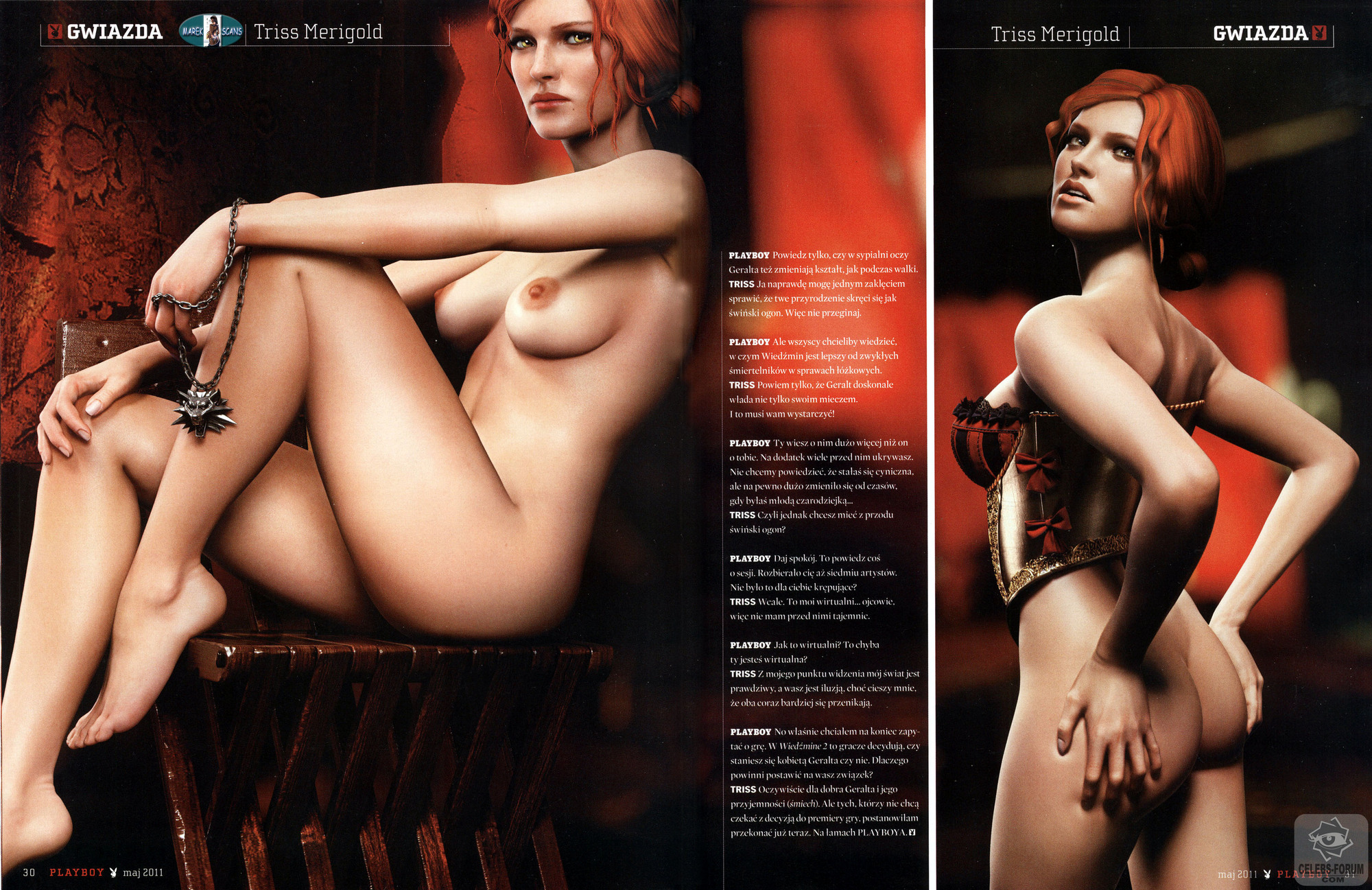
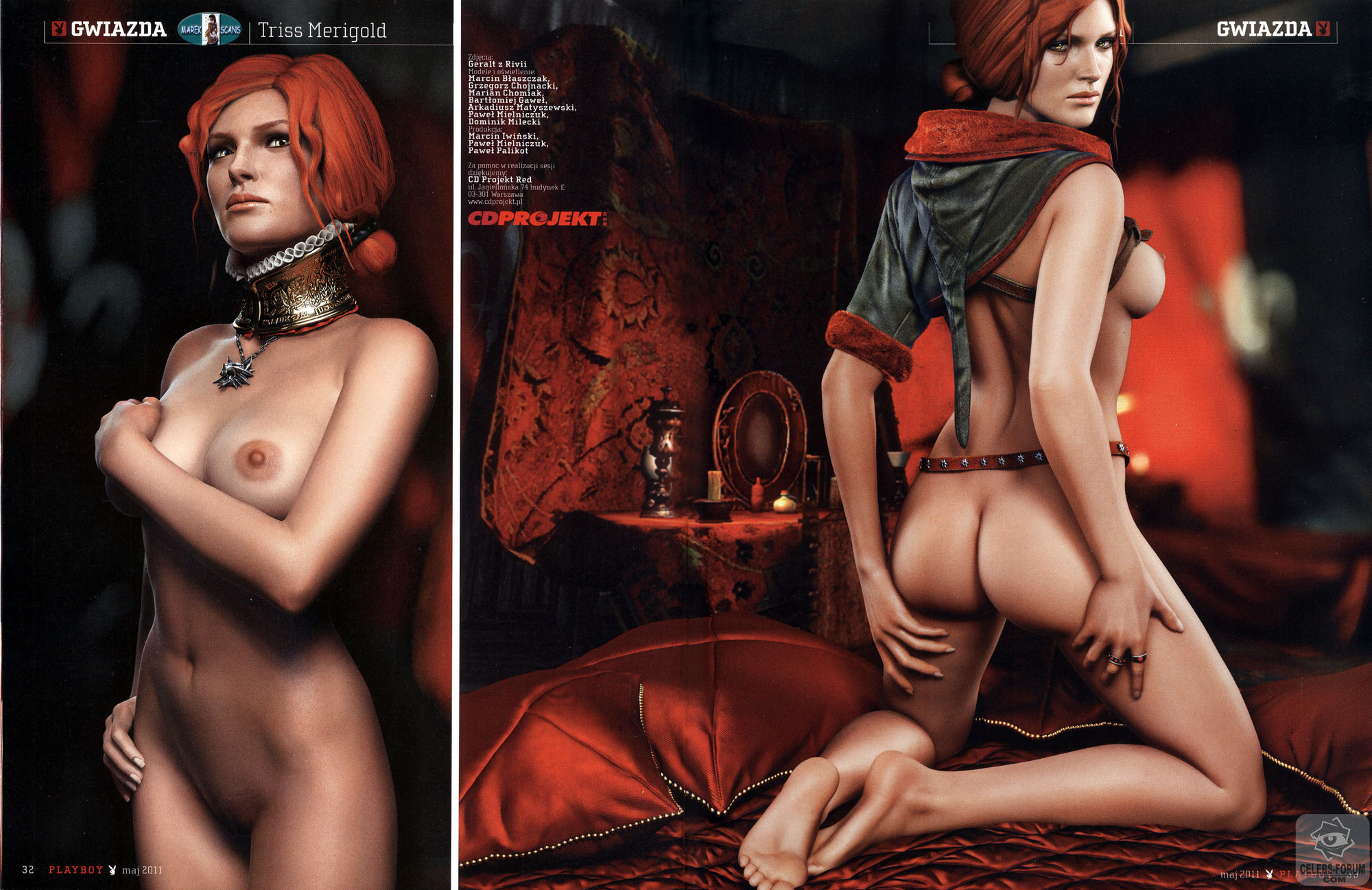
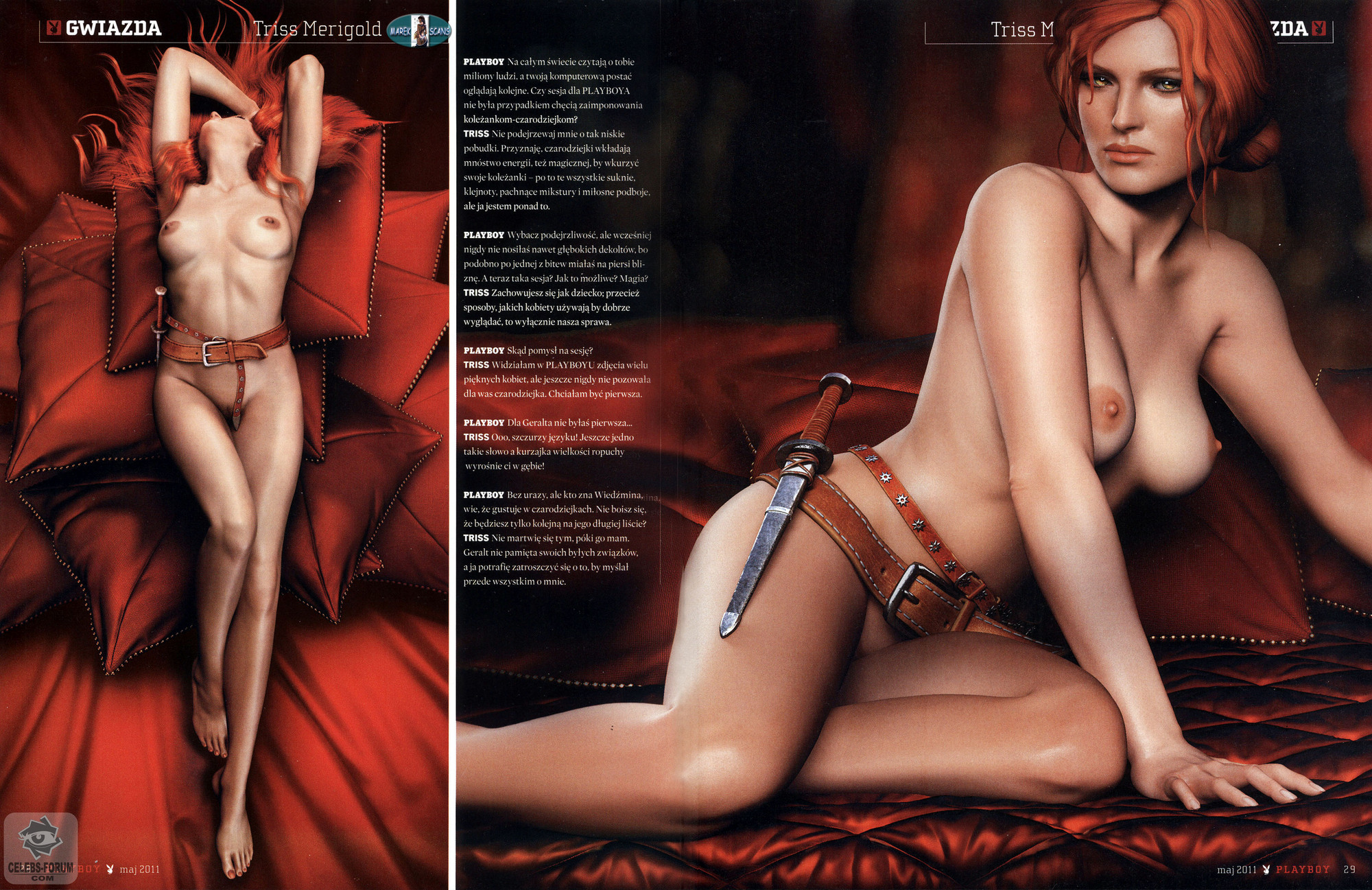
NSFW scans from playboy
Spoiler: show
-
2011-05-14 17:24 #34E. Body
- Join Date
- May 2006
- Posts
- 2,270
- BG Level
- 7
The game looks really nice -- I haven't played 1, I've been excited for this for a while. Although, I've been keeping up with the 360 one, and I didn't realize the PC release is freaking 3 days away D:
Is xbox also May 17 release??
-
2011-05-14 17:29 #35Salvage Bans
- Join Date
- Jun 2007
- Posts
- 787
- BG Level
- 5
- FFXI Server
- Lakshmi
The game's PC only, there is no 360 release.
-
2011-05-14 18:04 #36E. Body
- Join Date
- May 2006
- Posts
- 2,270
- BG Level
- 7
WHAT????
 for sure?? daammnnnnn
-
2011-05-15 08:00 #37Art Connesseur of Blue Gartr
- Join Date
- Jul 2007
- Posts
- 5,841
- BG Level
- 8
- FFXIV Character
- Odess E'iron
- FFXIV Server
- Balmung
- FFXI Server
- Ragnarok


Goddamn. I was excited for Tuesday, but now I really can't wait. With a reported 100+ hours with all the sidequests and everything... woooooo!
-
2011-05-15 17:41 #38A. Body
- Join Date
- Jul 2008
- Posts
- 4,325
- BG Level
- 7
holy shit, may 17??? i remember preordering this like last year on Steam
-
2011-05-17 10:15 #39E. Body
- Join Date
- May 2006
- Posts
- 2,270
- BG Level
- 7
Anyone get their hands on the game yet?? Thoughts!??
-
2011-05-17 11:44 #40Relic Weapons
- Join Date
- Feb 2009
- Posts
- 381
- BG Level
- 4
- FFXIV Character
- Xalien Shadowstar
- FFXIV Server
- Excalibur
- FFXI Server
- Leviathan
I'm just on the prologue and I'm already loving it. The game is gorgeous, loving the characters so far and the environments are fantastic. But yea only about 30 minutes in so far, going back to play now.